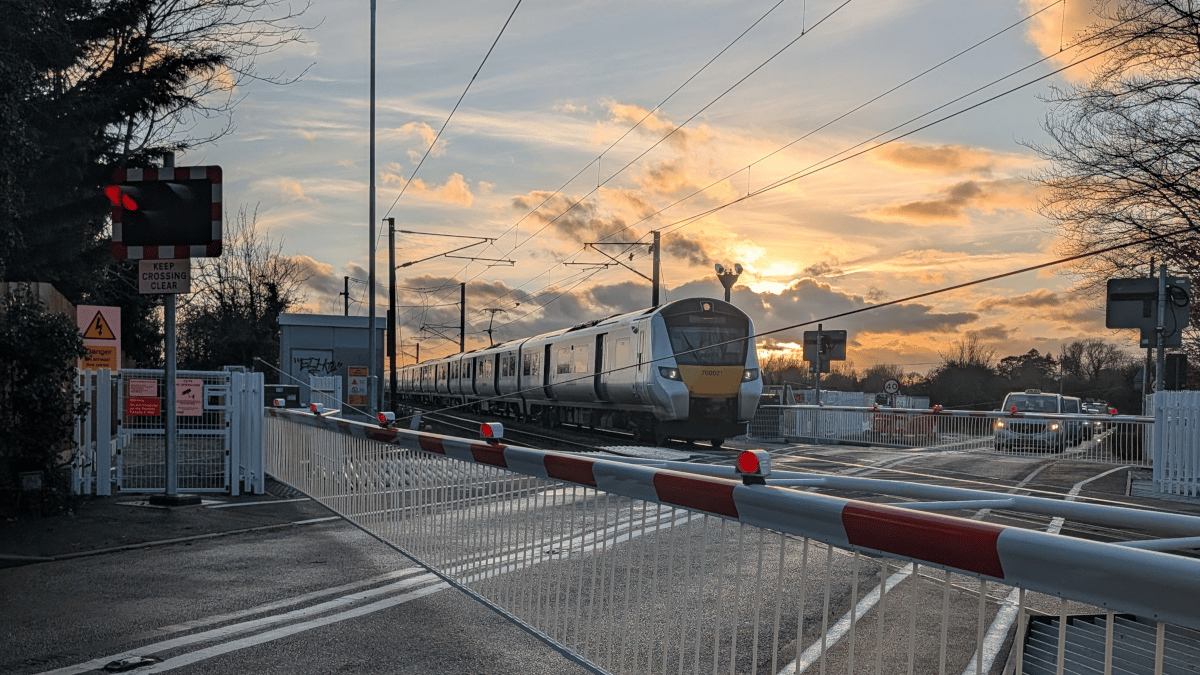
Cambridge Resignalling Takes Shape
Why It Matters
The upgrade eliminates decades‑old equipment, boosting reliability and capacity on a key UK rail corridor and enabling forthcoming infrastructure expansions.
Key Takeaways
- •£200 million (£≈$254 million) Cambridge resignalling project underway
- •Over 100 signals, 76 points, 300 axle counters upgraded
- •Seven high‑risk level crossings converted to obstacle‑detector barriers
- •New VDU‑based MCS Infinity control system operational
- •Project supports Cambridge South station 2026 opening and East West Rail
Pulse Analysis
The Cambridge corridor has long relied on signalling hardware installed in the early 1980s, many components now exceeding 40 years of service. Network Rail’s decision to invest roughly $254 million reflects a broader industry push to replace legacy interlockings that are prone to failure and costly to maintain. By consolidating control into two modern workstations and extending the control area to 132 track miles, the programme not only resolves imminent obsolescence but also creates a digital backbone capable of supporting higher traffic volumes and more sophisticated traffic management algorithms.
At the heart of the technical overhaul is Alstom’s Smartlock 400 system, paired with Smart I/O object controllers that communicate via fibre‑optic IP links on the FTNx network. This architecture replaces mechanical and ageing SSI interlockings with computer‑based logic, while LED signal aspects and Frauscher axle counters improve detection accuracy and energy efficiency. The new Modular Control System (MCS Infinity) offers a VDU‑centric interface and modular automatic route setting (MARS), streamlining signaller workflows. Additionally, seven level crossings deemed high‑risk have been upgraded to full‑barrier obstacle‑detector systems, enhancing safety on busy road‑rail interfaces.
Strategically, the resignalling lays the groundwork for several concurrent projects, most notably the imminent opening of Cambridge South station and the long‑term East West Rail corridor. By freeing critical spares and increasing line reliability, the upgrade is expected to reduce delays, support higher train frequencies, and attract further investment to the region’s transport network. The phased rollout—completed in the south by early 2025 and set to extend northward through 2027—demonstrates a pragmatic approach that balances immediate operational gains with future capacity needs, positioning Cambridge as a pivotal hub in the UK’s rail modernization agenda.
Cambridge resignalling takes shape
Comments
Want to join the conversation?
Loading comments...