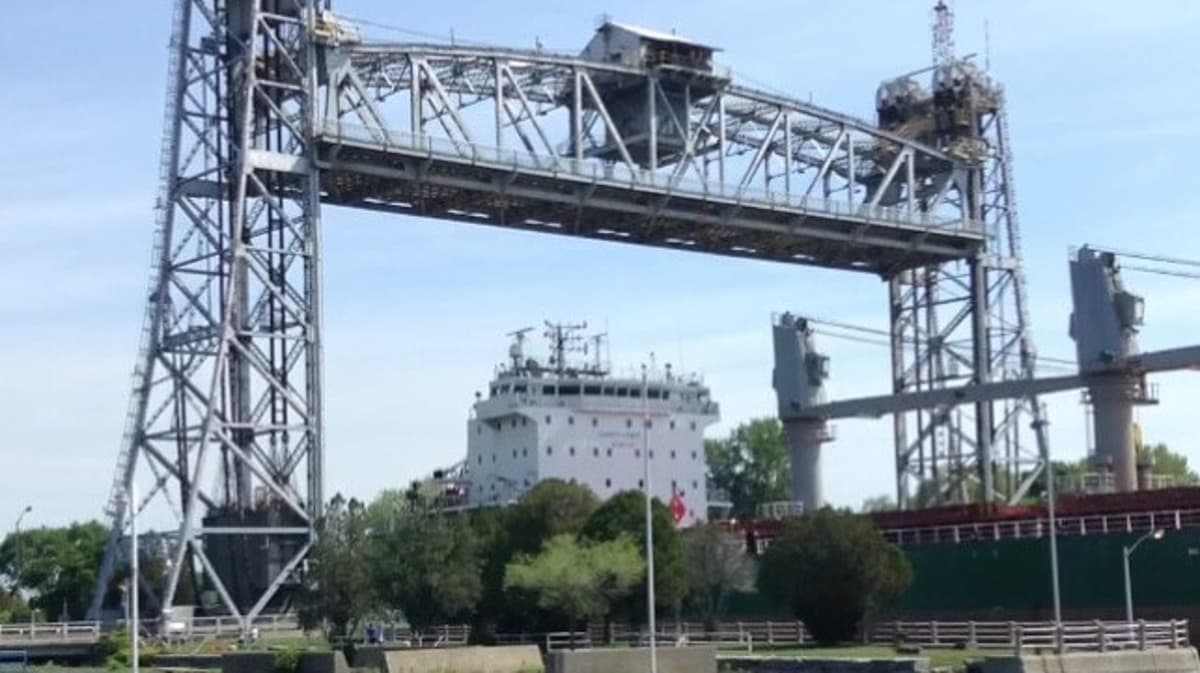
Canada Investigates Bridge Allision on the Welland Canal
Why It Matters
The collision underscores safety vulnerabilities in one of North America’s busiest inland waterways, where bridge strikes can halt traffic, increase costs, and prompt regulatory scrutiny. It highlights the need for improved navigation protocols and infrastructure upgrades to protect the vital supply chain.
Key Takeaways
- •TSB launches investigation after BBC Tokyo hits Bridge 21
- •Bridge reopened after ~10‑hour closure, no injuries reported
- •Canal handles ~3,000 ships and 40 million tonnes yearly
- •Similar bridge collisions occurred in 2001 and 2015
Pulse Analysis
The BBC Tokyo incident draws attention to the operational challenges of navigating the Welland Canal’s vertical‑lift bridges. Designed for heavy‑lift cargo such as wind‑turbine blades, the 149‑metre vessel collided with Bridge 21’s east tower while descending through Port Colborne. Immediate response by the St. Lawrence Seaway Management Corp. closed the bridge for safety, but rapid assessments found no structural damage, allowing traffic to resume after ten hours. No injuries or environmental impacts were recorded, and the ship sustained only superficial scrapes, illustrating the resilience of both the vessel and the bridge’s design.
While this event was resolved quickly, it adds to a pattern of bridge‑strike incidents that have plagued the canal for decades. Notable past collisions include the 2001 Windoc‑Bridge 11 crash, which sparked a two‑day shutdown and a fire, and the 2015 Lena J‑Bridge 19 impact that forced months‑long closures. With roughly 3,000 vessels transiting annually and moving 40 million tonnes of cargo, the canal’s dense traffic amplifies the risk of human error, mechanical failure, or miscommunication. Vertical‑lift bridges, essential for road traffic, require precise coordination between ship pilots and bridge operators, and any lapse can ripple through supply chains that depend on timely deliveries.
For the shipping industry and regional economies, the investigation’s findings could trigger tighter navigation protocols, enhanced pilot training, or upgraded bridge control systems. Stakeholders may also push for infrastructure investments to modernize aging lift mechanisms, reducing the likelihood of future strikes. As global trade increasingly relies on heavy‑lift vessels to transport oversized components, ensuring safe passage through constrained waterways like the Welland Canal becomes a strategic priority, balancing efficiency with the imperative to protect critical transport corridors.
Canada Investigates Bridge Allision on the Welland Canal
Comments
Want to join the conversation?
Loading comments...