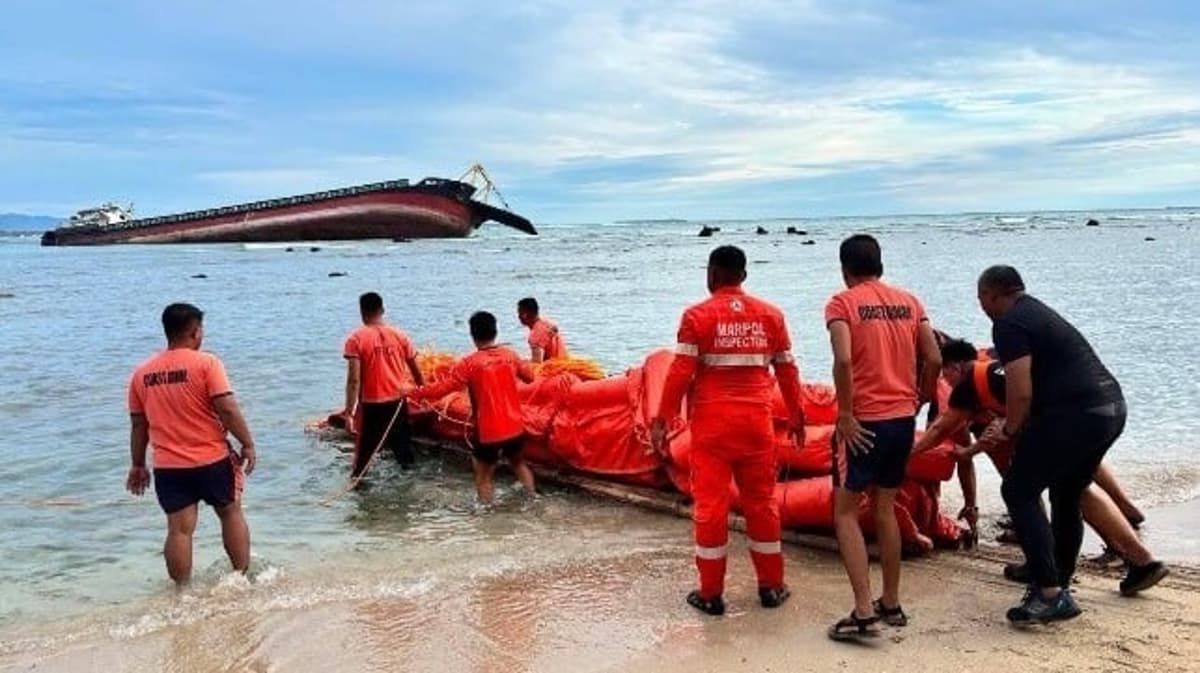
Cargo Ship Goes Aground and Spills Petroleum Off Luzon
Why It Matters
The incident underscores the environmental risk posed by aging, poorly maintained vessels operating in the Philippines and highlights gaps in maritime safety oversight that could affect regional trade and coastal ecosystems.
Key Takeaways
- •MSCI 1 grounded off Badoc, Ilocos Norte, then partially capsized
- •Fifteen crew members evacuated; all unharmed
- •Petroleum leak traced to engine room, not main fuel tanks
- •Spill-control booms shifted, causing shoreline oil slick
- •2025 inspection found ten deficiencies, including watertight doors
Pulse Analysis
The grounding of MSCI 1 illustrates a broader challenge for Southeast Asian maritime traffic: older vessels often operate beyond their design life with limited oversight. Intentional groundings, while sometimes used to avert larger disasters, can quickly turn hazardous when structural weaknesses—like the ten deficiencies recorded in the ship’s 2025 inspection—compromise stability. In this case, compromised watertight doors and engine problems accelerated flooding, leading to a dangerous list and eventual capsizing. Such events raise questions about the adequacy of port‑state control regimes and the incentives for operators to address known defects before deployment.
Environmental stakes are high when a vessel spills petroleum near a populated coastline. The leak from MSCI 1’s engine room, rather than its main fuel tanks, still produced a visible oil slick that contaminated a short stretch of shoreline in Ilocos Norte. Local responders struggled to keep containment booms in place amid shifting seas, forcing reliance on sorbent pads and manual shoreline cleanup. Even limited spills can threaten marine habitats, fisheries, and tourism—key economic pillars for the Philippines—highlighting the need for rapid, well‑equipped spill‑response capabilities in remote ports.
Regulators are likely to scrutinize this incident as a catalyst for stricter enforcement. The ten recorded deficiencies, especially those affecting watertight integrity, suggest systemic gaps in inspection follow‑up and corrective action. Strengthening mandatory remediation timelines, increasing the frequency of port‑state checks, and imposing heavier penalties for non‑compliance could deter operators from cutting corners. For the global shipping industry, the MSCI 1 episode serves as a reminder that aging fleets demand proactive investment in maintenance and safety to protect both commerce and the environment.
Cargo Ship Goes Aground and Spills Petroleum off Luzon
Comments
Want to join the conversation?
Loading comments...