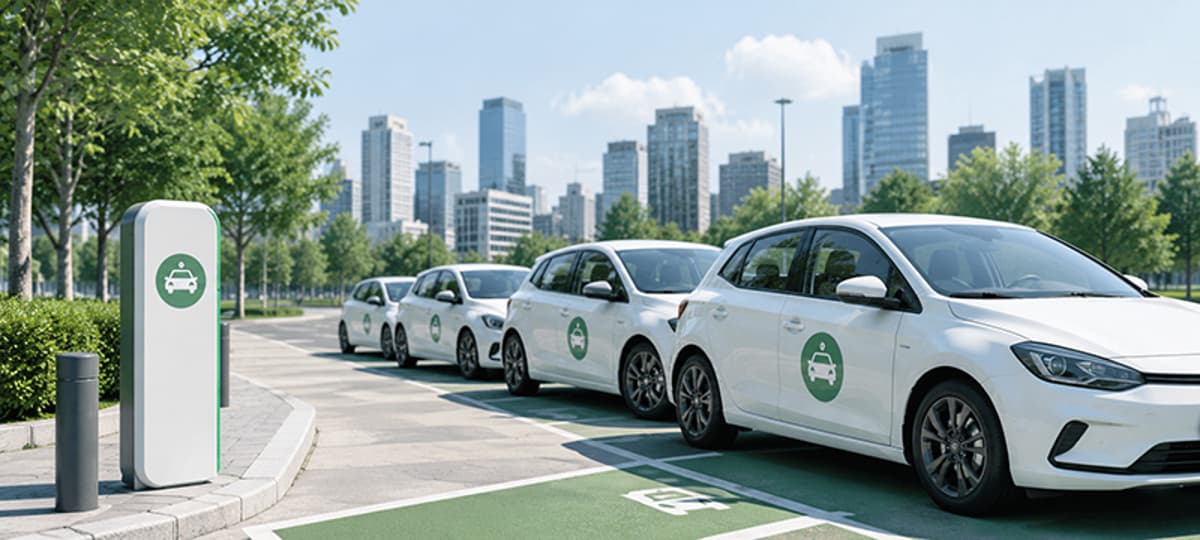
Carsharing Growth Puts Connected Fleet Platforms at the Centre of Mobility Operations
Companies Mentioned

Why It Matters
The surge in carsharing fleets turns connected‑vehicle platforms into essential revenue‑enablers, creating a sizable market for IoT and mobility‑software providers.
Key Takeaways
- •Global carsharing fleet to reach 768,000 vehicles by 2030.
- •User base projected to hit 141.1 million, 9.2% CAGR.
- •Free‑floating model dominates Europe, driving complex telematics needs.
- •IoT vendors like Bosch and Vulog poised for platform growth.
- •Operators shift focus to profitability, requiring utilization‑driven analytics.
Pulse Analysis
The carsharing sector is entering a scale‑up phase, with Berg Insight forecasting a jump to 768,000 shared vehicles and 141.1 million users by 2030. This expansion is not merely a consumer trend; it reflects a deepening integration of IoT technologies that enable remote authentication, real‑time vehicle monitoring, and dynamic pricing. As fleets grow, the need for robust telematics, data connectivity, and analytics platforms becomes a strategic differentiator for operators seeking to manage larger, more dispersed assets efficiently.
Regional dynamics further shape the technology stack. Europe’s dominance of free‑floating services—where cars are picked up and dropped off anywhere within a zone—creates a higher demand for sophisticated fleet‑visibility tools, predictive maintenance, and demand‑forecasting algorithms. In contrast, station‑based models in Asia‑Pacific rely on more predictable vehicle flows, allowing simpler hardware‑only solutions. Vendors such as Bosch, Vulog, Invers, and Targa Telematics are positioning themselves as end‑to‑end providers, bundling embedded telematics with cloud‑based fleet management suites to meet these divergent requirements.
Profitability is now the primary driver, pushing operators to squeeze idle time and maximize utilization. This shift elevates telemetry data from a peripheral feature to a core business asset, feeding analytics that optimize vehicle placement, pricing, and energy consumption. Corporate carsharing, projected to rise from 154,000 to 250,000 vehicles, adds another layer of complexity with stricter access controls and usage tracking. For IoT platform providers, the opportunity lies in delivering interoperable, scalable solutions that not only connect vehicles but also translate data into actionable insights that improve bottom‑line performance.
Carsharing Growth Puts Connected Fleet Platforms at the Centre of Mobility Operations
Comments
Want to join the conversation?
Loading comments...