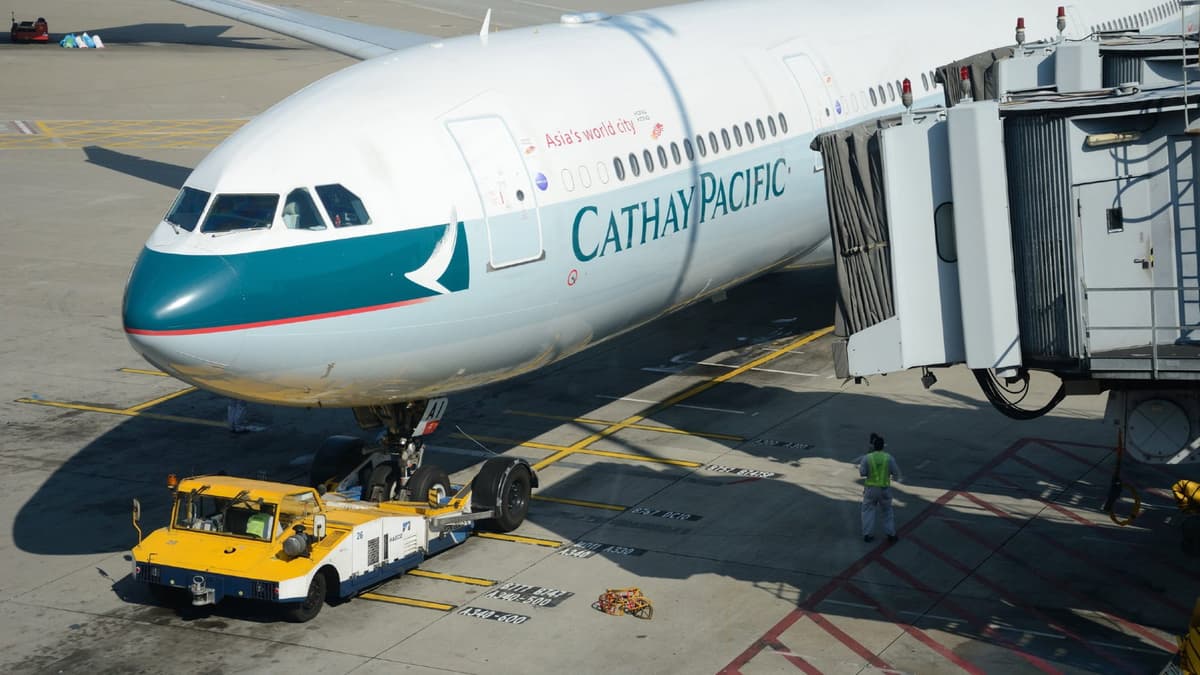
Cathay Pacific to Further Cut Fuel Surcharges From 1 July 2026
Why It Matters
Lower fuel surcharges improve ticket affordability and can boost demand as jet‑fuel volatility eases, while the prolonged Middle‑East suspension signals lingering regional demand weakness.
Key Takeaways
- •Fuel surcharge cut 14.5% across all routes except HK‑Mainland
- •Short‑haul surcharge drops to HK$290 (~$37) per passenger
- •Medium‑haul surcharge reduced to HK$541 (~$69), long‑haul to HK$1,164 (~$149)
- •HK‑Mainland flights retain HK$165 ($21) and CNY 135 ($19) fees
- •Dubai and Riyadh services suspended through 31 Aug 2026
Pulse Analysis
Cathay Pacific’s latest fuel‑surcharge reduction underscores how airlines are leveraging flexible pricing mechanisms to offset jet‑fuel volatility. By trimming the surcharge by 14.5% across its network, the carrier translates a roughly $12‑$30 per‑ticket saving for passengers, depending on flight length. The move follows a May 2026 adjustment and aligns with Cathay’s policy of reviewing surcharges every two weeks, a practice that helps it stay competitive against regional rivals such as Singapore Airlines and Emirates, which have also been tweaking ancillary fees in response to fluctuating oil markets.
The pricing shift arrives at a time when consumer confidence in air travel is rebounding, yet demand remains uneven across regions. While the fare relief may stimulate bookings on intra‑Asia and long‑haul routes, Cathay’s decision to keep the Hong Kong‑Mainland surcharge unchanged reflects regulatory and market realities specific to that corridor. Simultaneously, the airline’s continued suspension of Dubai and Riyadh flights through August 2026 highlights persistent softness in Middle‑East demand, likely driven by geopolitical uncertainty and slower business‑travel recovery. This operational pause allows Cathay to reallocate aircraft capacity to higher‑yield markets, preserving cash flow amid a cautious recovery.
Industry analysts view Cathay’s approach as a bellwether for how legacy carriers will balance cost‑pass‑through with revenue protection in the post‑pandemic era. The combination of targeted surcharge cuts and strategic route suspensions illustrates a nuanced response to both input‑cost pressures and demand‑side headwinds. As fuel prices stabilize, we can expect other airlines to adopt similar surcharge‑adjustment cycles, while the longer‑term outlook for Middle‑East routes will hinge on broader economic and diplomatic developments. Cathay’s actions thus provide a micro‑cosm of the broader strategic recalibrations shaping global aviation in 2026.
Cathay Pacific to further cut fuel surcharges from 1 July 2026
Comments
Want to join the conversation?
Loading comments...