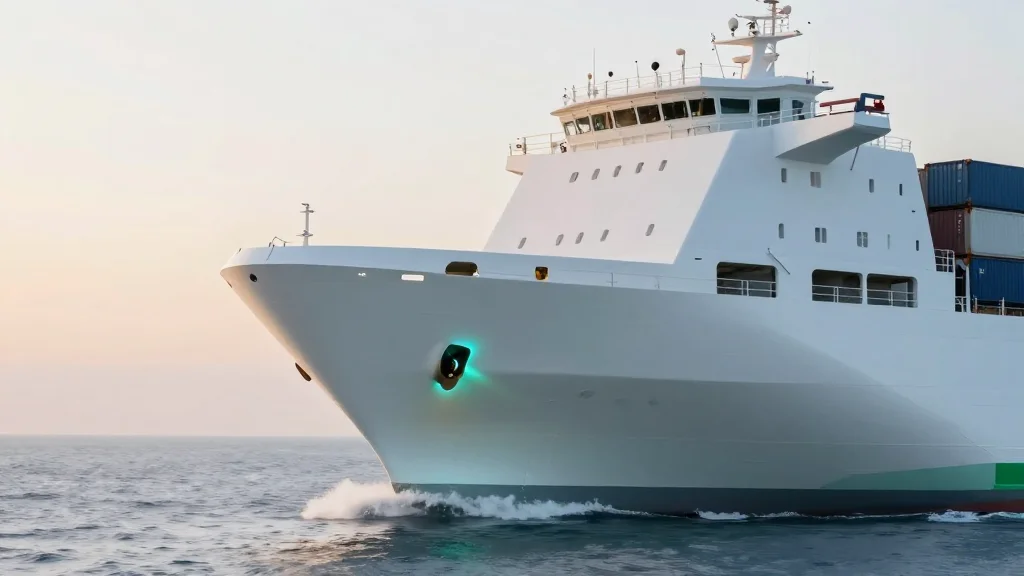
CCS Certifies Ningyuan Diankun as World’s Largest Pure‑Electric Vessel

Why It Matters
The certification of Ningyuan Diankun demonstrates that fully electric propulsion can be scaled to commercial container vessels, challenging the long‑standing dominance of diesel engines in short‑sea shipping. By delivering a measurable CO₂ reduction of over 1,400 tonnes per year, the ship provides a tangible pathway for the maritime sector to meet tightening international emissions regulations, such as IMO’s 2030 and 2050 targets. Moreover, the vessel’s intelligent ship notation showcases how automation and real‑time data analytics can be combined with green power to improve efficiency, potentially reshaping operational models for ports and logistics providers. If the vessel proves reliable in service, it could accelerate investment in battery manufacturing, shore‑power infrastructure, and rapid‑swap technologies worldwide. Shipping companies may reassess fleet renewal strategies, favouring electric or hybrid builds over traditional new‑builds, while policymakers could leverage the project as a benchmark for future regulatory frameworks and subsidies aimed at decarbonising maritime transport.
Key Takeaways
- •CCS certifies Ningyuan Diankun, a 740‑TEU, 127.8‑m pure‑electric container ship
- •The vessel runs on ten containerised battery units and a photovoltaic system
- •Projected annual CO₂ reduction of approximately 1,462 tonnes versus diesel ships
- •Equipped with CCS i‑ship (M, No, I) intelligent ship notation for advanced automation
- •Designed for high‑voltage shore power charging and rapid battery swapping at ports
Pulse Analysis
The Ningyuan Diankun marks a decisive shift from experimental electric ferries to commercially viable, cargo‑carrying vessels. Historically, electric propulsion in shipping has been limited to short‑range passenger services because of battery weight and energy density constraints. By integrating a modular battery architecture and shore‑power flexibility, the ship sidesteps the range‑anxiety that has hampered earlier projects, positioning electric power as a competitive alternative for short‑sea freight.
From a market perspective, the vessel could catalyse a new segment of battery‑centric shipbuilding, prompting shipyards to develop standardized battery containers that can be swapped in minutes. This model mirrors the containerisation principle that revolutionised cargo handling, potentially unlocking economies of scale for battery production. Ports that invest early in high‑capacity charging stations may capture a premium service market, while laggards could face higher berth fees or carbon penalties.
Strategically, the certification also reinforces China’s ambition to lead in green maritime technology. By showcasing a domestically built, fully electric ship, Chinese shipbuilders and classification societies can leverage the project to attract international contracts, especially as global carriers seek to diversify away from fossil‑fuel dependence. The success of Ningyuan Diankun will likely influence upcoming IMO policy discussions, providing concrete data on emissions reductions and operational feasibility that regulators can reference when tightening global standards.
CCS Certifies Ningyuan Diankun as World’s Largest Pure‑Electric Vessel
Comments
Want to join the conversation?
Loading comments...