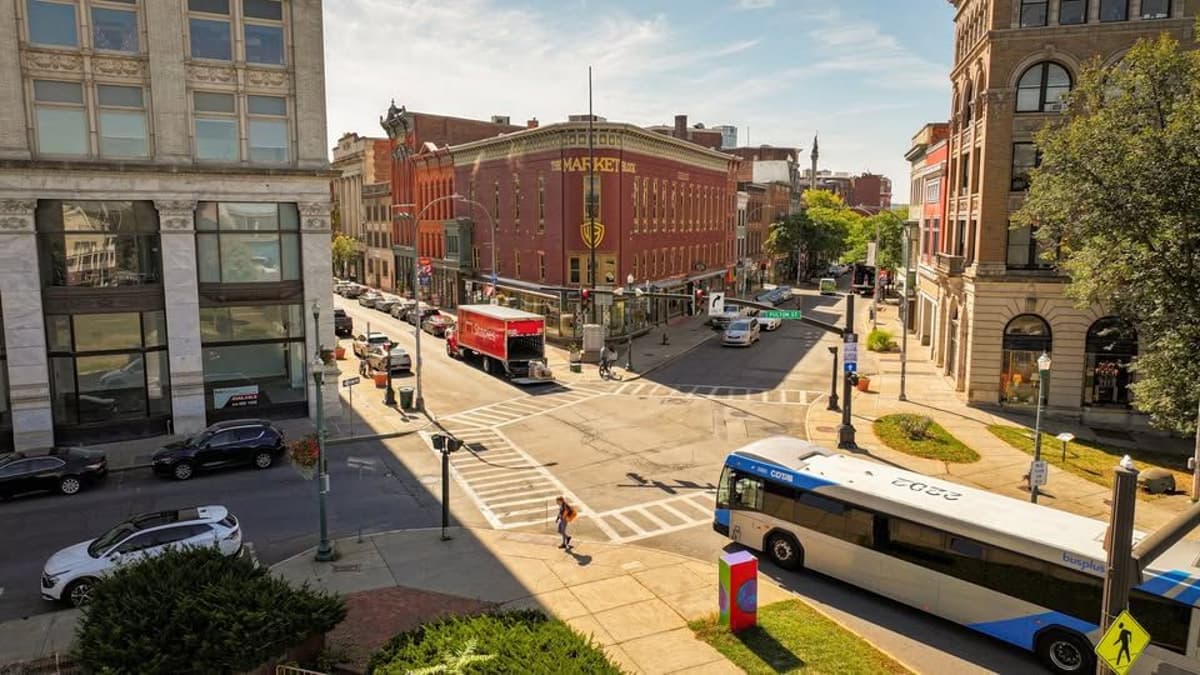
CDTA Achieves 90% Arrival Accuracy with Moovit Partnership
Why It Matters
Higher arrival accuracy and shorter wait times improve rider confidence, driving higher app adoption and overall transit usage. The partnership showcases how predictive AI can modernize regional public‑transport networks and set a benchmark for other agencies.
Key Takeaways
- •Navigator app reaches 30,000 monthly active users
- •Arrival prediction accuracy climbs to 90% for fixed routes
- •FLEX wait times drop up to 85% after operational changes
- •92% of FLEX rides booked via Navigator app
- •Trip planning exceeds 450,000 monthly on Navigator platform
Pulse Analysis
The CDTA‑Moovit collaboration illustrates how predictive analytics are reshaping public‑transport operations. By ingesting live GPS feeds, traffic flow data and historic travel trends, the new arrival engine can forecast bus arrivals with 90% accuracy—far surpassing legacy schedule‑based systems. This level of precision reduces uncertainty for commuters, a key factor in encouraging transit adoption, especially in mid‑size metros where car dependency remains high. The technology also positions Moovit as a go‑to mobility platform for agencies seeking scalable AI solutions.
Rider engagement metrics underscore the business impact of the upgrade. Navigator’s monthly active users jumped to 30,000, a 50% increase year‑over‑year, while daily active users now number 8,000. The platform facilitates over 450,000 trip plans each month and accounts for 92% of FLEX bookings, indicating that passengers prefer an integrated digital experience that combines planning, payment and on‑demand services. The dramatic reduction in FLEX wait times—from 31.5 to 12 minutes in Guilderland—has translated into an 85% cut in Sunday waits, reinforcing the value of operational tweaks paired with real‑time data.
For the broader transit ecosystem, CDTA’s results provide a compelling case study. Accurate ETAs and shorter on‑demand wait times can lift ridership, improve farebox recovery and justify further investment in digital infrastructure. Other regional agencies are likely to emulate this model, leveraging AI to fine‑tune schedules and enhance customer satisfaction. As mobility ecosystems evolve, partnerships that blend local operational expertise with global technology platforms will become a competitive differentiator, accelerating the shift toward smarter, more resilient public transportation networks.
CDTA achieves 90% arrival accuracy with Moovit partnership
Comments
Want to join the conversation?
Loading comments...