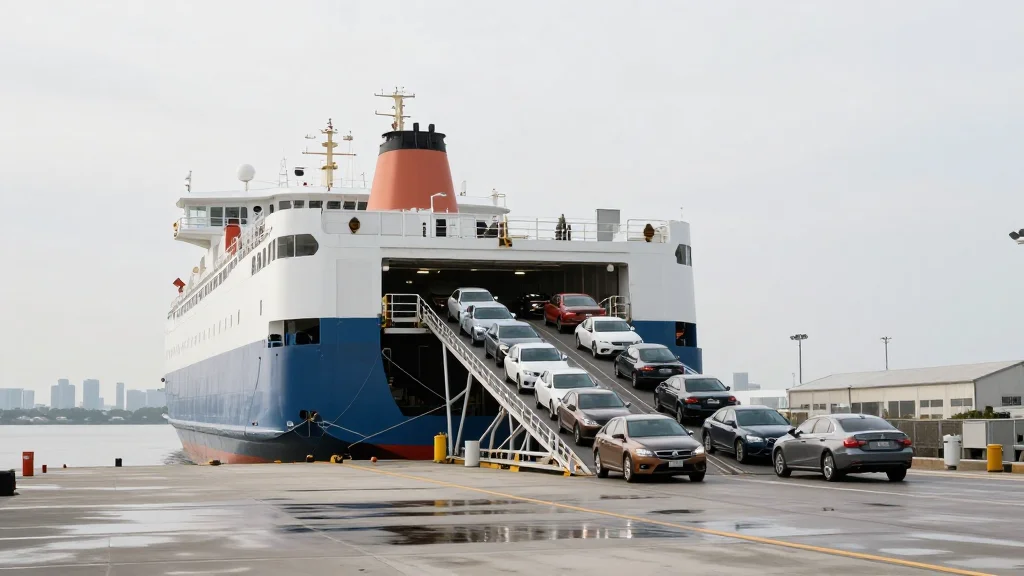
Charleston Port Looks to Develop Ro/Ro Operation at Ex-WestRock Site
Why It Matters
By adding a dedicated ro/ro operation, Charleston can capture a larger share of the lucrative automotive import market, diversifying its cargo mix and boosting long‑term profitability.
Key Takeaways
- •SC Ports approved design study for ro/ro on 210‑acre former WestRock site.
- •New ro/ro facility aims to capture auto imports for major Southern manufacturers.
- •Conversion will diversify cargo mix and reduce congestion at Columbus Street Terminal.
- •Project expected to generate incremental revenue and create construction jobs.
- •Completion targeted within five years, enhancing Charleston’s competitive edge.
Pulse Analysis
Charleston’s decision to add a roll‑on/roll‑off terminal reflects a broader shift among U.S. ports toward cargo specialization. While the port has historically excelled in container handling, the Southeast’s automotive supply chain—anchored by manufacturers in Georgia, Alabama and Tennessee—has outpaced container capacity. Competing ports such as Savannah and Jacksonville have already expanded ro/ro berths, prompting Charleston to protect its market share by offering a dedicated auto‑carrier hub that can handle larger volumes with faster turnaround times.
The 210‑acre site, acquired in 2024 for roughly $120 million (≈ $120 million USD), sits adjacent to the North Charleston Terminal’s existing infrastructure, minimizing new dredging or rail upgrades. The design phase will evaluate berth layout, ramp gradients, and integration with the port’s rail corridor, which feeds directly into the region’s intermodal network. Early estimates suggest the facility could generate $30 million to $40 million in annual revenue once fully operational, while creating 200 construction jobs and 50 permanent positions. By monetizing underused land, SC Ports aims to improve its asset utilization ratio and deliver a quicker return on investment.
Strategically, the ro/ro expansion positions Charleston as a one‑stop logistics gateway for automotive OEMs and importers seeking proximity to the Southeast’s manufacturing belt. It also reduces pressure on the Columbus Street Terminal, freeing container capacity for higher‑value cargo. However, the project must navigate environmental permitting and potential community concerns over increased truck traffic. If successfully executed, the new ro/ro hub could solidify Charleston’s status as a diversified, high‑throughput port capable of adapting to evolving trade patterns.
Charleston port looks to develop ro/ro operation at ex-WestRock site
Comments
Want to join the conversation?
Loading comments...