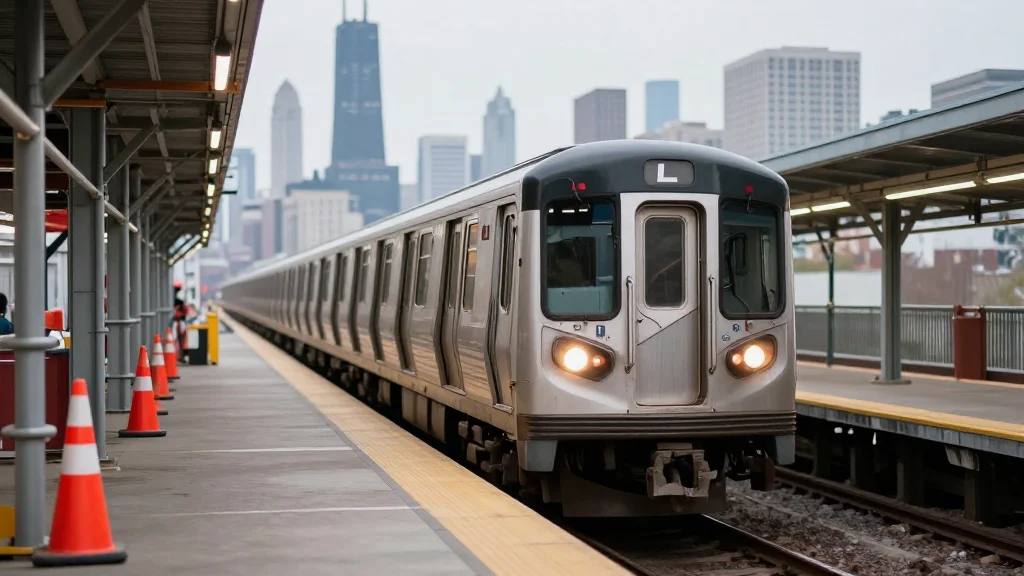
Chicago Breaks Ground on $5.7B Red Line Transit Extension
Why It Matters
The extension expands rapid‑rail access to Chicago’s Far South Side, driving economic development and easing congestion, while the restored federal financing signals renewed support for large‑scale transit infrastructure.
Key Takeaways
- •Extension adds 5.5 miles of rapid rail to Chicago’s Far South Side
- •Project creates over 12,500 construction jobs through 2027
- •Four new stations include bus, bike, pedestrian, and parking amenities
- •Walsh‑Vinci JV selected as design‑build contractor in 2024
Pulse Analysis
Chicago’s Red Line Extension marks a pivotal moment for the city’s transit network, finally delivering a project that has lingered for more than half a century. The 5.5‑mile stretch will connect the 95th Street terminal to the 130th Street corridor, filling a long‑standing gap in rapid‑rail service on the Far South Side. By employing a design‑build model, the Walsh‑Vinci partnership streamlines engineering and construction, reducing schedule risk—a critical advantage after years of political and funding setbacks.
Beyond the infrastructure itself, the extension promises a sizable economic boost. Over 12,500 construction jobs will be generated, supporting local labor markets and ancillary industries such as steel, concrete, and equipment supply. Once operational, the new stations—each equipped with bus connections, bike storage, pedestrian pathways, and parking—are expected to attract substantial ridership, easing road congestion and fostering transit‑oriented development around the 103rd, 111th, Michigan, and 130th Street sites. The accompanying rail yard near 120th Street will also enhance fleet maintenance capacity, improving service reliability across the system.
The project’s revival after a federal funding freeze underscores a broader shift in U.S. transportation policy. The court‑ordered reinstatement of more than $2 billion in federal aid not only rescues Chicago’s Red Line but also sets a precedent for other municipalities navigating political hurdles. As cities nationwide seek to modernize aging transit assets, Chicago’s reliance on a joint‑venture design‑build approach and its ability to secure federal dollars may serve as a blueprint for accelerating future rail expansions while aligning with sustainability and equity goals.
Chicago breaks ground on $5.7B Red Line transit extension
Comments
Want to join the conversation?
Loading comments...