China Deploys AI‑Driven Smart Hubs Across Shandong Ports to Accelerate Cargo Handling

Why It Matters
The introduction of AI‑driven smart hubs in Shandong ports signals a turning point for maritime logistics, where digital intelligence can replace manual processes that have limited throughput for decades. Faster cargo handling reduces vessel turnaround time, which in turn lowers freight rates and improves supply‑chain reliability for manufacturers and retailers worldwide. Beyond efficiency, the technology reshapes labor dynamics and raises regulatory considerations. As ports become more data‑centric, issues of workforce upskilling, data privacy and cross‑border cybersecurity will become central to policy debates. The success—or failure—of China’s pilot will likely influence investment decisions in port automation across the globe, accelerating a shift toward smarter, more resilient maritime infrastructure.
Key Takeaways
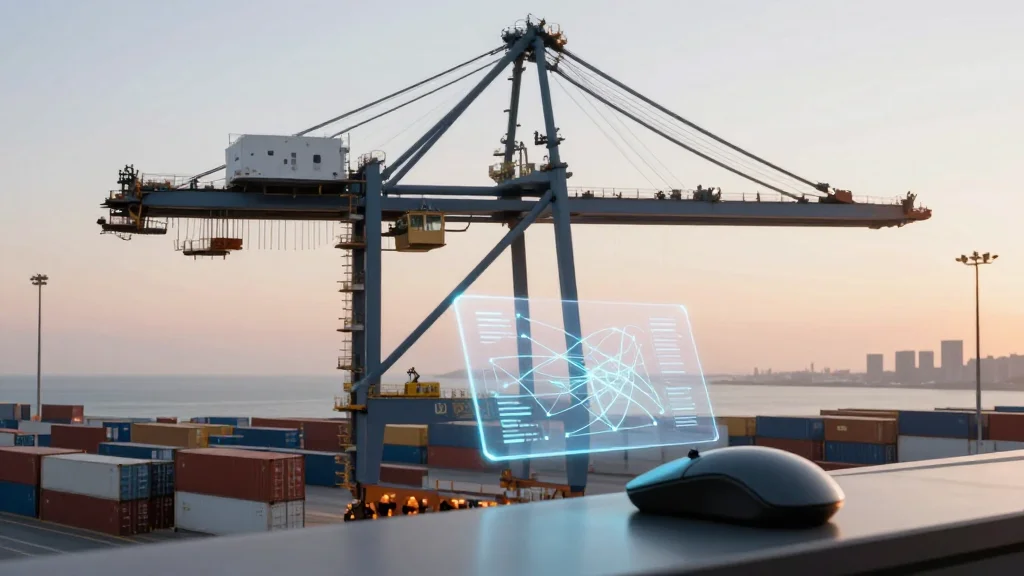
- •AI‑driven smart hubs installed at major Shandong ports
- •Operators now use mouse‑based consoles instead of manual crane controls
- •Early pilots report reduced crane idle time and smoother cargo flow
- •Technology integrates predictive analytics and real‑time sensor data
- •Rollout will be assessed over six months to guide national port modernization
Pulse Analysis
China’s smart hub deployment reflects a strategic convergence of AI and logistics that could redefine the economics of global trade. Historically, port efficiency has been constrained by human‑centric scheduling and legacy equipment. By embedding machine‑learning algorithms directly into the control layer, Chinese operators are effectively turning ports into adaptive, self‑optimizing ecosystems. This mirrors trends seen in other high‑volume logistics nodes, such as automated warehouses in the United States, but the scale and speed of maritime traffic amplify the impact.
From a competitive standpoint, the move gives Chinese ports a potential edge over rivals in Singapore, Rotterdam and Los Angeles, where automation projects have progressed more incrementally. If the Shandong pilots achieve measurable gains—such as a 10‑15% reduction in vessel dwell time—shipping lines may prioritize calls at Chinese terminals, reshaping routing patterns and influencing freight pricing. However, the technology also introduces new vulnerabilities; a cyber breach could disrupt an entire network of vessels, prompting regulators worldwide to tighten standards for maritime cyber‑resilience.
Looking forward, the smart hub model could serve as a template for integrated, AI‑enabled supply‑chain platforms that span inland rail, trucking and last‑mile delivery. As data flows seamlessly from ship to shore to road, stakeholders will need to navigate a complex web of standards, data‑ownership agreements and workforce transitions. The next six months will be a litmus test: strong performance could trigger a cascade of similar projects across China’s Belt and Road ports, while any shortcomings may temper the enthusiasm of global investors eyeing automation as a panacea for congestion and cost pressures.
China Deploys AI‑Driven Smart Hubs Across Shandong Ports to Accelerate Cargo Handling
Comments
Want to join the conversation?
Loading comments...