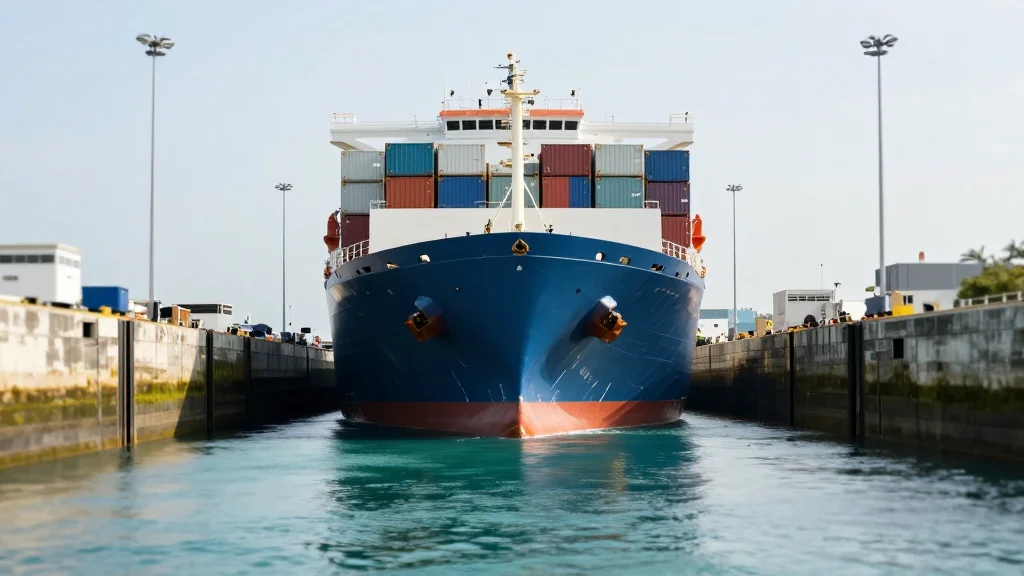
China Detains 91 Panama-Flagged Ships in March, Escalating Canal Dispute

Companies Mentioned
Why It Matters
The Panama Canal is a linchpin of global logistics, and any geopolitical friction that threatens its smooth operation can reverberate across supply chains, raising freight costs and prompting route diversions. A sustained increase in ship detentions could force carriers to seek alternative passages, lengthening transit times and eroding the canal’s cost advantage. Moreover, the episode underscores the broader contest for influence in Latin America, where China’s economic outreach challenges traditional U.S. dominance, potentially reshaping trade patterns for the region. If the diplomatic standoff deepens, investors may reassess exposure to shipping firms and port operators tied to the canal, while insurers could hike premiums for vessels transiting the area. The situation also tests the resilience of multilateral mechanisms that have historically kept the canal neutral, highlighting the need for clear rules governing state‑controlled inspections of foreign‑flagged vessels.
Key Takeaways
- •China detained 91 of 123 Panama‑flagged ships in March, up from 19 in February.
- •U.S. and five Latin American nations issued a joint statement condemning the detentions as political pressure.
- •Panama’s Supreme Court nullified CK Hutchison’s concession contracts for Balboa and Cristóbal terminals, citing irregularities.
- •China ordered COSCO to stop cargo for Balboa ports and urged MSC and Maersk to halt operations there.
- •The Panama Canal carries about 5% of global seaborne trade and 40% of U.S. container traffic.
Pulse Analysis
The rapid escalation of ship detentions signals a shift from a legal dispute over port concessions to a broader geopolitical contest over the Panama Canal’s strategic value. Historically, the canal has been insulated from great‑power rivalry through multilateral treaties and the principle of neutrality. However, China’s willingness to leverage state‑controlled inspections suggests a new playbook: using regulatory tools to exert pressure without overt military involvement.
For shippers, the immediate risk is operational uncertainty. Even a modest increase in inspection frequency can cause bottlenecks, prompting carriers to factor potential delays into routing decisions. In the longer term, persistent friction could erode confidence in the canal’s predictability, nudging some trade toward overland corridors like the Inter‑Oceanic Rail or even reviving interest in the Northern Sea Route as Arctic ice recedes. Such shifts would reshape freight cost structures and could benefit competitors to the canal, including ports in the Gulf of Mexico and the Caribbean.
From a policy perspective, the United States faces a delicate balancing act. While it seeks to counter Chinese influence, overt pressure on Panama could backfire by driving the nation closer to Beijing’s economic overtures. A coordinated diplomatic effort that reinforces the canal’s neutral status, perhaps through a renewed multilateral framework, may be the most effective way to defuse the standoff while preserving the waterway’s role as a global trade artery.
China Detains 91 Panama-Flagged Ships in March, Escalating Canal Dispute
Comments
Want to join the conversation?
Loading comments...