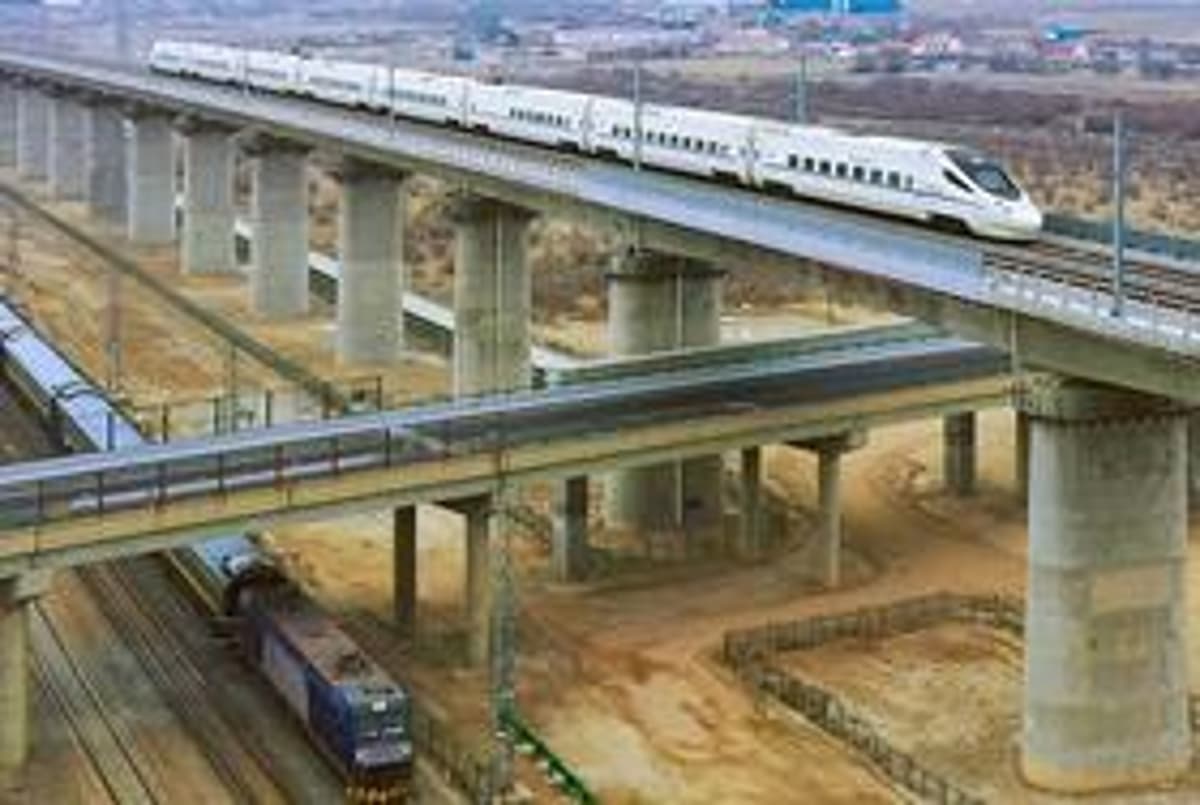
China: ‘Eight by Eight’ Network Nears Completion with Latest Wave of Openings
•March 7, 2026
0
Why It Matters
The enlarged high‑speed system deepens regional connectivity, accelerates economic growth, and reinforces China’s dominance in rail technology worldwide.
Key Takeaways
- •Over 50,000 km high‑speed rail operational in 2025
- •Additional 10,000 km slated for completion by 2030
- •“Eight‑by‑Eight” plan connects eight north‑south, eight east‑west corridors
- •New openings reduce travel times between major economic hubs
- •Strengthens China’s export of rail technology and standards
Pulse Analysis
The “Eight‑by‑Eight” high‑speed rail blueprint, first unveiled in 2016, envisions a grid of eight vertical and eight horizontal corridors linking China’s primary megacities. By 2025, more than 50,000 route‑kilometers are already serving passengers, a testament to the nation’s capacity to mobilize resources and labor at scale. Each new segment not only fills geographic gaps but also integrates with existing lines, creating seamless coast‑to‑coast journeys that were unimaginable a decade ago.
From an economic perspective, the network’s expansion shortens travel times dramatically, turning a six‑hour trip between Shanghai and Chengdu into roughly three hours. This compression of distance fuels business productivity, tourism, and labor mobility, especially in secondary cities that now sit on high‑speed corridors. Moreover, the infrastructure underpins regional development strategies, allowing inland provinces to tap into coastal markets more efficiently, thereby narrowing the growth disparity that has long characterized China’s economy.
Looking ahead, the planned 10,000 km addition under the next five‑year plan will cement China’s position as the world’s largest high‑speed rail operator and a leading exporter of rail technology. While challenges such as financing, land acquisition, and environmental stewardship persist, the government’s commitment to sustainable, electrified transport aligns with global decarbonisation goals. As neighboring countries seek to emulate the model, China’s standards and rolling stock are poised to become de‑facto benchmarks, shaping the future of high‑speed rail across Asia and beyond.
China: ‘Eight by eight’ network nears completion with latest wave of openings
0
Comments
Want to join the conversation?
Loading comments...