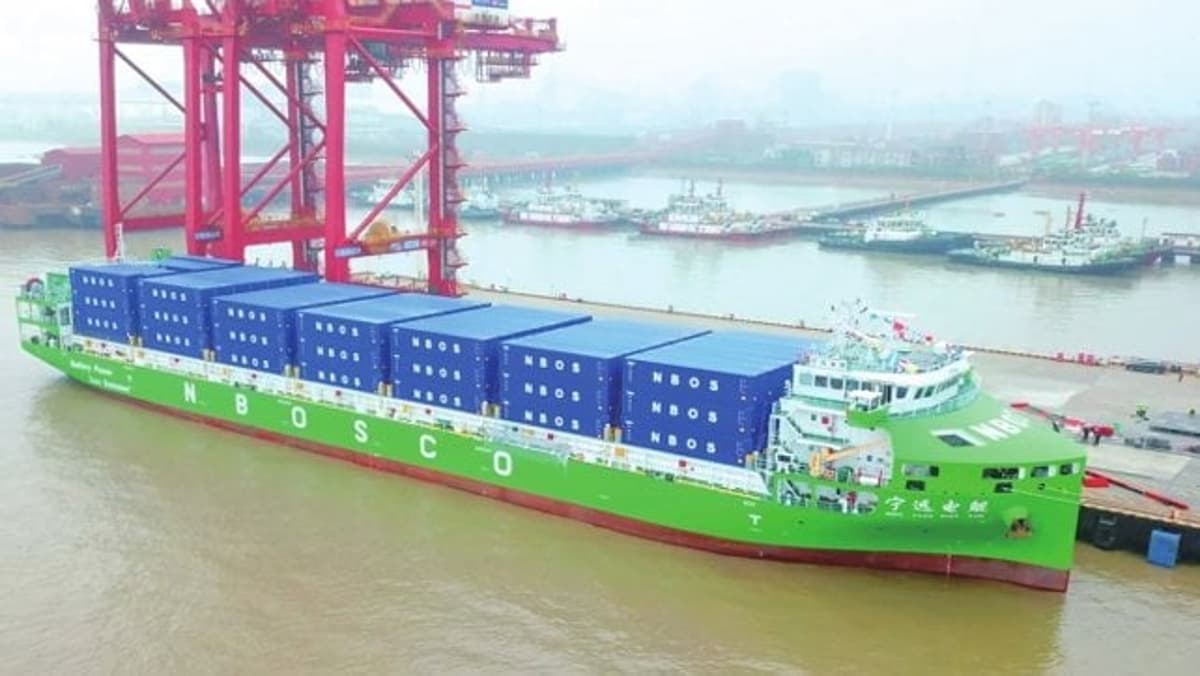
China Puts Fully-Electric, Intelligent Containership in Service
Why It Matters
The launch demonstrates China’s push toward decarbonizing short‑haul maritime logistics, offering a scalable model for zero‑emission coastal shipping. It signals a shift that could pressure global operators to adopt electric propulsion and autonomous tech to meet tightening environmental regulations.
Key Takeaways
- •Ning Yuan Dian Kun carries 740 TEU, fully electric propulsion.
- •Ten container-sized batteries deliver 19,600 kWh, cutting 1,462 t CO₂ annually.
- •Top speed 11.5 knots; bow design reduces wind resistance up to 20%.
- •Ships feature autonomous navigation and near‑silent electric motors.
- •Sister vessel Ning Yuan Dian Peng to launch June, expanding green fleet.
Pulse Analysis
The maritime sector accounts for roughly 3% of global greenhouse‑gas emissions, prompting regulators and shippers to explore zero‑emission alternatives. China, home to the world’s largest merchant fleet, has accelerated its green‑shipping agenda by investing in fully electric vessels for short‑haul routes. By deploying battery‑powered containerships on coastal feeder lanes, the country aims to showcase a viable pathway for reducing the carbon intensity of inland trade while complying with upcoming IMO targets.
The Ning Yuan Dian Kun embodies a blend of advanced battery technology and autonomous navigation. Ten container‑sized lithium‑ion packs supply 19,600 kWh, enough to power two 875 kW permanent‑magnet synchronous motors that propel the 128‑metre hull at 11.5 knots. A streamlined bow cuts wind resistance by up to 20%, and the electric drivetrain eliminates the bulk of diesel‑engine noise, delivering a quieter port environment. Autonomous navigation systems further enhance operational efficiency, allowing precise route planning and reduced crew workload.
Beyond the immediate environmental benefits—an estimated 1,462 tonnes of CO₂ saved annually—the project signals a broader industry shift. As China expands its green fleet, other global carriers may feel compelled to adopt similar electric and autonomous solutions to stay competitive and meet stricter emissions standards. The development of swappable batteries for Yangtze River vessels hints at a scalable ecosystem that could extend zero‑emission shipping to inland waterways, potentially reshaping supply‑chain logistics across Asia and beyond.
China Puts Fully-Electric, Intelligent Containership in Service
Comments
Want to join the conversation?
Loading comments...