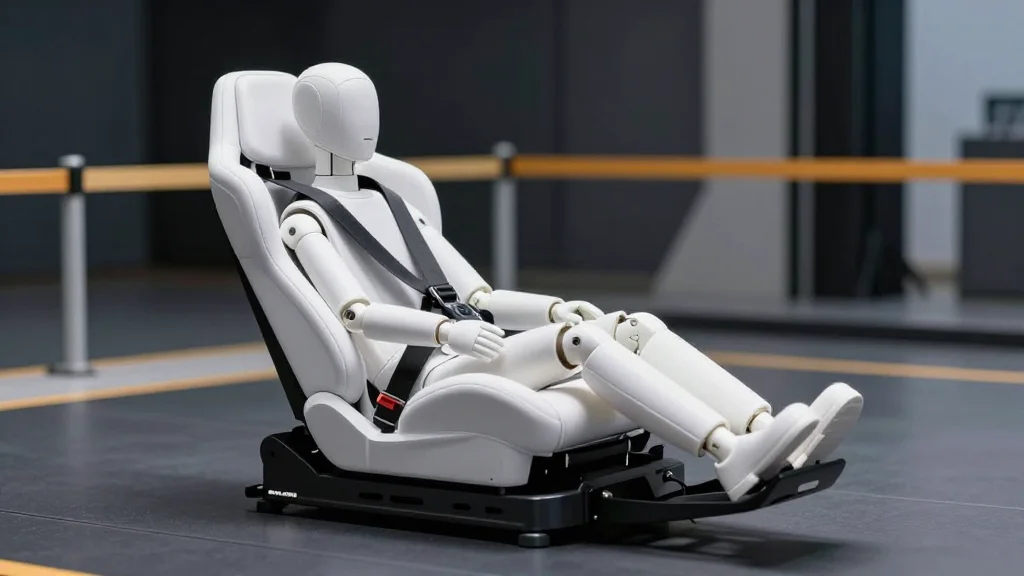
China Takes Aim at 'Zero-Gravity' Seats in EV Draft Safety Rules
Companies Mentioned
Why It Matters
The draft rules could force EV makers to redesign interiors, raising compliance costs and reshaping vehicle safety standards across China’s massive market. Global manufacturers will need to adapt quickly to avoid losing market share in the world’s largest EV market.
Key Takeaways
- •Zero‑gravity seats allow near‑horizontal recline, challenging crash‑test standards
- •Draft rules require safety validation for reclined positions by July 25
- •Regulators also target hidden door handles, battery recycling, and seat restraints
- •Xiaomi SU7 fatalities prompted stricter EV safety oversight in China
- •Public comments close July 25, influencing final regulations
Pulse Analysis
The rise of “zero‑gravity” seats reflects a broader shift toward lounge‑like interiors in electric vehicles, driven by the intelligent cockpit trend and consumer demand for comfort. While these seats enhance the in‑car experience, they also alter occupant kinematics during a collision, potentially reducing the effectiveness of airbags and seat belts. By flagging this risk, Chinese regulators are signaling that comfort cannot outweigh fundamental safety metrics, prompting manufacturers to invest in new crash‑test protocols and restraint systems that accommodate reclined postures.
China’s draft safety framework extends beyond seating, encompassing hidden door handles, battery recycling, and head‑rest standards. The ban on key‑fob‑activated door handles, slated for 2027, aims to eliminate delayed egress hazards, while the emphasis on dismantling and crushing power‑train batteries addresses environmental and fire‑risk concerns. Together, these measures illustrate a holistic approach to EV safety that balances technological innovation with public protection. Industry stakeholders are now navigating a tighter compliance landscape, where early engagement in the public comment period can shape final regulations and mitigate costly redesigns.
For global EV producers, China’s regulatory trajectory sets a de‑facto benchmark. Compliance with the new seat‑safety requirements could become a prerequisite for market entry, influencing design choices from the ground up. Companies that proactively integrate adaptable seat‑anchor systems and advanced occupant‑sensing technologies may gain a competitive edge, while laggards risk delayed launches or penalties. As other jurisdictions watch China’s approach, the ripple effect could standardize recline‑safe designs worldwide, reshaping the future of vehicle interiors.
China takes aim at 'zero-gravity' seats in EV draft safety rules
Comments
Want to join the conversation?
Loading comments...