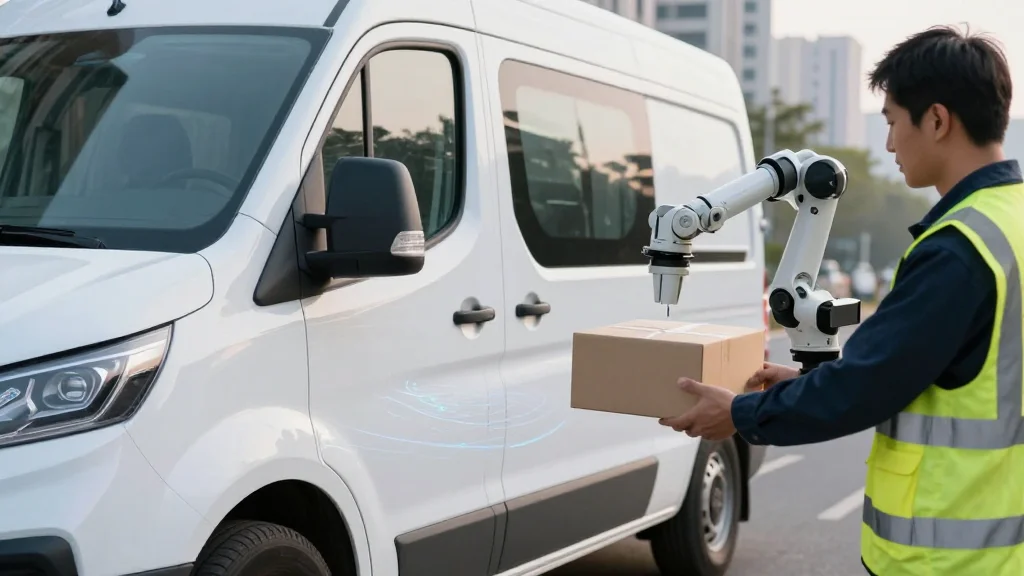
China Wants More Robots but Not Fewer Workers
Why It Matters
The approach balances efficiency gains from AI‑driven logistics with job security, crucial for China’s economic stability and global supply‑chain competitiveness.
Key Takeaways
- •China targets robot growth while protecting employment
- •Qingdao deployed ~1,200 autonomous delivery vans, aiming for 4,000
- •Autonomous taxis and food‑delivery pilots expand across major cities
- •Policy emphasizes retraining workers for robot‑assisted roles
- •AI‑driven logistics could boost productivity without mass layoffs
Pulse Analysis
China’s industrial strategy is increasingly anchored in artificial intelligence and robotics, but policymakers are careful to frame automation as a complement rather than a substitute for human labor. The government’s ‘human‑first’ narrative, echoed in recent white papers, stresses that robots should handle repetitive or hazardous tasks while workers transition to higher‑value roles such as robot supervision, maintenance, and data analysis. This approach aims to preserve social stability, mitigate unemployment risks, and sustain consumer demand, which together underpin the country’s long‑term economic growth plan.
Qingdao illustrates how the human‑first model is being tested at scale. In the past year the city’s streets have become a proving ground for more than 1,200 autonomous delivery vans operated by Neolix, with a target of 4,000 units before year‑end. Parallel pilots for driverless taxis and AI‑powered food‑delivery bots are rolling out across Shanghai and Shenzhen, creating a new class of ‘robot‑assisted’ jobs. Local authorities are partnering with vocational schools to certify technicians who monitor fleets, ensuring that the surge in machines translates into skilled employment rather than layoffs.
The rapid rollout of autonomous fleets signals a shift in China’s competitive edge for global supply chains. By automating last‑mile delivery, Chinese firms can cut logistics costs by an estimated 15‑20 %, while the human‑first policy cushions domestic consumption by preserving wages. International investors are watching closely, as the model could set a template for other emerging economies grappling with labor shortages and rising automation costs. However, the success of this strategy hinges on sustained investment in training programs and clear regulatory frameworks that balance innovation with worker protection.
China wants more robots but not fewer workers
Comments
Want to join the conversation?
Loading comments...