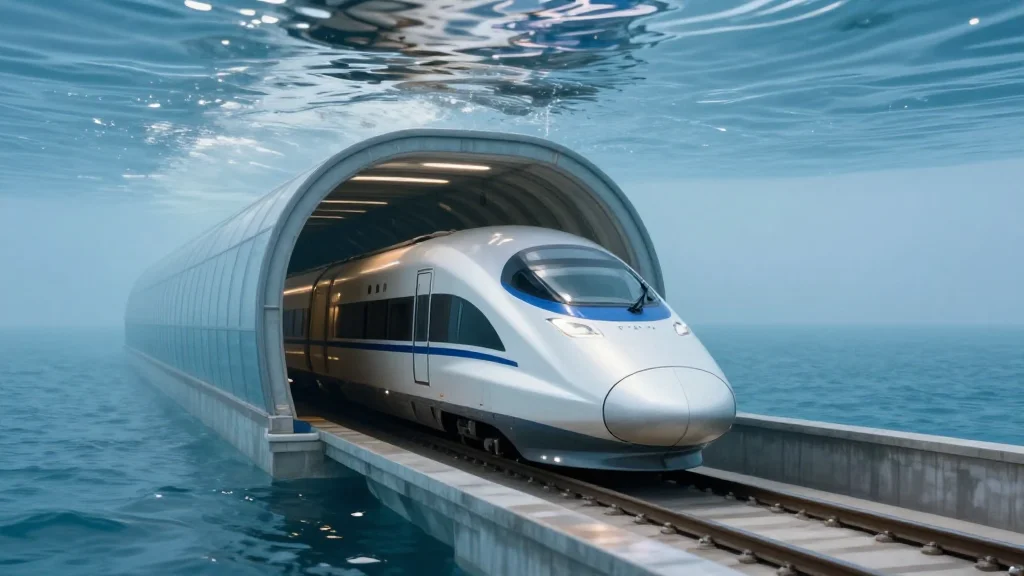
China Wants to Build a High-Speed Undersea Rail Tunnel
Why It Matters
The tunnel would dramatically cut passenger and freight transit between two key industrial hubs, boosting regional economic integration and positioning China at the forefront of mega‑infrastructure innovation.
Key Takeaways
- •Tunnel length 123‑125 km, 90 km underwater
- •Travel time cut from 6‑8 hrs to ~40 min
- •Estimated cost $28‑$42 bn, one of world's largest rail projects
- •Links Dalian and Yantai ports, boosting regional logistics efficiency
- •Targeted for 2035, but financing and technical hurdles remain
Pulse Analysis
China’s ambition to carve a 123‑kilometre undersea rail tunnel beneath the Bohai Strait reflects its relentless push to expand the world’s largest high‑speed rail network. By directly connecting Dalian in the northeast with Yantai on the eastern coast, the project promises a seamless corridor that could feed into existing lines stretching to Beijing, Shanghai and beyond. This strategic link would not only slash travel times for passengers but also create a high‑capacity freight artery, reshaping logistics patterns across two of China’s most productive industrial zones.
The engineering challenge is formidable. Building a tunnel that runs 90 km beneath a seismically active, high‑pressure marine environment rivals the scale of the Channel Tunnel and Japan’s Seikan Tunnel. Dual parallel tunnels with a central service conduit are being considered to meet safety standards, while the projected $28‑$42 billion price tag tests the limits of public financing and private partnership models. Cost overruns and technical setbacks could push the timeline beyond the optimistic 2035 target, echoing the delays seen in other megaprojects worldwide.
If realized, the Bohai Strait tunnel would deliver significant economic dividends. Faster passenger journeys would stimulate tourism and labor mobility, while freight operators could slash shipping times and costs, enhancing the competitiveness of the Bohai Economic Rim. The project also signals China’s intent to set new benchmarks in infrastructure scale and sophistication, potentially spurring similar undertakings in other regions seeking to bridge geographic barriers with high‑speed rail. Stakeholders will watch closely as feasibility studies progress, gauging whether the tunnel can transition from visionary concept to operational reality.
China wants to build a high-speed undersea rail tunnel
Comments
Want to join the conversation?
Loading comments...