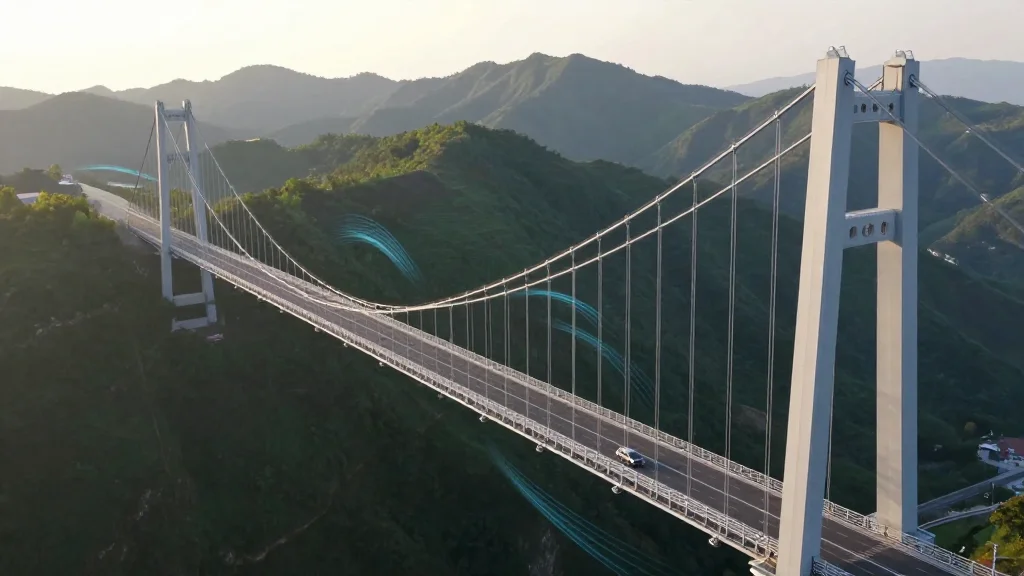
China's 625‑Meter‑High Huajiang Bridge Slashes Travel Time and Spurs Tourism in Guizhou

Why It Matters
The Huajiang Bridge demonstrates how strategic infrastructure can simultaneously address physical isolation and digital exclusion, two persistent challenges in China’s western hinterland. By cutting travel times dramatically, the bridge lowers logistics costs for local producers, making regional goods more competitive in national markets. The accompanying 5G rollout expands educational and health services, narrowing the urban‑rural gap in access to information. If the bridge’s economic and social benefits prove durable, it could reshape policy priorities, encouraging further high‑cost engineering feats that are paired with broadband deployment. The model offers a template for other countries grappling with mountainous terrain and underserved populations, highlighting the synergistic potential of transport and telecom investments.
Key Takeaways
- •World’s highest suspension bridge at 625 m (2,050 ft) opened Sep 2025
- •Travel time reduced from hours to minutes for remote Guizhou communities
- •Thousands of tourists visit monthly, spurring local businesses
- •5G network installed alongside the bridge, expanding high‑speed internet
- •Historic town Tianlong Tunpu sees increased visitors via social‑media promotion
Pulse Analysis
The Huajiang Grand Canyon Bridge is more than a marvel of civil engineering; it is a strategic lever in China’s broader push to integrate its western provinces into the national economy. Historically, the region’s rugged topography has limited market access, keeping per‑capita incomes well below coastal averages. By creating a direct, high‑capacity corridor, the bridge reduces freight costs and shortens supply chains, a factor that could attract manufacturing and logistics firms seeking lower land and labor costs.
Equally significant is the bridge’s role as a conduit for digital infrastructure. The simultaneous rollout of 5G reflects a policy shift toward convergent development—recognizing that physical connectivity alone is insufficient without digital access. For residents, this means new opportunities in e‑commerce, remote education, and telemedicine, potentially curbing rural‑to‑urban migration. However, the rapid tourism boom also raises sustainability questions. Overcrowding could strain local ecosystems and dilute cultural heritage, especially in sites like Tianlong Tunpu where traditional Dixi opera is a living art form.
Future policy will need to balance these competing pressures. Targeted investments in visitor management, environmental safeguards, and cultural preservation can ensure that the bridge’s benefits are inclusive and long‑lasting. As other provinces evaluate similar projects, the Huajiang bridge will serve as a benchmark for measuring the economic uplift versus social and ecological costs of mega‑infrastructure in remote settings.
China's 625‑Meter‑High Huajiang Bridge Slashes Travel Time and Spurs Tourism in Guizhou
Comments
Want to join the conversation?
Loading comments...