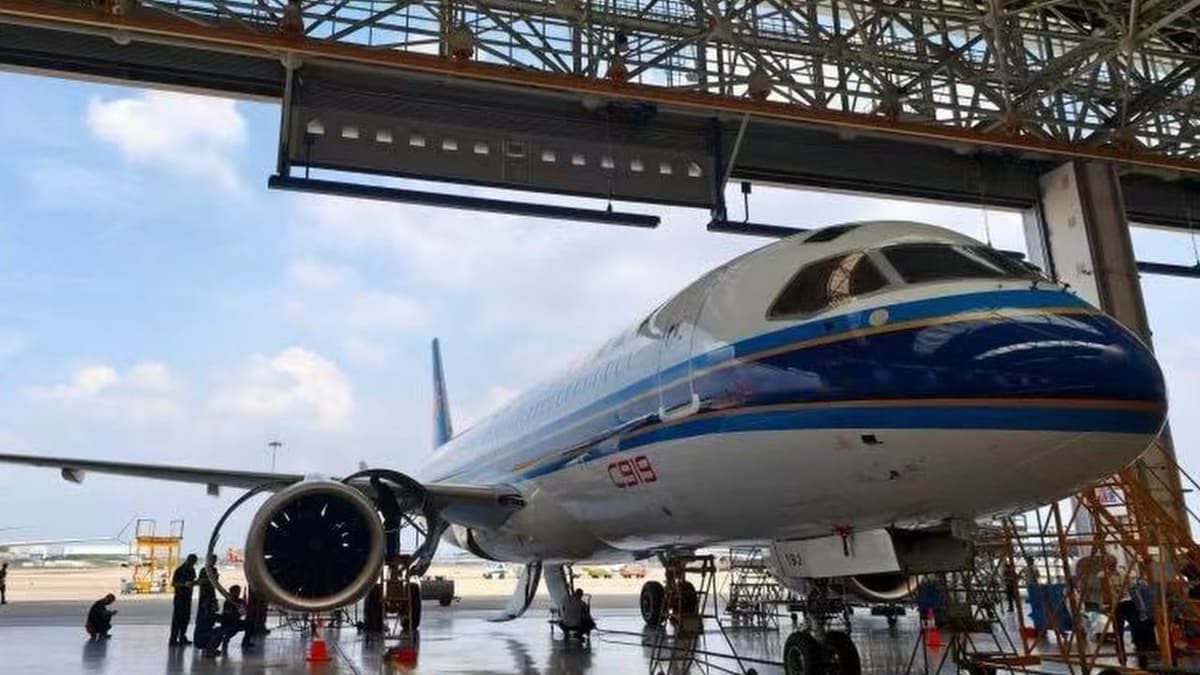
China’s First C919s Get Critical ‘C-Checks’ as European Regulators Watch
Companies Mentioned
Why It Matters
A clean C‑check will bolster confidence in the C919’s reliability, a prerequisite for EASA certification and access to the lucrative European narrow‑body market, potentially reshaping the global duopoly.
Key Takeaways
- •China Southern finished first C‑check, 6,000 man‑hours, three weeks
- •C‑checks occur every 18‑24 months or 4,000‑6,000 flight hours
- •Findings will be shared with EASA for European certification
- •Component wear may indicate build‑quality issues in early production
- •Over 5 million passengers flown since May 2023 across 23 cities
Pulse Analysis
The Commercial Aircraft Corporation of China (Comac) launched the C919 in 2023 as the nation’s answer to Boeing’s 737 and Airbus’s A320 families. With a capacity of 158‑168 seats and a range of roughly 4,000 kilometers, the jet is designed to serve domestic and regional routes while showcasing China’s growing industrial capability. Since its entry into service, the C919 has carried more than five million passengers across 23 Chinese cities, a milestone that demonstrates operational reliability but still leaves the aircraft seeking validation beyond its home market.
The first C‑check, a comprehensive inspection usually done every 18‑24 months or after 4,000‑6,000 cycles, started in early 2026 and finished for China Southern after three weeks and about 6,000 man‑hours. Technicians opened engines, avionics, hydraulics and landing gear to measure wear, corrosion and manufacturing tolerances. Because the C919 is still in its early production batch, the findings give rare insight into component durability and possible design tweaks. Any issues will be recorded and passed to the CAAC and, importantly, to EASA, which is reviewing the data for European certification.
Successful C‑check outcomes could speed the C919’s entry into Europe, a market that accounts for about 30 % of global narrow‑body demand. For Comac, European certification would diversify its customer base and demonstrate that Chinese aerospace engineering meets Western safety standards. Conversely, significant defects could delay the program, reinforcing the Boeing‑Airbus duopoly and keeping airlines cautious about the new type. In either case, the C‑check provides critical data that will influence the competitive dynamics of commercial aviation for years.
China’s first C919s get critical ‘C-checks’ as European regulators watch
Comments
Want to join the conversation?
Loading comments...