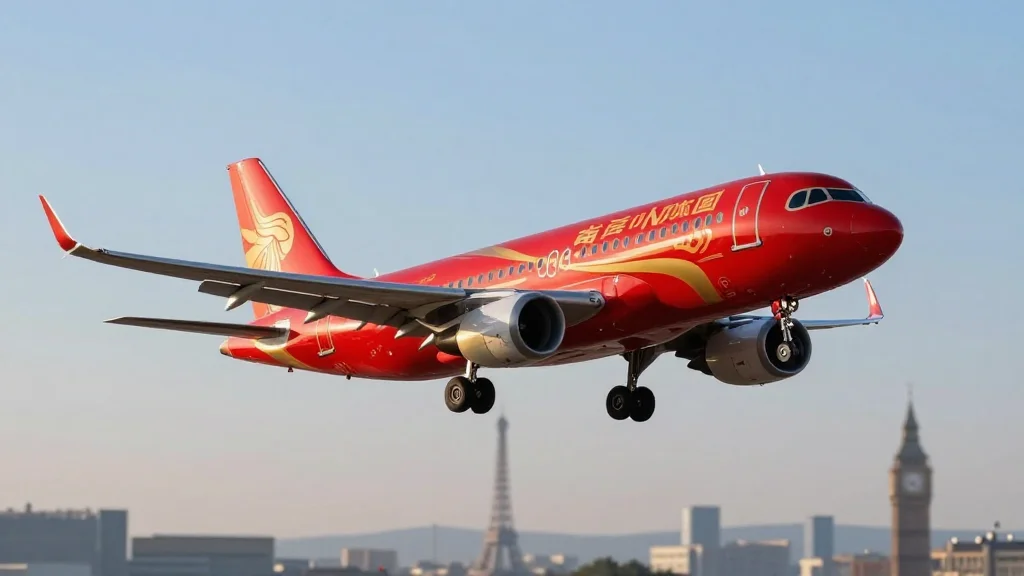
Chinese Airlines Add Thousands of Europe Flights, Shrugging Off Iran War
Why It Matters
The surge in Chinese capacity could reshape trans‑Euro traffic dynamics, pressuring yields and forcing legacy carriers to adjust pricing. It also underscores how geopolitical conflicts can reconfigure airline route economics.
Key Takeaways
- •Chinese carriers schedule 3,000+ additional Europe slots by Oct 2026.
- •Ability to overfly Russia shortens routes versus EU rivals.
- •Iran conflict raises jet fuel costs for Western airlines.
- •Expanded Chinese capacity pressures European airport slots and yields.
Pulse Analysis
The ongoing conflict between Iran and its regional adversaries has forced many Western airlines to reroute flights around contested airspace, extending flight times and inflating jet‑fuel consumption. Russia’s willingness to keep its skies open for Chinese carriers provides a rare shortcut across Eurasia, shaving off up to two hours on typical Europe‑Asia routes. This geopolitical advantage translates into lower operating costs and more attractive schedules for Chinese airlines, prompting them to aggressively expand their European footprint.
Chinese carriers, bolstered by a modernizing fleet that includes fuel‑efficient narrow‑bodies and long‑range wide‑bodies, are seizing the moment to capture demand from business travelers and tourists alike. By adding thousands of seats, they aim to tap into high‑yield markets such as London‑Heathrow, Paris‑Charles de Gaulle and Frankfurt, where slot scarcity has long constrained growth. The added capacity also aligns with China’s broader “Belt and Road” tourism push, encouraging outbound travel and facilitating cargo links that benefit both economies.
For European airports and legacy carriers, the influx of Chinese flights presents both a challenge and an opportunity. Increased competition may compress yields, forcing airlines to revisit pricing strategies and enhance service differentiation. Meanwhile, airports could benefit from higher passenger volumes and ancillary revenue, provided they can accommodate the surge without compromising operational efficiency. The situation illustrates how geopolitical shifts can rapidly alter the competitive landscape of international aviation, reshaping route economics for years to come.
Chinese airlines add thousands of Europe flights, shrugging off Iran war
Comments
Want to join the conversation?
Loading comments...