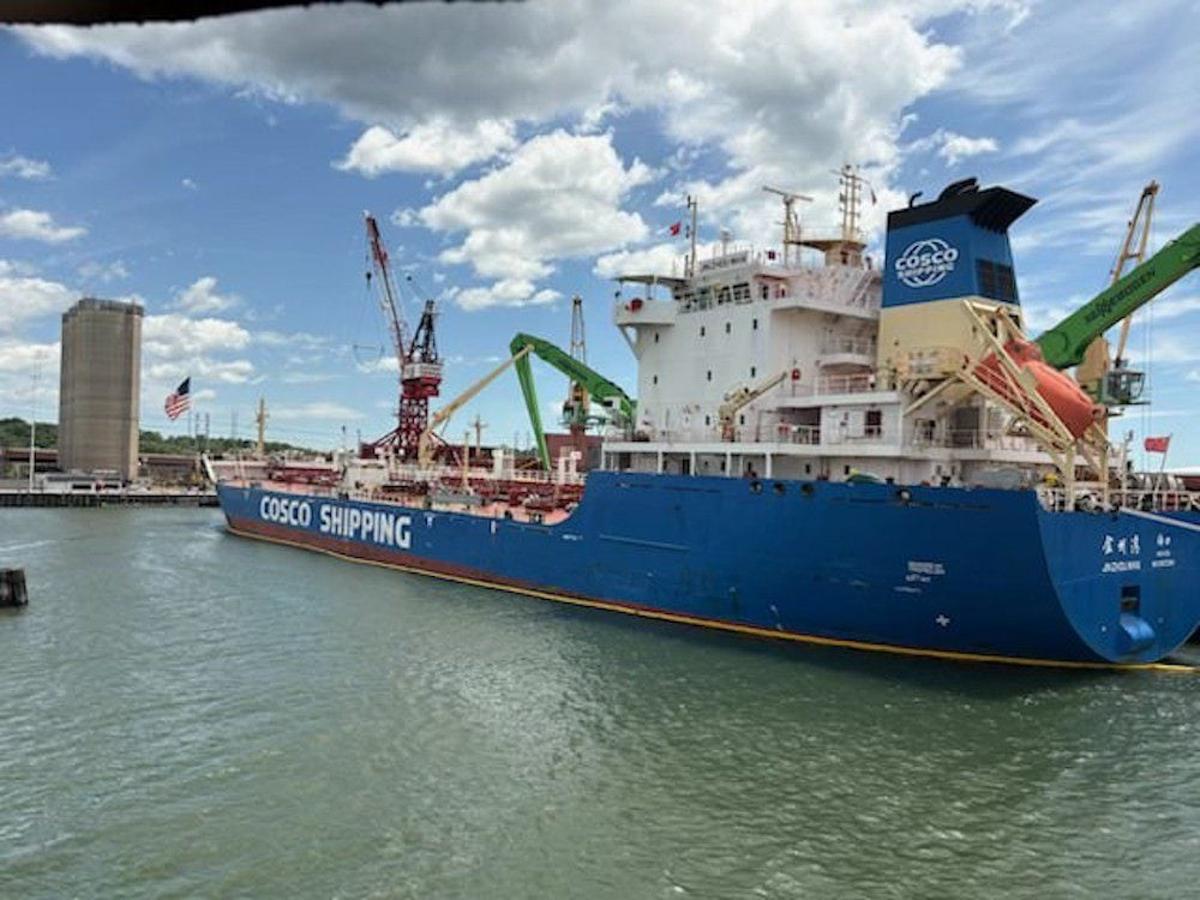
Chinese COSCO Tanker Delivers Asphalt to Connecticut Under Jones Act Waiver
Why It Matters
The case spotlights how emergency Jones Act waivers can sideline U.S. shipping jobs and raise questions about what qualifies as a national‑security need, influencing future policy and industry competition.
Key Takeaways
- •COSCO's Jin Zhou Wan delivered asphalt from New Orleans to New Haven.
- •Shipment used 501(a) Jones Act waiver granted for national security.
- •AMP argues waiver harms U.S. mariners and offers little consumer benefit.
- •Over 60 foreign-flagged voyages have occurred under the waiver since March.
- •Debate centers on whether asphalt transport qualifies as a security necessity.
Pulse Analysis
The Jones Act, a cornerstone of U.S. maritime policy, requires domestic cargo to move on American‑built, owned, flagged, and crewed vessels. In 2020, the Trump administration invoked a 150‑day emergency waiver, citing disruptions from the Middle East conflict, to allow foreign‑flagged tankers to fill perceived supply gaps. While the waiver was intended as a short‑term fix, it has been extended and broadened, prompting scrutiny from industry groups and lawmakers who fear it erodes the protective intent of the legislation.
The recent arrival of COSCO’s Jin Zhou Wan in New Haven illustrates the waiver’s practical reach. The 13,265‑dwt asphalt tanker, owned by a subsidiary of state‑owned China COSCO Shipping, completed a week‑long trip from Louisiana under the national‑security exemption. Critics, led by the American Maritime Partnership, argue that moving asphalt—a non‑essential construction material—does not meet the stringent criteria for national defense, and that the exemption merely enables foreign operators to capture U.S. market share at the expense of American crews and shipyards.
Beyond the immediate controversy, the episode signals a broader policy crossroads. If the administration continues to justify waivers on loosely defined security grounds, foreign competition could become a permanent fixture in domestic energy logistics, reshaping pricing dynamics and labor markets. Conversely, tightening the waiver framework could reinforce the Jones Act’s protective goals but risk supply disruptions during future crises. Stakeholders are watching closely as Congress weighs legislation that could either codify stricter limits or formalize the emergency provisions, making this case a bellwether for the future of U.S. maritime sovereignty.
Chinese COSCO Tanker Delivers Asphalt to Connecticut Under Jones Act Waiver
Comments
Want to join the conversation?
Loading comments...