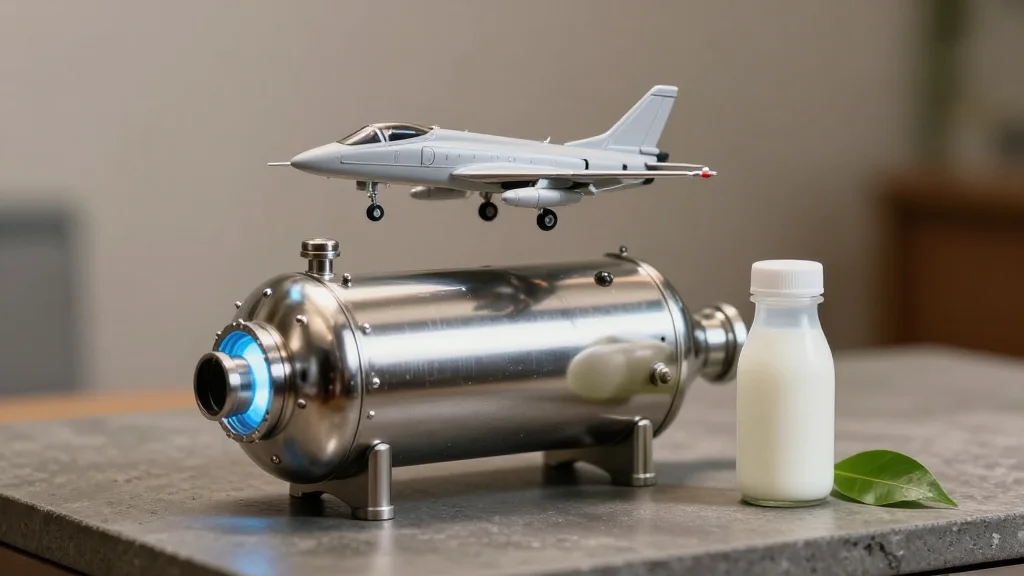
Circularity Cuts Cost Of Making Sustainable Aviation Fuel From Bio-Methane
Why It Matters
By turning on‑farm methane into low‑cost, carbon‑negative jet fuel, Circularity creates a new revenue stream for dairy producers while addressing the aviation industry's urgent need for affordable sustainable fuel.
Key Takeaways
- •Circularity converts raw dairy biogas to jet fuel in six‑month pilot
- •Modular reactors cost 20% of comparable European SAF facilities
- •Fuel achieves –350.7 gCO₂e/MJ, net carbon‑negative per lifecycle model
- •Jet fuel can be blended up to 50% with conventional Jet A
- •First commercial site slated for 2027, targeting U.S., Latin America, Europe
Pulse Analysis
The aviation sector faces mounting pressure to decarbonize, yet sustainable aviation fuel (SAF) remains a niche product because of high production costs and limited feedstock. Circularity Fuels’ pilot demonstrates that waste biogas from dairy manure digesters—a largely untapped methane source—can be upgraded directly into drop‑in jet fuel that meets ASTM D7566 Annex A1 standards. By operating on raw biogas (65% methane, 35% CO₂) without extensive pre‑purification, the Ouro reactor sidesteps a major economic barrier that has slowed other SAF pathways, such as used‑cooking‑oil or power‑to‑liquid processes.
Cost competitiveness is the linchpin for SAF adoption, and Circularity claims its modular, skid‑mounted reactors can be built for roughly one‑fifth of the capital expense of European equivalents. This reduction, combined with a lifecycle carbon intensity of –350.7 gCO₂e/MJ—effectively a net removal of about 100 pounds of CO₂e per gallon—positions the fuel to compete with conventional Jet A on price while delivering a clear environmental benefit. The ability to blend up to 50% with existing jet fuel further eases integration for airlines, offering a pragmatic bridge toward broader decarbonization without requiring immediate fleet redesign.
Looking ahead, the company’s $8 million seed backing and upcoming 2027 commercial rollout signal growing investor confidence in waste‑derived SAF. However, broader adoption will hinge on policy incentives, the scalability of biogas infrastructure, and addressing concerns that increased digesters may shift pollution rather than eliminate it. If these challenges are managed, dairy‑based SAF could become a replicable model for other agricultural sectors, expanding the domestic supply chain and reducing reliance on imported feedstocks, thereby strengthening energy security while moving the industry closer to its net‑zero ambitions.
Circularity Cuts Cost Of Making Sustainable Aviation Fuel From Bio-Methane
Comments
Want to join the conversation?
Loading comments...