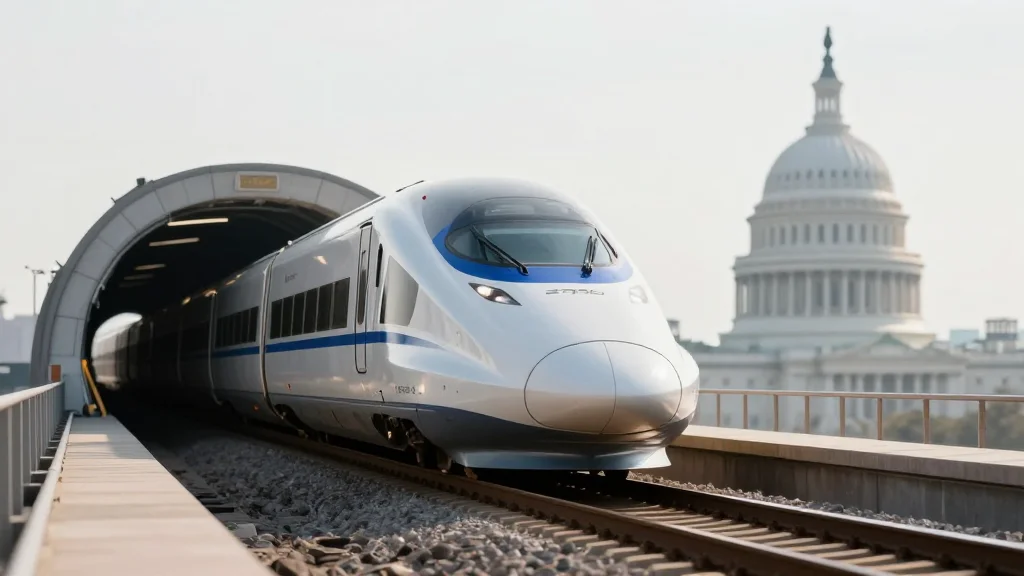
Civic Leaders Outline 8 Surface Transportation Priorities
Companies Mentioned
Why It Matters
The proposals could steer billions of federal dollars toward urban infrastructure, directly influencing economic competitiveness and mobility in America’s largest metros.
Key Takeaways
- •Coalition of nine city business groups proposes eight transportation priorities.
- •Priorities cover multimodal funding, faster permitting, rail upgrades, congestion solutions.
- •Pushes federal grants to attract private capital for transit‑oriented development.
- •Supports major projects like Hudson Tunnel, Washington Union Station expansion.
- •Calls for investment in urban freight networks and aviation hubs.
Pulse Analysis
Congressional reauthorization of surface‑transportation funding is at a pivotal juncture, with the 2021 Infrastructure Investment and Jobs Act delivering roughly $1.2 trillion in projects that have reshaped urban mobility. Metropolitan leaders, through the Civic Leadership Alliance, are leveraging that momentum to argue that predictable, long‑term investment is essential for sustaining economic growth in dense corridors. Their outreach underscores how cities have become testing grounds for innovative financing and public‑private partnerships that can be scaled nationally.
The alliance’s eight‑point agenda blends traditional infrastructure with forward‑looking solutions. By advocating for multimodal funding, the group seeks to balance road and bridge repairs with rail fleet upgrades, citing flagship projects like the Hudson Tunnel, Washington Union Station, and Caltrain’s downtown extension. Streamlining permitting processes aims to cut costly delays, while new congestion‑mitigation tools—such as high‑occupancy vehicle lanes and dynamic tolling—target chronic traffic bottlenecks. A strong emphasis on transit‑oriented development and private‑investment leverage reflects a shift toward market‑driven growth, using federal grants to unlock additional capital for mixed‑use, walkable neighborhoods.
If Congress embraces these priorities, federal allocations could channel an additional $150 billion over the next decade into urban freight corridors, aviation hubs, and multimodal hubs, bolstering supply‑chain resilience and regional competitiveness. However, the proposals also face political headwinds, as budgetary constraints and partisan debates over the scale of federal involvement persist. For city leaders, the outcome will determine whether they can continue to modernize aging infrastructure, attract private investment, and maintain the mobility standards needed for 21st‑century economic vitality.
Civic leaders outline 8 surface transportation priorities
Comments
Want to join the conversation?
Loading comments...