Clearing the Strait: How Autonomous Systems Are Redefining Mine Countermeasure Operations
Why It Matters
The autonomous capability shortens clearance timelines, directly lowering insurance costs and preventing costly route diversions, while protecting naval personnel. Its adoption signals a shift toward AI‑driven maritime security, reshaping how nations safeguard critical trade arteries.
Key Takeaways
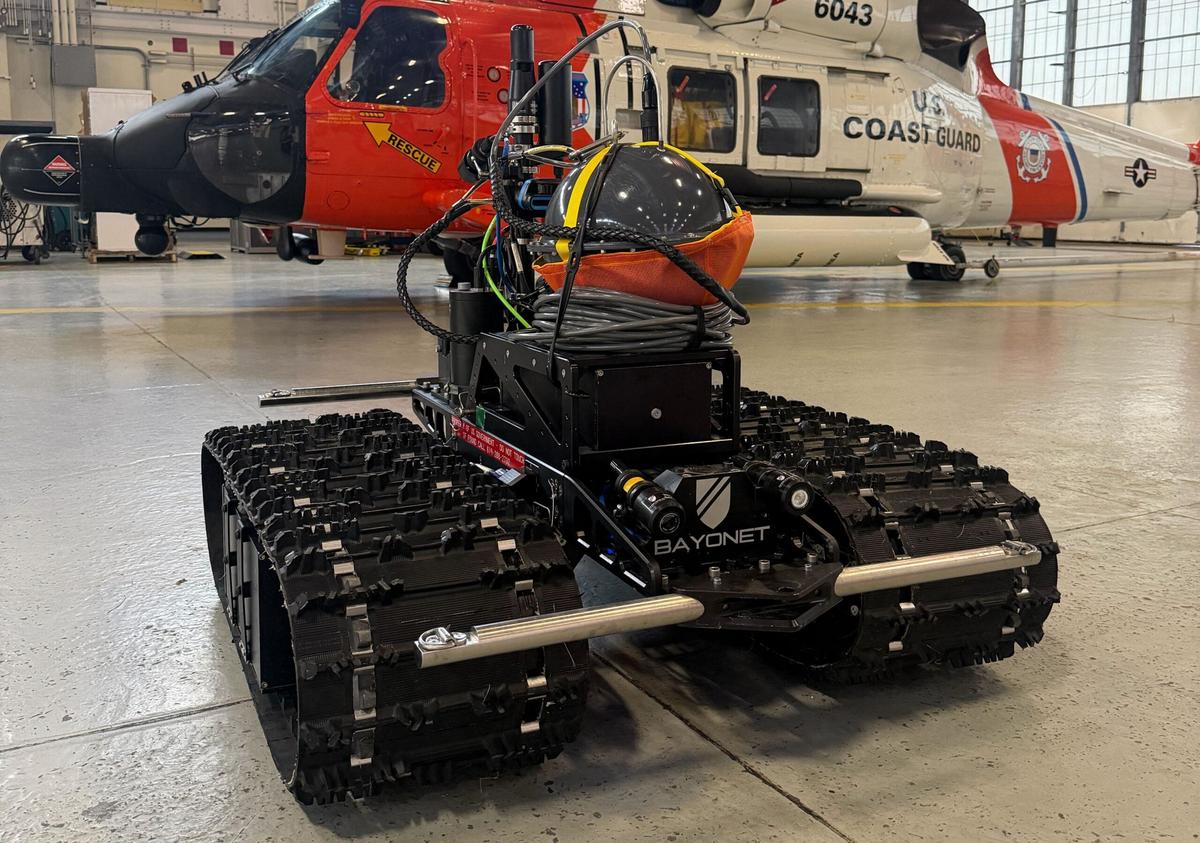
- •Bayonet AUGV is only commercial robot for shore-to-seafloor mine clearance.
- •Autonomous surveys cut detection time, lowering insurance premiums and shipping delays.
- •Machine‑learning sonar analysis identifies buried mines faster than diver inspections.
- •Open‑architecture software integrates sensors, enabling real‑time seabed mapping for navies.
Pulse Analysis
The strategic importance of the Strait of Hormuz cannot be overstated; even a handful of hidden mines can trigger insurance spikes, reroute cargo, and jeopardize global supply chains. Traditional mine‑countermeasure tactics rely on human divers, whose operational windows are limited by depth, decompression schedules, and hazardous conditions. As commercial traffic intensifies and adversaries deploy more sophisticated, low‑observable mines, the maritime industry faces mounting pressure to adopt faster, safer detection methods.
Enter Greensea IQ’s Bayonet Underwater Ground Vehicle, a purpose‑built autonomous system that bridges the gap between shore‑based launch platforms and deep‑sea clearance. Equipped with high‑frequency sonar and machine‑learning algorithms, Bayonet continuously scans the seabed, distinguishing man‑made objects from natural clutter. Its open‑architecture software unifies sensor feeds, generating real‑time, high‑resolution maps that can be compared across missions. This data‑centric approach not only shortens survey cycles but also creates a reusable intelligence repository for naval planners.
The broader implications extend beyond the Hormuz corridor. By reducing reliance on divers, autonomous mine‑countermeasure platforms lower personnel risk and operational costs, translating into cheaper insurance premiums and more predictable shipping schedules. As navies worldwide modernize their littoral warfare capabilities, demand for scalable, AI‑enhanced robotics is set to rise, positioning companies like Greensea IQ at the forefront of a new era in maritime security. The shift promises to safeguard critical trade arteries while delivering measurable economic benefits to the global logistics ecosystem.
Clearing the Strait: How Autonomous Systems Are Redefining Mine Countermeasure Operations
Comments
Want to join the conversation?
Loading comments...