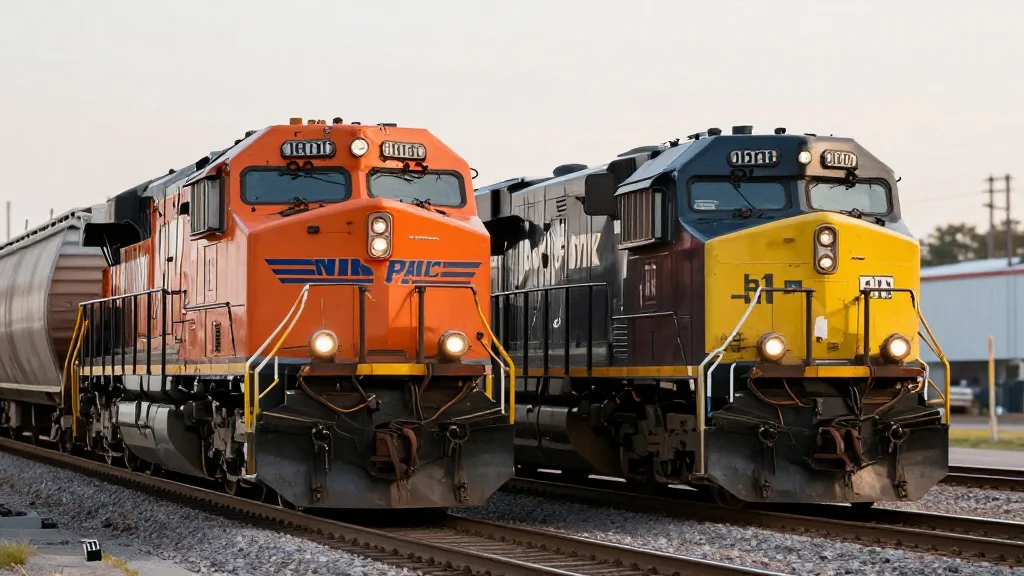
CN, CPKC Argue Amended UP-NS Merger Filing Remains Incomplete
Why It Matters
The dispute highlights regulatory hurdles that could stall the creation of the nation’s first transcontinental railroad, affecting competition, shippers, and the broader logistics market. A delayed or blocked merger would preserve the current competitive landscape and limit potential supply‑chain risks.
Key Takeaways
- •CN and CPKC claim UP-NS application still missing key data
- •STB requires full market-share analysis and complete merger agreement
- •Proposed Gateway Pricing Program covers less than 1% of U.S. rail traffic
- •UP argues merger will cut transit times by up to 30 hours
- •Analysts now see roughly 50-50 chance of approval
Pulse Analysis
The Surface Transportation Board, the federal agency that vets major rail consolidations, has set a clear compliance roadmap for Union Pacific and Norfolk Southern. After deeming the December filing incomplete, the STB demanded a full system impact analysis, detailed market‑share projections, and the complete merger contract. CN and CPKC’s recent comments argue that the amended filing only fixes the contract issue while ignoring competitive‑enhancement requirements, notably the limited Gateway Pricing Program that applies to a tiny slice of freight traffic. Their critique underscores the board’s insistence on transparent, data‑driven assessments before approving any mega‑merger.
Competition concerns sit at the heart of the debate. A combined UP‑NS entity would control nearly half of U.S. freight rail capacity, raising red flags about market power, pricing flexibility, and service reliability. Critics point out that the proposed pricing program is temporary and excludes major commodities such as finished vehicles and intermodal shipments, offering little real‑world relief for shippers. Proponents, however, argue that single‑line service could shave 24‑30 hours off transit times, reduce handling risks, and unlock $2 billion in capital investments for infrastructure and IT integration. The tension between promised efficiency gains and potential monopoly power will shape the STB’s final decision.
Beyond regulatory compliance, the merger’s fate carries broader economic and political implications. A successful consolidation could reshape national supply chains, potentially diverting truck traffic to rail and influencing logistics costs for manufacturers and retailers. Conversely, a blockage would preserve the status quo, maintaining multiple Class I carriers and safeguarding competitive pricing. Analysts now peg the approval odds at roughly 50‑50, noting that the upcoming midterm elections could intensify scrutiny. Stakeholders—from shippers to investors—are watching closely, as the outcome will signal how aggressively the U.S. will permit consolidation in critical infrastructure sectors.
CN, CPKC argue amended UP-NS merger filing remains incomplete
Comments
Want to join the conversation?
Loading comments...