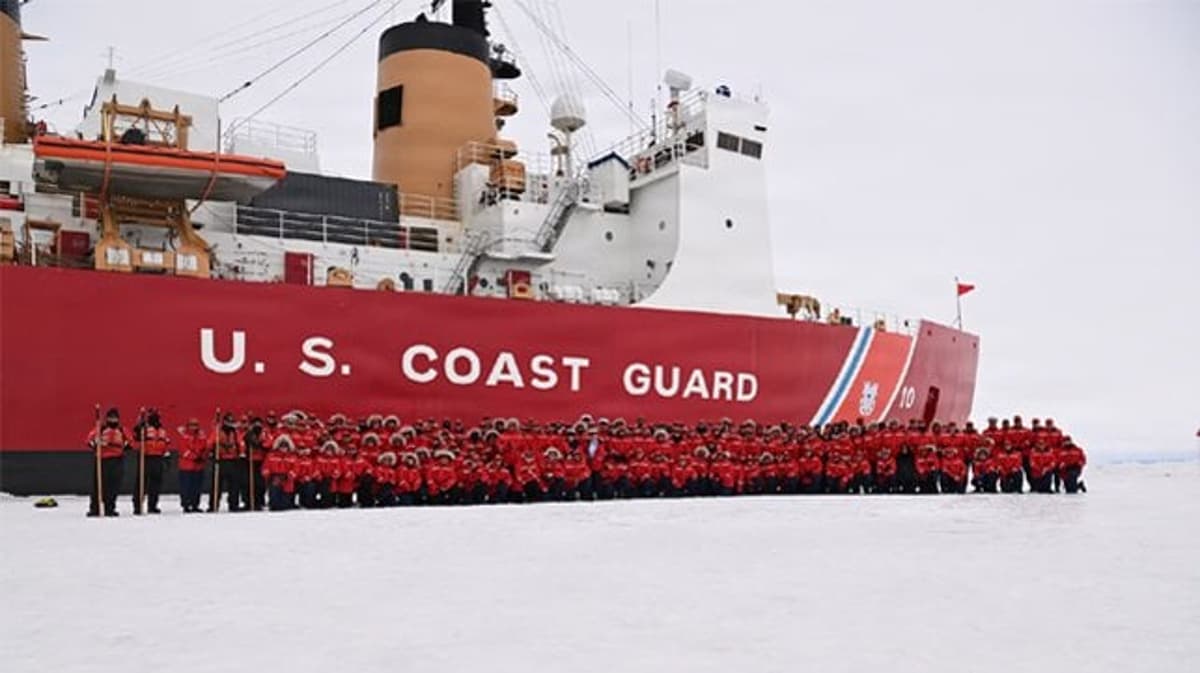
Coast Guard’s Heavy Icebreaker Returns From Antarctica, Marking 50 Years
Why It Matters
Polar Star’s unique capabilities keep the United States’ only heavy icebreaker operational, safeguarding critical Antarctic resupply, scientific research, and maritime security. Its continued service highlights the urgency of modernizing the ice‑breaking fleet to meet growing strategic and commercial demands.
Key Takeaways
- •Polar Star completed 146‑day Antarctic deployment, traveling >20,000 nautical miles.
- •Established 7‑mile channel through 8‑ft thick ice for McMurdo resupply.
- •Only U.S. heavy icebreaker, will remain active until at least 2030.
- •Assisted a cruise ship in heavy ice and supported CCAMLR fisheries monitoring.
- •Underwent extensive renewal; new icebreakers scheduled for delivery in 2030.
Pulse Analysis
The U.S. Coast Guard’s heavy icebreaker Polar Star has just completed a 146‑day, 20,000‑nautical‑mile deployment to Antarctica, marking half a century of service. During the mission the cutter carved a seven‑mile channel through ice up to eight feet thick, enabling a fuel tanker and container vessel to reach McMurdo Station as part of Operation Deep Freeze. In addition to resupply duties, Polar Star escorted a tug delivering the 330‑foot NSF Discovery Pier and responded to a cruise ship trapped in dense ice, underscoring its versatile ice‑handling capabilities.
Polar Star remains the nation’s sole active heavy icebreaker, a status that makes its continued operation critical for U.S. strategic interests in the Southern Ocean. An extensive phased renewal program has kept the 1976‑era hull seaworthy, but the cutter is slated to serve only until at least 2030, when the first of a new class of icebreakers is expected to enter service. The aging fleet highlights a broader challenge: maintaining year‑round access to Antarctica for scientific research, national defense, and emerging commercial routes in a warming climate.
The cutter’s recent support for the Commission for the Conservation of Antarctic Marine Living Resources illustrates how icebreakers contribute to environmental governance, providing real‑time sighting reports of fishing vessels in the Ross Sea. As tourism and commercial shipping increase around the continent, reliable ice‑breaking assets become essential for safety and regulatory compliance. The upcoming replacement vessels will need to match Polar Star’s multi‑mission profile—resupply, search and rescue, and ecological monitoring—ensuring the United States retains a credible presence in one of the world’s most remote frontiers.
Coast Guard’s Heavy Icebreaker Returns from Antarctica, Marking 50 Years
Comments
Want to join the conversation?
Loading comments...