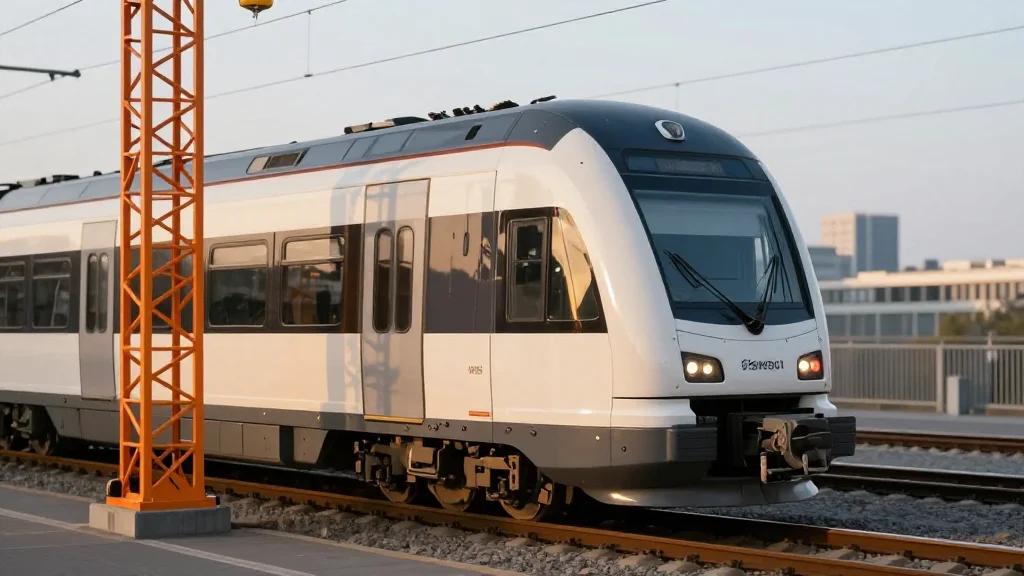
Cologne S-Bahn Expansion Agreed
Why It Matters
The investment strengthens Cologne’s commuter rail capacity, supporting growing passenger demand and regional economic integration. It also showcases coordinated state‑federal financing for large‑scale rail infrastructure in Germany.
Key Takeaways
- •NRW funds €305m ($332m) of Cologne S‑Bahn rebuild.
- •Federal grant covers remaining €531m ($579m) of €836m ($912m) project.
- •Two new tracks added at Cologne main station and Messe/Deutz.
- •215‑meter viaduct platforms built above Breslauer Platz entrance.
- •New Kalk West station expands service to multiple S‑Bahn lines.
Pulse Analysis
Germany’s renewed focus on rail modernization is embodied in the Cologne S‑Bahn expansion, a flagship component of the national public‑transport investment programme. By allocating €531 million in federal grant money alongside state contributions, the project underscores a collaborative financing model that aims to revitalize aging commuter corridors while meeting EU sustainability targets. The infusion of capital reflects broader policy goals to shift travel from road to rail, reduce emissions, and enhance cross‑regional connectivity across the densely populated Rhine‑Rhine area.
The technical scope of the S11 upgrade is ambitious. Adding two parallel tracks at Cologne Hauptbahnhof and the Messe/Deutz hub will separate S‑Bahn services from long‑distance traffic, eliminating bottlenecks that have limited frequency. The 215‑meter viaduct platforms, constructed above the historic Breslauer Platz entrance, will accommodate longer trains and improve passenger flow. Track doubling on the 4.1‑km Cologne‑Dellbrück to Bergisch Gladbach stretch, coupled with a new Kalk West station, expands service coverage and creates operational flexibility for multiple S‑Bahn lines, directly addressing rising commuter volumes.
Beyond the immediate operational gains, the expansion is poised to stimulate the regional economy. Faster, more reliable rail links attract businesses, support labor mobility, and boost tourism in Cologne’s Messe district. The project also sets a precedent for future infrastructure initiatives, demonstrating how state and federal entities can jointly fund complex rail upgrades. As German cities continue to grapple with urban congestion, the Cologne S‑Bahn model offers a scalable blueprint for integrating high‑capacity commuter rail into broader mobility strategies.
Cologne S-Bahn expansion agreed
Comments
Want to join the conversation?
Loading comments...