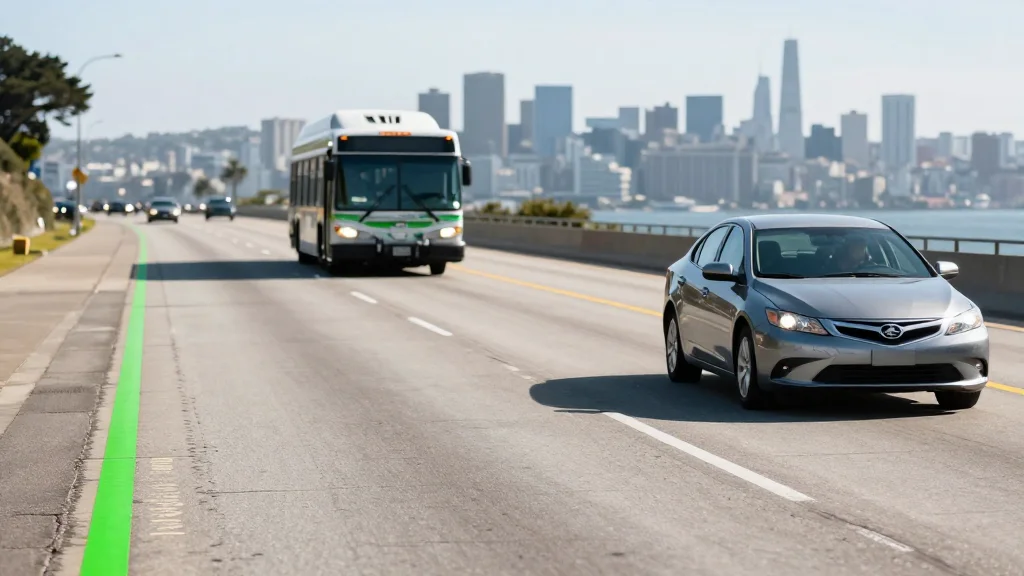
Construction Starts on Westbound I‑580 HOV Lane in Oakland, Aiming to Cut Bay Bridge Commutes

Why It Matters
The I‑580 HOV lane represents one of the few large‑scale, infrastructure‑driven attempts to curb congestion on a critical commuter route into San Francisco. By reallocating a general‑traffic lane to high‑occupancy vehicles, the project tests whether policy can shift driver behavior in a region where traffic delays cost billions annually. If successful, the lane could serve as a template for similar conversions on other congested corridors, reinforcing the Bay Bridge Forward initiative’s broader goal of integrating car‑pooling and transit into the region’s mobility mix. Conversely, if ridership remains low, the effort may underscore the limits of lane‑reallocation strategies and push planners toward alternative solutions such as dynamic pricing or expanded public‑transit capacity. Beyond immediate traffic impacts, the project highlights the tension between short‑term construction inconvenience and long‑term congestion relief. Night‑time lane closures will temporarily exacerbate delays, testing commuters’ patience and willingness to endure short‑term pain for potential future gains. The outcome will inform how agencies balance disruptive construction schedules with the urgency of addressing chronic congestion in a rapidly growing metropolitan area.
Key Takeaways
- •Construction started April 20 on a 2.3‑mile HOV conversion of westbound I‑580 in Oakland.
- •Lane will be open to buses and 3‑plus‑occupant vehicles weekdays 5‑10 a.m. and 3‑7 p.m., with EVs also required to meet occupancy rules.
- •Project is part of the Bay Bridge Forward initiative aimed at reducing Bay Bridge congestion.
- •MTC expects the HOV lane to open in October, with data collection beginning shortly after.
- •Community reaction is mixed; some commuters doubt the lane will change driving habits.
Pulse Analysis
The I‑580 HOV lane is a classic case of supply‑side traffic engineering meeting demand‑side behavioral economics. Historically, HOV lanes have delivered mixed results: in some corridors they have attracted enough carpools to improve overall flow, while in others they have sat underutilized, effectively removing capacity from solo drivers without delivering commensurate benefits. The Bay Area’s dense employment clusters and high car‑ownership rates make it a fertile testing ground, but also raise the bar for success. Goodwin’s acknowledgment that data will be "inconsistent" suggests the MTC is bracing for a nuanced outcome rather than a binary success/failure verdict.
From a market perspective, the lane could boost the attractiveness of bus operators and emerging mobility‑as‑a‑service platforms that can guarantee three‑person rides. If the lane delivers measurable time savings, it may justify higher fare structures for premium bus services or incentivize ride‑share companies to offer pooled rides during peak windows. Conversely, a lack of uptake could reinforce arguments for congestion pricing, a tool already under discussion for the Bay Bridge itself. The construction’s night‑time schedule also reflects a growing trend of minimizing daytime disruption, a practice that could become standard for future infrastructure upgrades.
Looking ahead, the real test will be the post‑opening data. Should the lane achieve a sustained occupancy rate above 70 % during peak periods, it could become a cornerstone of the Bay Bridge Forward strategy, encouraging further HOV conversions on other freeways. If not, policymakers may pivot toward more aggressive demand‑management tools, such as variable tolls or expanded high‑frequency bus lanes. Either scenario will shape the Bay Area’s transportation roadmap for the next decade, making the I‑580 HOV lane a bellwether for regional congestion mitigation efforts.
Construction Starts on Westbound I‑580 HOV Lane in Oakland, Aiming to Cut Bay Bridge Commutes
Comments
Want to join the conversation?
Loading comments...