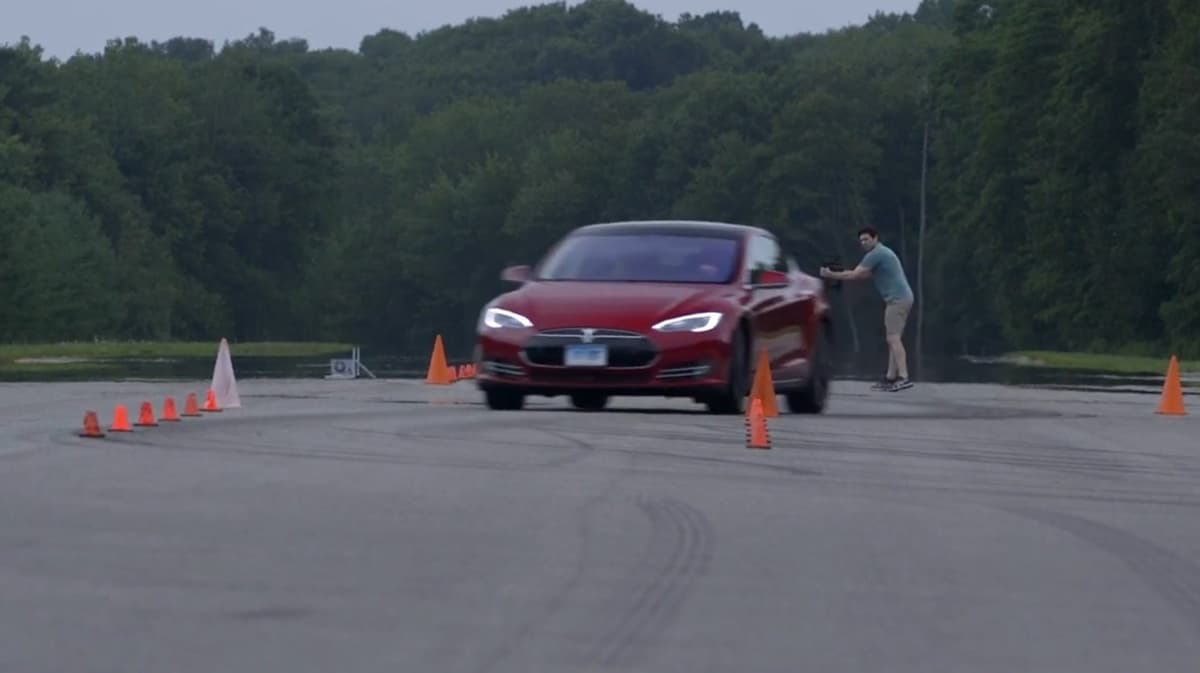
Consumer Reports' Emergency Handling Tests Look Super Fun

Companies Mentioned
Why It Matters
The tests provide independent, empirical safety metrics that directly influence consumer purchasing choices and push automakers to improve vehicle dynamics under emergency conditions.
Key Takeaways
- •Consumer Reports tests ~50 new vehicles annually at 327‑acre Connecticut center
- •Emergency handling includes slalom, 3,500‑ft course, 60 mph braking
- •Boxster stopped in 108 ft, 3 ft ahead of BMW Z4
- •Tests generate data on obstacle avoidance, road‑holding, and tire performance
- •Results influence consumer buying decisions and automaker safety engineering
Pulse Analysis
Consumer Reports’ emergency‑handling program is more than a spectacle; it’s a cornerstone of independent vehicle safety validation. By allocating a sprawling 327‑acre campus to simulate real‑world crises—sharp swerves, high‑speed stops, and low‑traction braking—the nonprofit captures performance data that regulators and manufacturers rarely publish. This granular insight fills a market gap, offering consumers a clear, comparative view of how new models behave when the unexpected occurs, from compact sedans to high‑performance sports cars.
The testing methodology blends controlled repeatability with extreme conditions. Drivers navigate a slalom of cones at escalating speeds, then tackle a 3,500‑foot handling circuit that stresses suspension geometry and steering precision. Braking trials push vehicles to 60 mph before demanding full stops on dry, wet, and even ice‑treated surfaces. Such rigor yields quantifiable metrics—stopping distances, lateral g‑forces, and obstacle‑avoidance speeds—that translate into the Consumer Reports safety scores featured in every annual vehicle guide.
For the automotive industry, these results act as both a badge of honor and a catalyst for improvement. A Porsche 718 Boxster’s 108‑foot 60‑to‑0 stop, for instance, not only outperformed a BMW Z4 but also set a benchmark that rivals must chase. Automakers monitor the rankings closely, adjusting chassis tuning, brake calibrations, and tire selections to climb the safety ladder. Meanwhile, shoppers use the data to align purchase decisions with personal risk tolerance, reinforcing the market’s shift toward evidence‑based safety evaluation.
Consumer Reports' Emergency Handling Tests Look Super Fun
Comments
Want to join the conversation?
Loading comments...