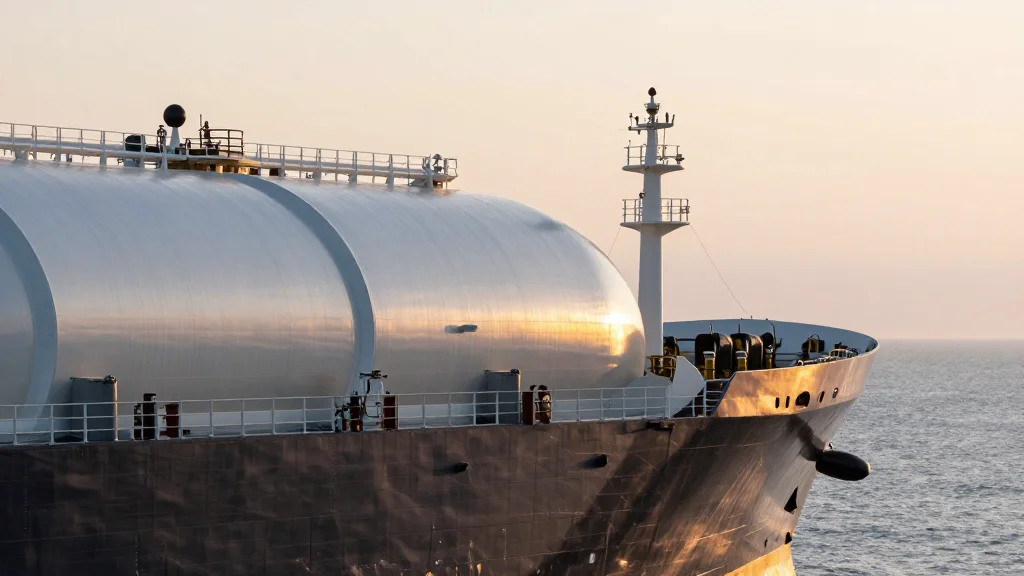
COSCO Inks $953m LNG Carrier Order
Companies Mentioned

Why It Matters
The contract deepens COSCO’s foothold in the rapidly expanding LNG transport market and secures steady, high‑value cargoes with Shell, while bolstering Chinese shipbuilding capacity in a competitive global arena.
Key Takeaways
- •COSCO orders four 175,000‑cu m LNG carriers for $953 m
- •Deliveries slated for 2029‑2030, targeting long‑term Shell charters
- •Expands COSCO’s gas fleet beyond its 150‑plus crude tankers
- •Reinforces Jiangnan Shipyard’s role in the global LNG carrier boom
- •Highlights charter‑back model driving new LNG ship orders
Pulse Analysis
The global demand for liquefied natural gas (LNG) is accelerating as utilities and industrial users seek cleaner‑burning fuels, prompting shipping companies to expand their gas‑carrier portfolios. COSCO Shipping Energy, traditionally known for its massive crude‑oil tanker fleet, is diversifying by adding four state‑of‑the‑art 175,000‑cubic‑meter LNG carriers. This move not only aligns with the company’s long‑term growth strategy but also positions it to capture a larger share of the lucrative LNG transportation market, which analysts project to grow at a compound annual rate of roughly 6% through the next decade.
A key feature of the new vessels is their likely charter‑back arrangement with energy major Shell. Charter‑back contracts, where ship owners secure financing by pre‑selling the vessel’s operating rights, have become a popular financing tool in the LNG sector. For COSCO, the partnership guarantees a steady revenue stream and mitigates market volatility, while Shell gains access to dedicated, modern carriers without the capital outlay of ownership. This symbiotic model reflects a broader industry shift toward long‑term, off‑take agreements that stabilize fleet utilization and support the financing of increasingly sophisticated, high‑efficiency LNG ships.
Jiangnan Shipyard’s role in the deal highlights China’s rising prominence in the LNG carrier market. Having secured at least ten LNG carrier orders this year, Jiangnan is emerging as a competitive alternative to traditional European and Korean yards. The shipyard’s ability to deliver large, technologically advanced carriers at competitive pricing strengthens China’s shipbuilding export portfolio and contributes to the global supply of vessels needed to meet expanding LNG trade flows. As more energy majors lock in capacity through charter‑back deals, shipyards like Jiangnan are poised to benefit from sustained order pipelines, reinforcing the strategic importance of the Chinese maritime manufacturing sector.
COSCO inks $953m LNG carrier order
Comments
Want to join the conversation?
Loading comments...