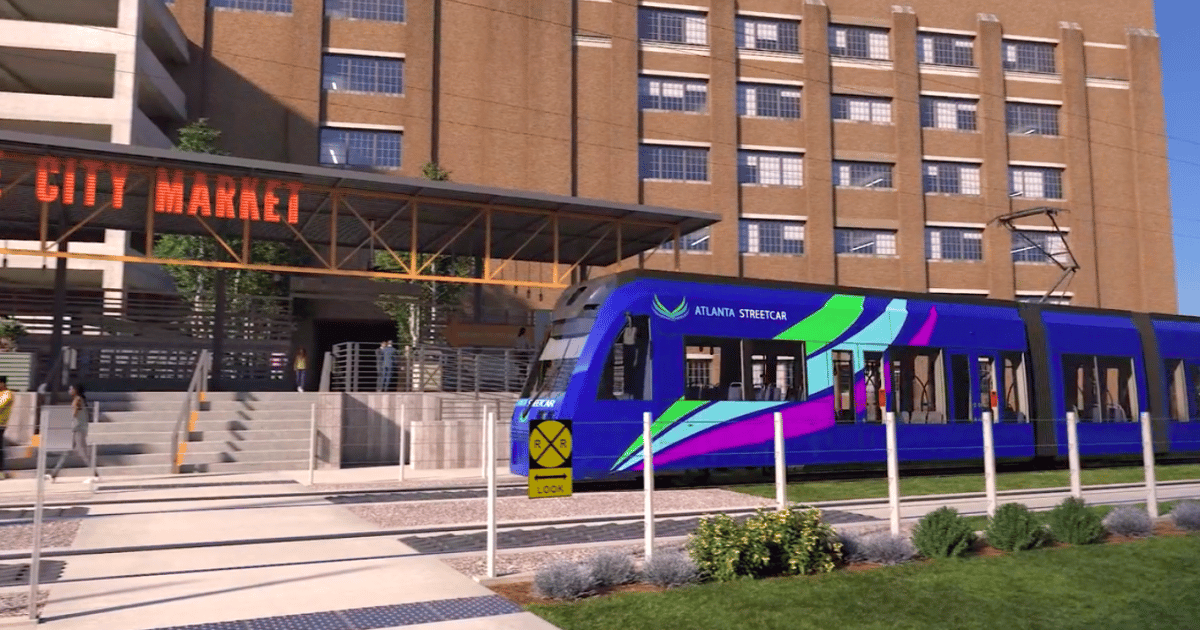
Cox Head Honcho Blasts Beltline Rail as ‘Pollutive, Antiquated’ Concept
Companies Mentioned
Why It Matters
The proposal pits a multi‑billion‑dollar rail investment against a lower‑cost EV network, forcing policymakers to weigh long‑term infrastructure commitments against rapid, electrified mobility trends. The outcome will shape Atlanta’s urban development, environmental goals, and transit equity for decades.
Key Takeaways
- •Cox CEO Alex Taylor opposes Beltline rail, calls it pollutive
- •Taylor proposes $300M autonomous EV network versus $3B rail cost
- •ARC forecasts 21,200 daily boardings on Beltline transit by 2050
- •Advocates claim fixed rail improves safety and creates park‑like corridors
- •Debate reflects broader shift to electrified, on‑demand urban mobility
Pulse Analysis
Atlanta’s Beltline, a 22‑mile loop of trails, parks and mixed‑use development, has become a symbol of the city’s renaissance. Since its inception 27 years ago, the project has attracted billions in private and public capital, and recent plans to add a light‑rail line along the Eastside Trail have ignited fierce debate. Proponents argue that a fixed‑rail system would lock in safe, high‑capacity transit while preserving the Beltline’s park‑like character, echoing the original vision of founder Ryan Gravel. Yet the project’s cost—estimated at over $3 billion in concrete and steel—has raised concerns about fiscal prudence and environmental impact.
In a sharply worded op‑ed, Alex Taylor, chairman and CEO of Cox Enterprises, dismissed the rail concept as “pollutive, antiquated,” proposing instead a $300 million autonomous electric‑vehicle (EV) network. Taylor’s calculations suggest buying 1,000 EVs and installing charging stations could deliver a 90 percent cost saving while cutting carbon emissions threefold per passenger. He cites Jacksonville’s $65 million autonomous‑vehicle pilot as a proof point, positioning the EV model as the future of urban mobility. By framing the Beltline rail as a relic of outdated transit thinking, Taylor is urging Atlanta’s leaders to prioritize flexible, electrified solutions that align with emerging mobility trends.
The controversy underscores a broader shift in U.S. cities toward on‑demand, electrified transport options that promise lower upfront costs and rapid scalability. If Atlanta adopts Taylor’s EV proposal, it could set a precedent for other municipalities grappling with legacy rail projects and climate goals. Conversely, embracing rail could lock in a high‑capacity corridor that supports dense, transit‑oriented development for decades. Stakeholders must balance immediate fiscal realities with long‑term land‑use planning, equity considerations, and the city’s ambition to remain a national model for sustainable urban redevelopment.
Cox head honcho blasts Beltline rail as ‘pollutive, antiquated’ concept
Comments
Want to join the conversation?
Loading comments...