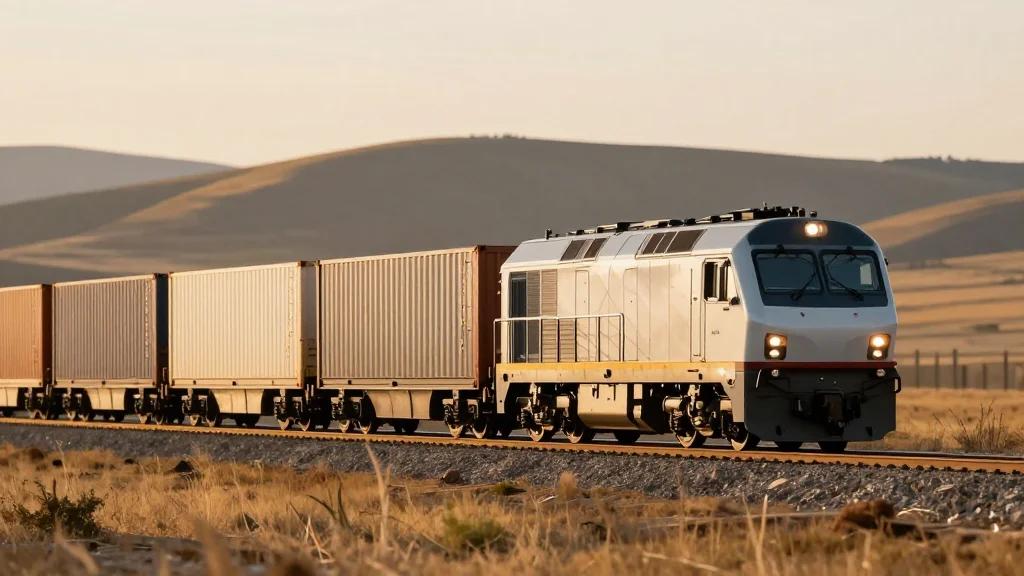
CPKC and CSX Launch Faster Southeast Mexico Express, Cutting Transit up to 2.5 Days

Companies Mentioned
Why It Matters
The SMX upgrade strengthens North American rail connectivity at a time when supply‑chain resilience is paramount. By delivering truck‑competitive transit times, the service gives shippers a viable alternative to road freight, potentially easing congestion on interstate highways and reducing greenhouse‑gas emissions. The partnership also signals deeper integration between two of the continent’s largest Class I railroads, setting a benchmark for cross‑border rail collaboration. If the SMX can consistently attract the projected truck‑to‑rail conversions, it could reshape freight flows across the Southeast, prompting other carriers to accelerate their own intermodal investments. The resulting competitive pressure may drive further infrastructure spending, faster service standards, and ultimately lower logistics costs for manufacturers and retailers that rely on timely cross‑border deliveries.
Key Takeaways
- •SMX service launched May 4, 2026 with two‑day Atlanta‑Dallas runs
- •Transit times improved 20‑45%, cutting Atlanta‑Dallas by ~1 day and Atlanta‑central Mexico by ~2.5 days
- •New origins added in Charlotte, Jacksonville and Central Florida
- •Each train can replace up to 300 semi‑trucks, reducing emissions
- •CPKC expects most truck‑to‑rail conversion to occur on the upgraded SMX
Pulse Analysis
The SMX upgrade arrives at a crossroads where railroads are racing to reclaim market share lost to trucking during the pandemic‑induced supply‑chain shock. Historically, intermodal growth has been driven by cost advantages; however, the SMX flips the script by targeting speed, a traditional trucking stronghold. By shaving days off cross‑border trips, CPKC and CSX are positioning rail as a direct competitor for time‑critical freight, a segment that has largely remained truck‑dominant.
The partnership leverages complementary networks: CPKC’s north‑south reach from Canada through the Midwest to the Gulf, and CSX’s dense Southeast footprint. Their joint investment in the former Meridian & Bigbee line creates a seamless Class I‑to‑Class I interchange near Myrtlewood, Alabama, eliminating bottlenecks that previously forced shippers onto longer, multi‑hand-off routes. This operational synergy not only improves reliability but also lowers handling costs, a compelling value proposition for manufacturers with just‑in‑time inventory models.
Looking ahead, the SMX’s success will hinge on its ability to attract sustained volume. Early signs of truck‑to‑rail conversion, as noted by CPKC’s John Brooks, suggest that higher fuel prices and tighter trucking capacity are creating a favorable environment. Yet, the service must prove its consistency during peak seasons and weather disruptions. If CPKC and CSX can maintain on‑time performance while scaling train frequency, the SMX could become the template for future cross‑border corridors, prompting rivals like Union Pacific and Canadian National to double‑down on their own speed‑focused initiatives. In the broader context, the upgrade underscores a strategic shift: railroads are no longer content with being the low‑cost, slower alternative—they are now courting the speed‑sensitive segment, reshaping the logistics hierarchy across North America.
CPKC and CSX launch faster Southeast Mexico Express, cutting transit up to 2.5 days
Comments
Want to join the conversation?
Loading comments...