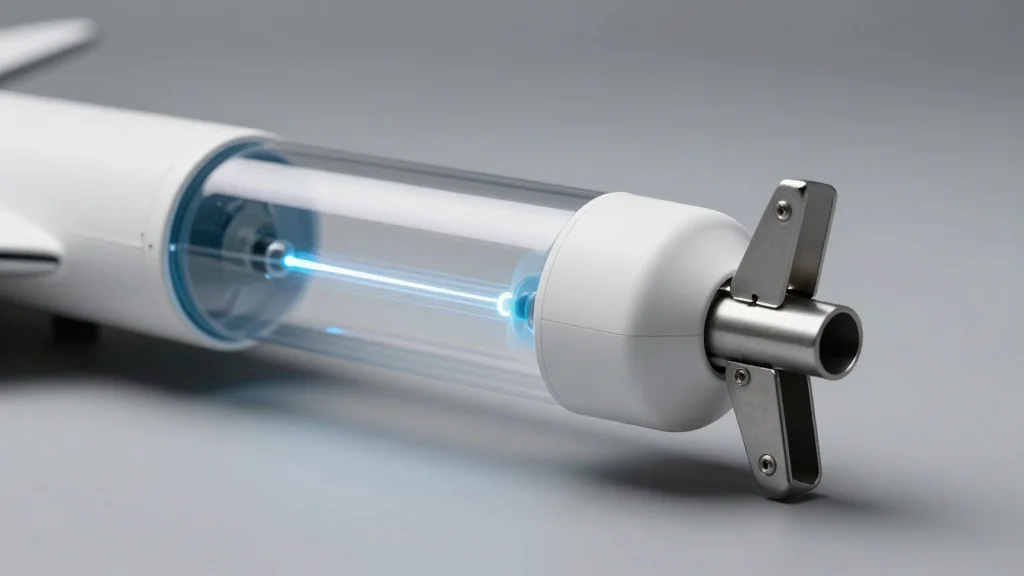
Crashworthy Fuselage, Tail Designs for H2 Aircraft Using Thermoplastic Composites
Why It Matters
The breakthroughs lower weight and increase safety for hydrogen aircraft, accelerating the aviation sector’s shift toward zero‑carbon propulsion. They also give manufacturers a validated pathway to certify composite structures for cryogenic fuel environments.
Key Takeaways
- •AE sensors detect microcracks in liquid H2 tanks at 20 K
- •Double‑hinged rudder improves fuel efficiency while staying aeroelastic stable
- •Induction welding joins 7.4 mm thermoplastic composites with high strength
- •Infrared thermography spots defects up to 4.5 mm deep in TPC skins
- •Project reaches TRL 4 for crashworthy hydrogen aircraft structures
Pulse Analysis
Hydrogen‑fuelled aircraft are emerging as a cornerstone of the aviation industry’s decarbonisation agenda, promising zero‑emission flight without sacrificing range. However, the ultra‑cold liquid hydrogen (LH2) storage and the high‑energy‑density requirements place stringent demands on airframe structures. Traditional aluminum alloys add weight and struggle to meet crash‑worthiness criteria under cryogenic conditions, prompting a shift toward advanced thermoplastic composites that combine high strength, impact resistance, and design flexibility. The FASTER‑H2 consortium, spearheaded by Airbus, is tackling these challenges by integrating fuselage and tail components into a single, lightweight load‑bearing system.
NLR’s experimental programme delivered four key technology advances. Fiber‑optic acoustic‑emission sensors were calibrated to detect the onset of microcracking in LH2 tanks at 20 K, providing real‑time health monitoring for the most vulnerable component. A double‑hinged rudder concept introduced spanwise splits that maintain aeroelastic stability while reducing drag, translating into measurable fuel‑efficiency gains. Induction welding successfully joined 7.4 mm‑thick thermoplastic intercostals to the skin, achieving coupon‑level strengths that match analytical predictions. Finally, infrared thermography proved capable of locating subsurface defects up to 4.5 mm deep in carbon‑fiber‑reinforced thermoplastic skins, streamlining nondestructive inspection for large structures.
Reaching technology readiness level 4 marks a pivotal step toward certification and series production of hydrogen aircraft. By validating crash‑worthy composite fuselage and empennage designs, Airbus and its partners reduce the weight penalty traditionally associated with LH2 tanks, improving payload and range metrics that have long hindered market adoption. The demonstrated inspection and joining techniques also lower manufacturing costs and shorten assembly cycles, making the business case more attractive to airlines and regulators. As the sector moves toward the 2030‑2035 horizon for commercial hydrogen‑powered jets, the FASTER‑H2 outcomes provide a concrete blueprint for scaling up safe, efficient, and environmentally sustainable airframes.
Crashworthy fuselage, tail designs for H2 aircraft using thermoplastic composites
Comments
Want to join the conversation?
Loading comments...