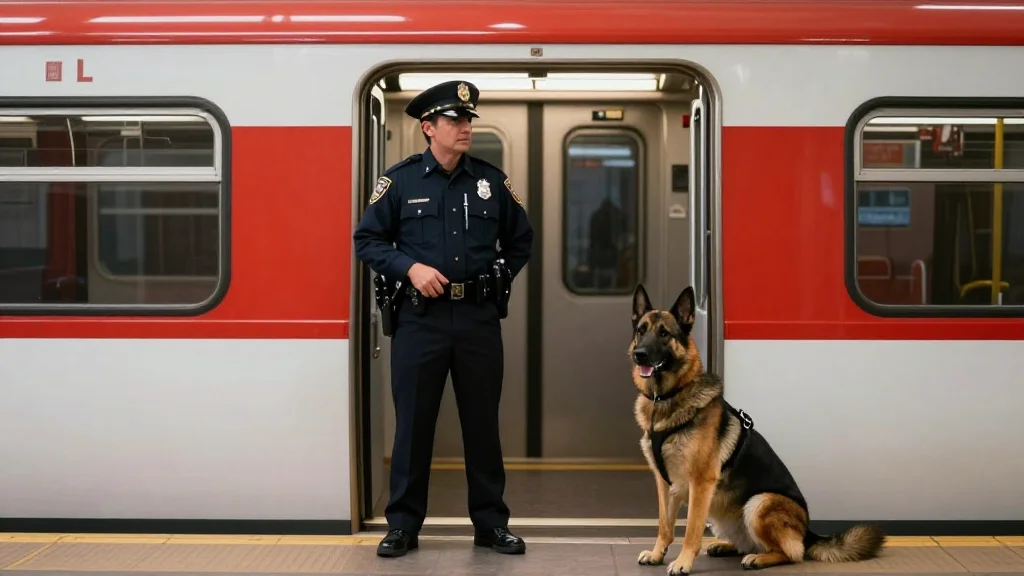
CTA Cuts $44 M Unarmed Guard Contract, Shifts Funds to Police and K‑9 Units

Why It Matters
The CTA’s decision highlights the tension between cost‑effective private security and the political demand for visible police presence on public transit. By reallocating $44 million to sworn officers, the agency hopes to curb a surge in assaults and vandalism that has threatened federal funding, but it also raises labor concerns for the displaced security workforce and may set a precedent for other cities facing similar security pressures. If the policy succeeds in lowering crime rates, it could validate the federal push for higher police visibility on transit, potentially reshaping budgeting priorities nationwide. Conversely, if rider complaints about over‑policing grow, the CTA could face new public‑relations challenges, prompting a reevaluation of how best to balance safety, equity, and fiscal responsibility in mass‑transit security.
Key Takeaways
- •CTA cancels $44 million contract with Monterrey Security, affecting ~250 unarmed guards.
- •Funds will be redirected to sworn police officers, K‑9 units and crisis‑response teams.
- •Police presence on CTA routes increased by 75% after federal pressure in March.
- •Service Employees International Union Local 1 represents 159 displaced guards.
- •Federal DOT and FTA warned of possible funding cuts if CTA does not improve security.
Pulse Analysis
CTA’s pivot from private security to expanded police staffing is emblematic of a post‑pandemic security paradigm where transit agencies are forced to choose between cost‑saving measures and politically driven safety mandates. Historically, many large systems relied on private guards to handle fare enforcement and low‑level disturbances, a model that kept labor costs low but offered limited deterrence against serious assaults. The recent surge in high‑profile attacks—culminating in a 24‑year high in aggravated incidents—has shifted the calculus, especially as federal funding now hinges on demonstrable safety outcomes.
The move also reflects a broader national trend: cities like New York and Los Angeles have similarly increased police footprints on subways after federal audits linked security lapses to funding risks. While this may yield short‑term reductions in violent crime, it can also exacerbate community tensions, particularly in neighborhoods that view heightened police presence as over‑reach. The CTA’s decision could therefore serve as a bellwether for how transit agencies balance fiscal prudence with political imperatives, and whether the trade‑off of displacing private‑security workers for sworn officers ultimately delivers the promised safety gains.
Looking ahead, the CTA will need to monitor crime statistics closely and assess rider sentiment to determine if the reallocation justifies its cost. If successful, other transit authorities may follow suit, potentially reshaping the security labor market across the sector. However, any misstep—such as a spike in complaints about police conduct—could reignite debates over the role of private security versus public law enforcement in keeping America’s rails moving safely.
CTA Cuts $44 M Unarmed Guard Contract, Shifts Funds to Police and K‑9 Units
Comments
Want to join the conversation?
Loading comments...