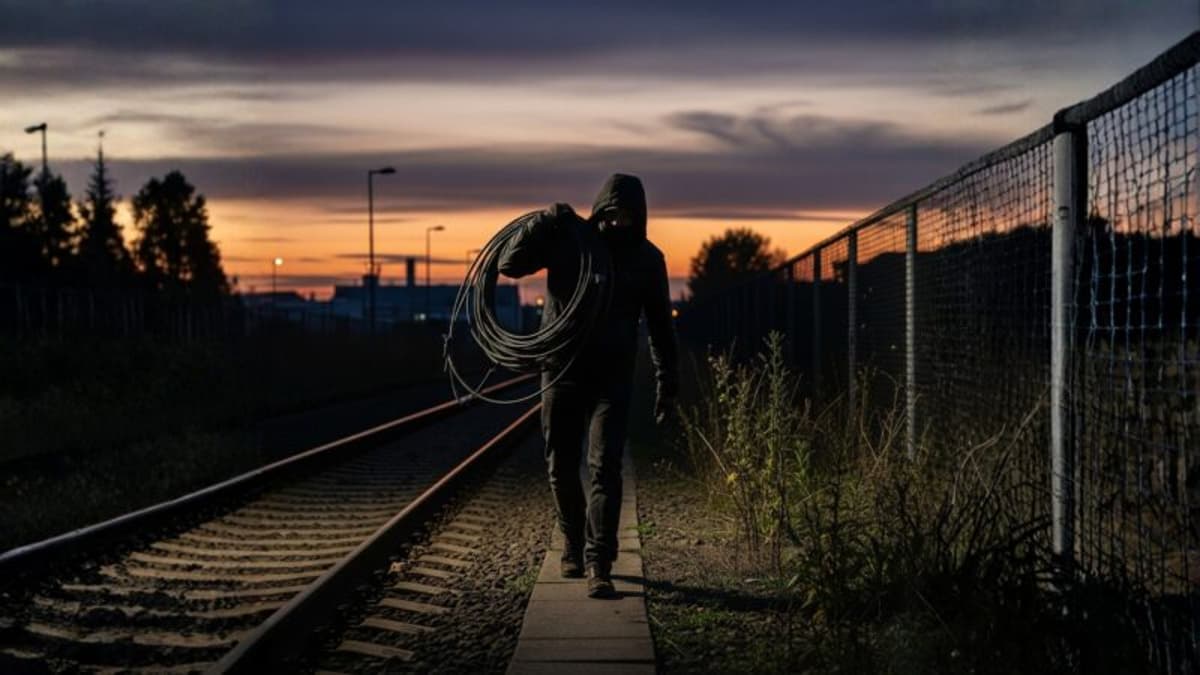
Curbing Copper Cable Theft: Turning Hunted Into Hunter
Why It Matters
By shifting from reactive repairs to real‑time interception, rail networks can protect critical assets, safeguard revenue, and deter organized metal‑theft gangs. The technology offers a scalable, low‑maintenance security layer that aligns with rail operators’ cost‑control and reliability goals.
Key Takeaways
- •DAS detects digging vibrations before cable is cut
- •Real‑time location pinpointed within metres across up to 80 km
- •Automated drones dispatched within minutes to capture live evidence
- •Precision response cuts theft losses and prevents service delays
- •Uses existing fiber, passive, no power, low maintenance
Pulse Analysis
Copper theft has become a chronic scourge for railways, costing millions in replacement parts, labor, and lost revenue from delayed or cancelled services. Traditional alarm systems only react after a cable is severed, leaving operators scrambling to locate damage and restore operations. The financial and reputational fallout extends beyond immediate repair costs, affecting freight contracts and passenger trust, making a pre‑emptive solution a strategic imperative for the industry.
Distributed Acoustic Sensing leverages the same fiber‑optic cables that already run alongside trackside copper, converting them into an uninterrupted acoustic array. By continuously listening for the subtle vibrations of shovels, footsteps, or lid openings, DAS can flag a potential theft minutes before a cut occurs. Its ability to locate the disturbance within a few metres over stretches of up to 80 km eliminates the blind spot that has plagued legacy systems. This granular, real‑time intelligence empowers security teams to act decisively rather than reactively, fundamentally altering the theft timeline.
When a suspicious signature is detected, the system can automatically launch a "drone‑in‑a‑box" unit to the exact coordinates, delivering live video, thermal imaging, and audible warnings within seconds. Coupled with precision‑guided security patrols, the likelihood of apprehending thieves rises sharply, creating a deterrent effect that can suppress organized crime networks. Because DAS piggybacks on existing fiber, it scales across vast rail networks without additional power or maintenance burdens, offering a cost‑effective, covert shield that aligns with modern rail operators’ sustainability and reliability objectives.
Curbing Copper Cable Theft: Turning Hunted into Hunter
Comments
Want to join the conversation?
Loading comments...