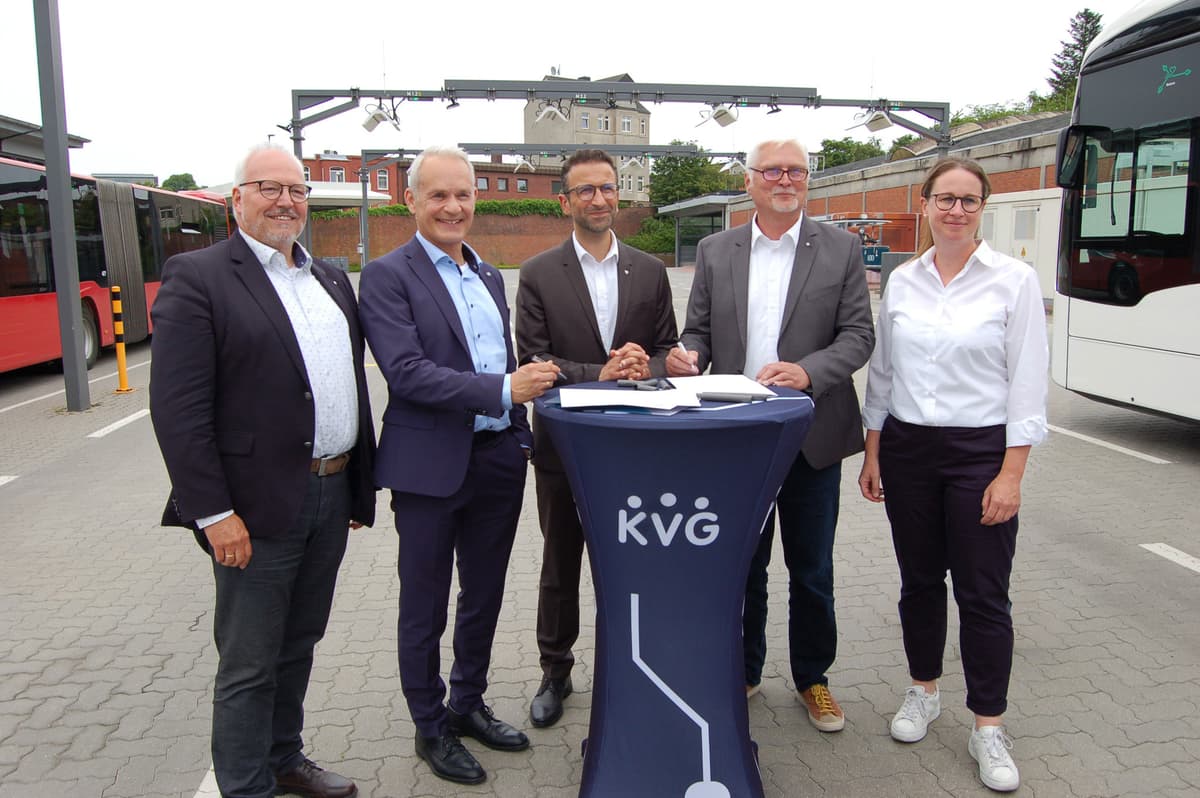
Daimler Buses Wins Kiel Tender for 28 eCitaro G E-Buses
Companies Mentioned
Why It Matters
The deal accelerates Germany’s shift to zero‑emission public transit, showcasing how cost‑focused, sustainability‑driven procurement can scale electric bus adoption across European cities.
Key Takeaways
- •Daimler Buses awarded EU tender for 28 eCitaro G buses
- •Each bus carries 555 kWh battery, charges via pantograph
- •KVG's electric fleet rises to over 150 vehicles by 2028
- •Pilot delivery starts Q3 2027; full rollout by Q1 2028
- •Contract includes option for five additional e‑buses
Pulse Analysis
European cities are racing to electrify public transport, and Germany remains a front‑runner. Daimler’s eCitaro G, a flagship articulated electric bus, won an EU‑wide tender against multiple competitors, reflecting the growing weight of operating‑cost efficiency and sustainability metrics in procurement decisions. The contract with Kiel’s KVG illustrates how municipalities are leveraging large‑scale tenders to lock in favorable pricing and technology standards, setting a benchmark for other German and EU operators.
The eCitaro G’s technical package is designed for high‑capacity routes. Five NMC4 battery modules deliver a combined 555 kWh, enabling full‑day service on a single charge when paired with rapid pantograph recharging at depots. This capacity translates into lower per‑kilometre energy costs compared with diesel or hybrid alternatives, while the four‑door layout and articulated chassis improve passenger flow on busy corridors. KVG’s fleet, already 56% electric, will surpass 150 zero‑emission buses by early 2028, pushing the electric share above 60% and reducing local pollutants.
Beyond Kiel, the agreement signals a broader market shift. Municipal leaders see electric buses as a tangible climate action lever, and manufacturers like Daimler are scaling production to meet rising demand. The optional five‑bus add‑on offers flexibility for future expansion, while the timeline—pilot in late 2027, full deployment by early 2028—provides a clear roadmap for other cities evaluating similar rollouts. As EU emissions regulations tighten, such procurement models are likely to become the norm, accelerating the transition to cleaner urban mobility across the continent.
Daimler Buses wins Kiel tender for 28 eCitaro G e-buses
Comments
Want to join the conversation?
Loading comments...