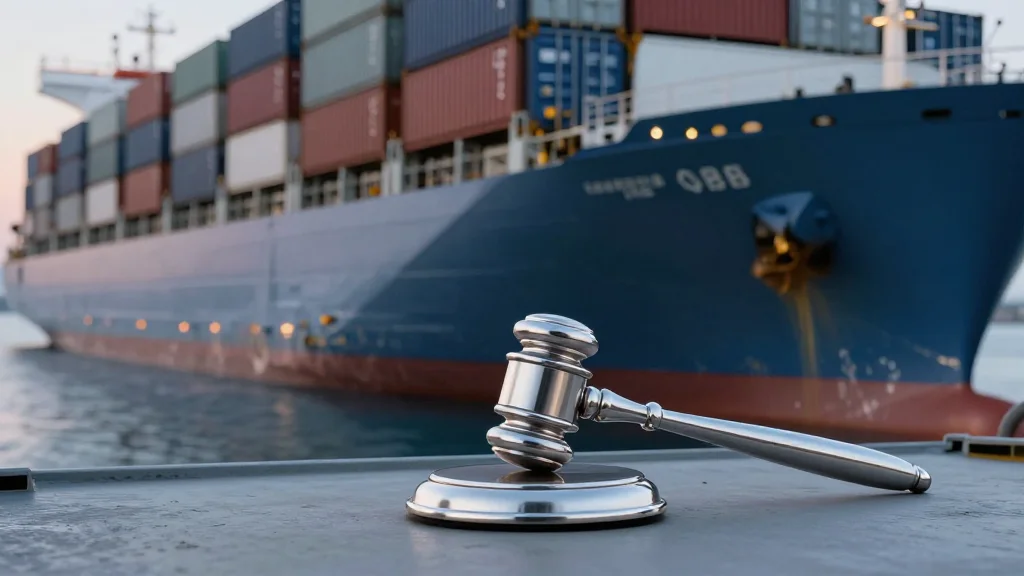
Dali Operator Faces Federal Charges in Key Bridge Incident
Why It Matters
The case underscores how technical shortcuts in maritime operations can trigger catastrophic infrastructure loss and massive public liabilities, prompting tighter regulatory scrutiny. It also highlights the financial exposure of ship owners and the importance of robust settlement strategies for state governments.
Key Takeaways
- •Two Synergy subsidiaries indicted for modifying Dali’s fuel system
- •Modifications caused generator failures, leading to bridge collapse
- •Maryland settled for $2.25 billion, capping liability at $43.7 million
- •Federal charges include conspiracy, obstruction, and Clean Water Act violations
- •Bridge rebuild delayed as costs triple and contractor removed
Pulse Analysis
The Key Bridge disaster revealed a cascade of engineering failures rooted in unauthorized modifications to the Dali’s fuel supply system. Investigators traced the loss of power to a flushing pump that lacked automatic restart capability, a deviation from the vessel’s original redundancy design. When a loose high‑voltage wire triggered an initial blackout, the compromised pump prevented the generators from re‑energizing, leaving the ship adrift and unable to steer clear of the bridge’s support pylons. This technical lapse illustrates how even minor deviations from design specifications can have outsized safety consequences in complex maritime environments.
In the legal arena, the Department of Justice has charged Synergy Marine’s Singapore and Indian subsidiaries, along with their technical superintendent, with conspiracy, obstruction, and multiple environmental violations. The indictment emphasizes the duty of ship operators to promptly report hazardous conditions to the Coast Guard, a duty that was allegedly ignored. Maryland’s $2.25 billion settlement, negotiated after assessing the owners’ insurance limits and the Limitation of Liability Act cap of $43.7 million, reflects a pragmatic approach to recouping damages while avoiding protracted litigation. A separate $102 million federal settlement covered immediate response and cleanup costs, underscoring the layered financial repercussions of maritime accidents.
Beyond the courtroom, the incident is reshaping industry standards and infrastructure planning. Regulators are likely to tighten oversight of vessel modifications, demanding stricter documentation and verification of critical system changes. For ports and bridge authorities, the episode serves as a cautionary tale about the interdependence of maritime traffic and critical infrastructure, prompting reviews of emergency response protocols. Meanwhile, the replacement bridge project faces delays as costs have nearly tripled and the original contractor was removed, pushing the timeline into the late 2030s and inflating public‑private partnership considerations. The fallout reinforces the need for resilient design, transparent operations, and robust risk management across the maritime and infrastructure sectors.
Dali Operator Faces Federal Charges in Key Bridge Incident
Comments
Want to join the conversation?
Loading comments...