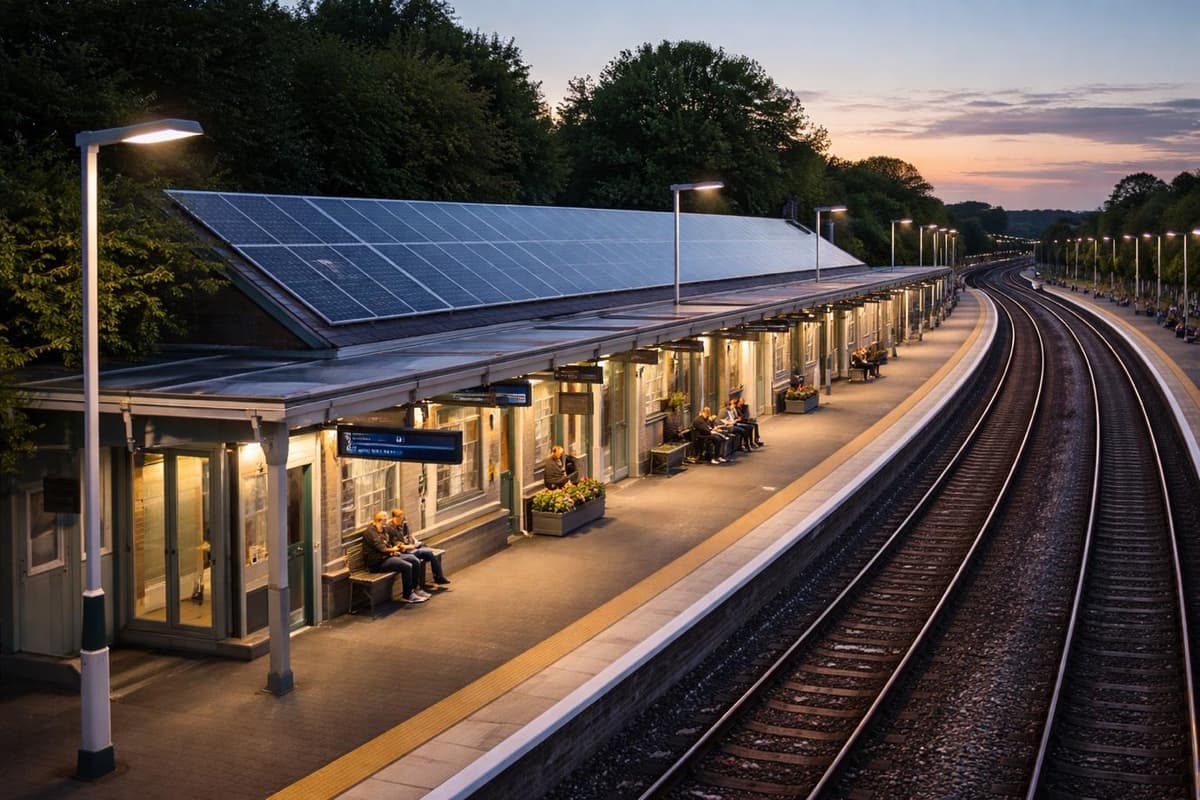
Decarbonising the UK’s “Ordinary” Stations: Reduce First, Then Generate
Companies Mentioned
Why It Matters
Reducing and generating power at ordinary stations delivers immediate carbon cuts, lowers energy costs, and improves passenger safety without competing with larger electrification projects.
Key Takeaways
- •LED lighting can cut station electricity by up to 80%
- •Smart controls add extra savings beyond LED upgrades
- •A 5 kWp solar array yields ~4 MWh per station annually
- •Combined efficiency and solar could offset 6‑11 GWh yearly
- •Programmatic rollout needed to overcome fragmented ownership
Pulse Analysis
Rail decarbonisation in the United Kingdom is often measured by the rollout of electrified lines and alternative traction, yet the sector’s non‑traction electricity use—primarily in stations, depots and ancillary facilities—accounts for a sizable 449 GWh annually. This hidden load, spread across more than a thousand smaller stations, presents a low‑ hanging fruit for emissions reduction. By treating these assets as a homogeneous portfolio rather than isolated projects, Network Rail can apply standardized solutions at scale, unlocking both environmental and operational benefits.
The first lever is demand‑side efficiency. Carbon Trust data shows that retrofitting LED lighting can slash illumination energy by 50‑80%, while occupancy‑based controls and photocells deliver additional reductions. For many Category D and E stations, lighting is the dominant load, so a combined 20‑50% cut in electricity use is realistic. Beyond the carbon payoff, brighter, well‑controlled lighting improves perceived safety, especially for women traveling at night, strengthening the business case for investment and aligning with Department for Transport safety guidelines.
Once demand is trimmed, a modest solar PV overlay becomes viable. A standardized 5 kWp system, typical of UK yields (≈800 kWh/kWp/year), would generate roughly 4 MWh per station, translating to 5‑8 GWh across the entire Category C‑E cohort. When paired with the earlier efficiency gains, the net impact reaches 6.5‑11 GWh annually—equivalent to several flagship solar projects but dispersed across a broad asset base. The main hurdles are fragmented ownership and the need for a dedicated delivery mechanism, challenges that may be eased by the upcoming Great British Railways structure. In sum, a coordinated efficiency‑first, generation‑later strategy offers a pragmatic, quick‑win layer to the broader rail decarbonisation agenda.
Decarbonising the UK’s “Ordinary” Stations: Reduce First, Then Generate
Comments
Want to join the conversation?
Loading comments...