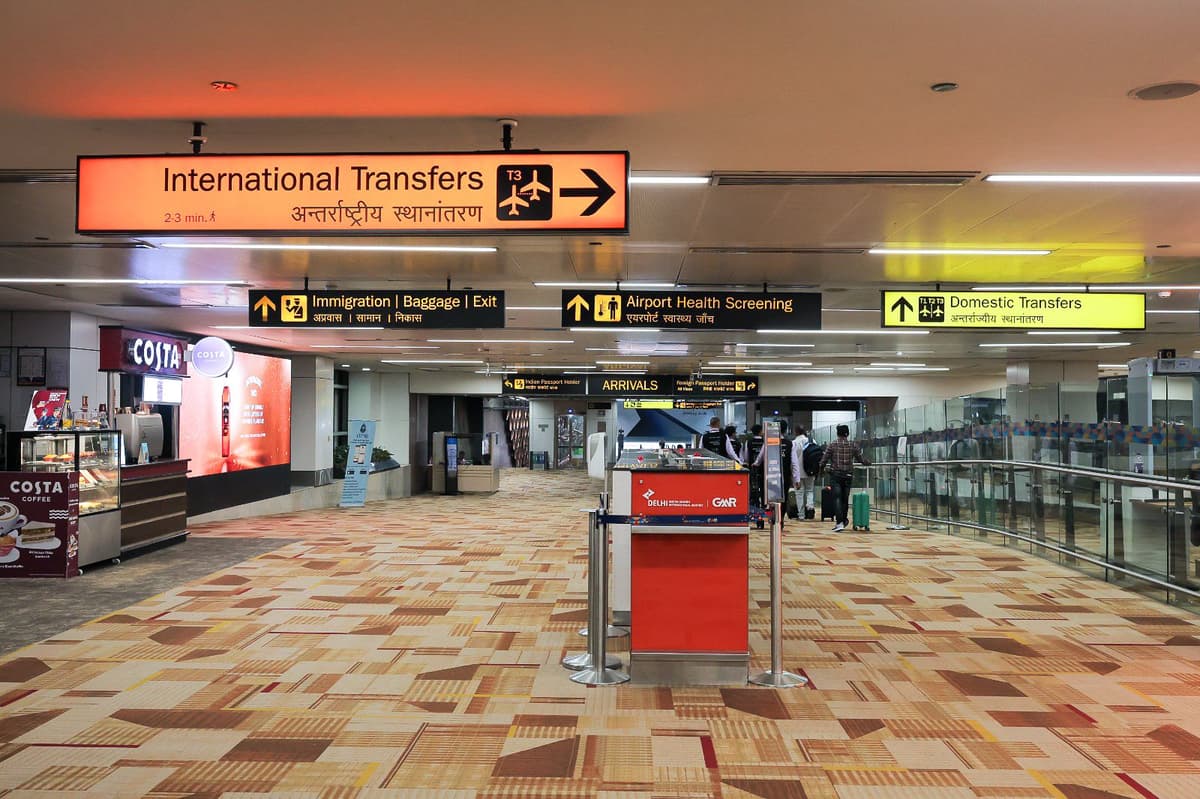
Delhi Airport Transfer Traffic Hits 27%, Reinforces Hub Status
Companies Mentioned
Why It Matters
The surge solidifies Delhi’s position as a critical connectivity node for both domestic and global routes, attracting airlines and investors seeking hub‑centric growth in a fast‑expanding market.
Key Takeaways
- •Transfer passengers reached 56,000 daily in May 2026
- •Transfer share grew from 20% in May 2025 to 27% in May 2026
- •Domestic‑to‑domestic transfers make up 61% of hub traffic
- •IndiGo, Air India and Air India Express dominate transfer flows
Pulse Analysis
India’s aviation sector is on a steep upward trajectory, with passenger volumes projected to outpace global averages. Within this context, Delhi’s Indira Gandhi International Airport has emerged as the nation’s leading transfer hub, handling nearly 56,000 connecting passengers each day. The 27% share of transfer traffic recorded in May 2026 reflects both organic demand from a burgeoning middle class and strategic airline scheduling that leverages Delhi’s geographic centrality. This growth aligns with broader trends of hub consolidation seen across Asia, where carriers prioritize efficient connection points to maximize network reach.
The composition of Delhi’s transfer traffic reveals a dual narrative. Domestic‑to‑domestic connections dominate, accounting for 61% of all transfers, linking tier‑1 metros with emerging economic and tourism centers such as Pune, Srinagar, and Kolkata. Simultaneously, international transfer corridors are gaining momentum, with routes like Ahmedabad‑Delhi‑Toronto and Phuket‑Delhi‑London illustrating Delhi’s expanding gateway role between South Asia and major global markets. Airline partners—particularly IndiGo, Air India, and Air India Express—play a pivotal part, supplying the flight frequencies and slot allocations needed to sustain seamless passenger flows.
For airlines, investors, and policymakers, the data signals a compelling case for deeper hub investment. Higher transfer volumes justify expanded terminal capacity, upgraded baggage handling, and enhanced digital passenger services. From a financial perspective, GMR Airports can leverage the hub status to negotiate premium landing fees and attract ancillary revenue streams. Moreover, the trend offers a strategic lever for airlines seeking to optimize route economics in a region where fuel costs and geopolitical tensions pose operational challenges. As Delhi continues to cement its hub stature, it is poised to shape the competitive dynamics of South Asian aviation for years to come.
Delhi Airport Transfer Traffic Hits 27%, Reinforces Hub Status
Comments
Want to join the conversation?
Loading comments...