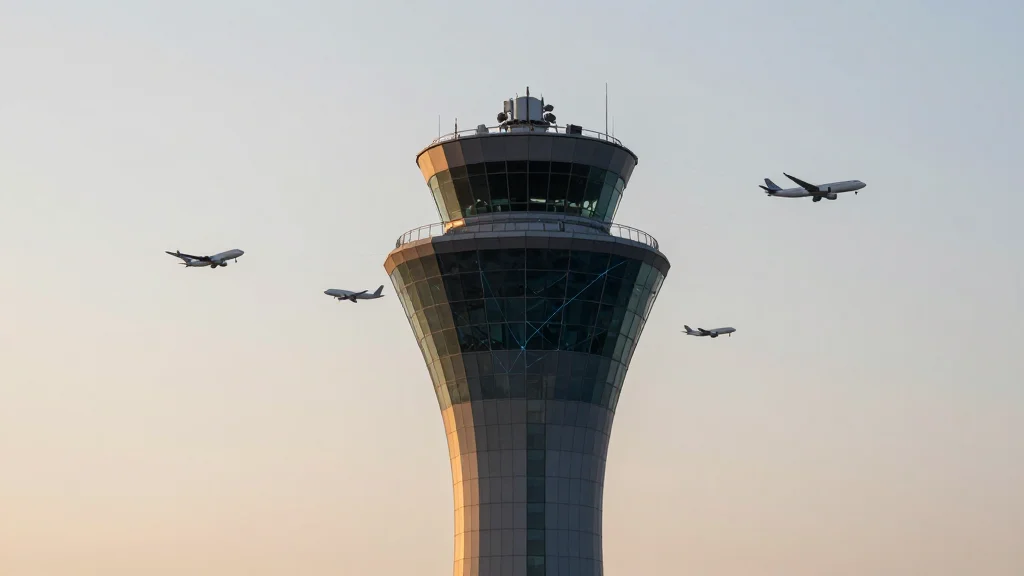
Delta CEO Bastian Calls AI Modernization of Air Traffic Control Aviation’s Biggest Opportunity

Companies Mentioned
Why It Matters
Modernizing ATC with AI could unlock significant capacity gains for the U.S. aviation system, which is currently operating near its limits. By reducing delays and improving safety, airlines can lower operating costs, mitigate the impact of fuel price volatility, and restore consumer confidence after a spate of cancellations. Moreover, AI‑enhanced ATC could enable more precise routing, cutting fuel burn and emissions—a key metric as regulators tighten climate standards. The initiative also has labor implications. If AI can automate routine conflict‑resolution tasks, it may alleviate the chronic overtime burden on controllers, improving job satisfaction and retention. Conversely, rapid automation could spark concerns about workforce displacement, making the balance between technology and human expertise a focal point for policymakers and unions alike.
Key Takeaways
- •Delta CEO Ed Bastian says AI’s biggest aviation opportunity is modernizing U.S. air traffic control.
- •Bastian warned AI could make travel "quicker" and "more efficient" than any other deployment.
- •FAA currently 3,800 controllers short of its staffing target, with outdated ATC screens dating to the 1960s‑70s.
- •Federal plan to upgrade 4,600 ATC sites and add six new towers could provide the hardware backbone for AI.
- •Delta recently launched the AI‑powered Delta Concierge digital assistant, showing its commitment to AI experimentation.
Pulse Analysis
The push to embed AI into the nation’s air traffic control system represents a strategic inflection point for both the airline industry and the broader transportation ecosystem. Historically, ATC upgrades have been incremental, hampered by budget cycles and entrenched legacy systems. Bastian’s framing of AI as a "game‑changing" lever signals a shift from incremental hardware refreshes to a data‑centric, predictive architecture. If successful, the technology could unlock latent capacity in the congested U.S. airspace, allowing airlines to add flights without building new airports or runways—a cost‑effective way to meet rising demand.
However, the path forward is fraught with challenges. Integrating AI into safety‑critical systems demands rigorous certification, extensive testing, and clear accountability frameworks. The FAA’s historical caution on technology adoption may slow rollout, especially as unions like the NCTCA push back against any perception that AI could replace human controllers. The optimal outcome likely lies in a hybrid model where AI augments human decision‑making, handling routine conflict detection while leaving strategic judgments to seasoned controllers. This approach could reduce fatigue, improve morale, and preserve the high safety standards that define U.S. aviation.
From a market perspective, early adopters such as Delta could gain a competitive edge by offering more reliable schedules and lower delay‑related costs. Investors may begin to price in the potential upside of AI‑enabled efficiency gains, especially as fuel price volatility continues to erode margins. In the longer term, successful AI integration could set a global benchmark, prompting other nations to emulate the U.S. model and potentially reshaping the international air traffic management landscape.
Delta CEO Bastian Calls AI Modernization of Air Traffic Control Aviation’s Biggest Opportunity
Comments
Want to join the conversation?
Loading comments...