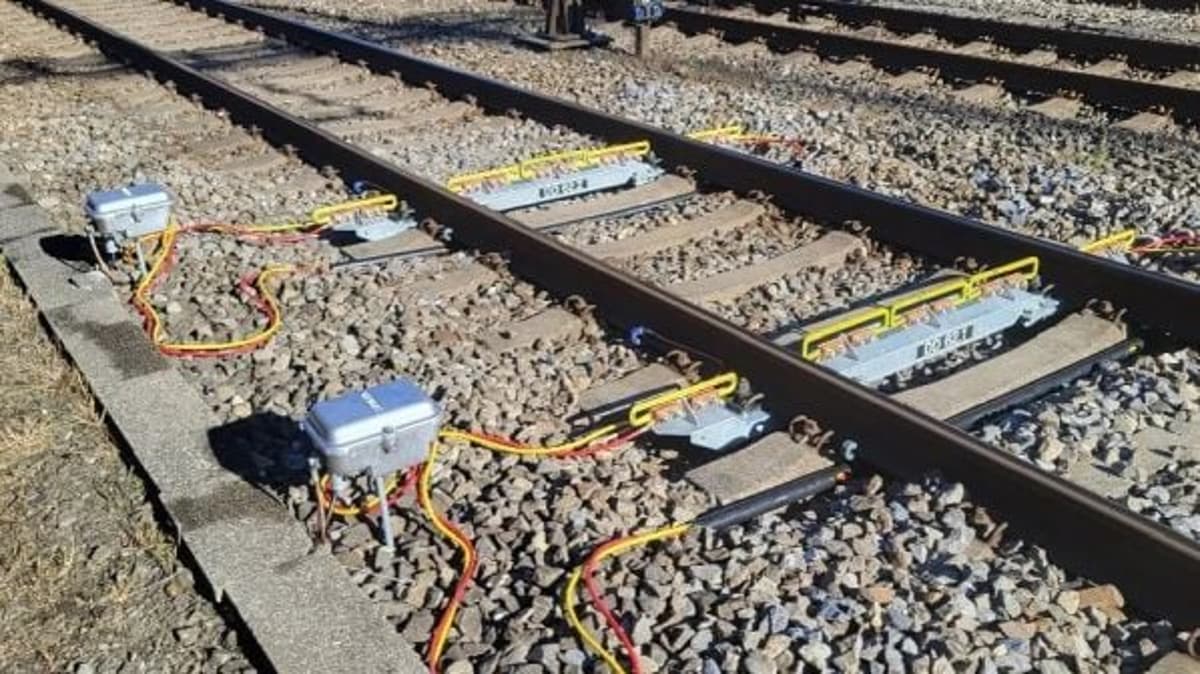
Derailment Detectors Go Live on Gotthard Base Tunnel Approaches
Why It Matters
The upgrade restores full speed capacity, reducing bottlenecks on a critical European freight corridor, while highlighting that safety improvements depend more on maintenance standards and legal reforms than on detection technology alone.
Key Takeaways
- •SBB commissioned 10 derailment detectors on Gotthard Base Tunnel approaches.
- •Detectors allow lifting 160 km/h temporary speed restriction at tunnel portals.
- •New Swiss regulations require tighter wagon wheel standards by end‑2026.
- •Liability law still places blame on operators, not wagon owners.
- •Improved maintenance, not technology, is key to preventing future derailments.
Pulse Analysis
The Gotthard Base Tunnel, stretching 57 km through the Swiss Alps, is the backbone of north‑south European rail traffic, handling both passenger and high‑value freight flows. A broken wheel caused a freight train derailment on the western bore on 10 August 2023, forcing a complete shutdown for several weeks and rippling delays across the continent’s logistics chain. The incident exposed a vulnerability in the tunnel’s safety envelope, prompting Swiss Federal Railways (SBB) to accelerate the deployment of advanced monitoring systems on the tunnel’s approaches. The shutdown forced shippers to reroute cargo onto congested road networks, raising costs and emissions. It also highlighted the strategic risk of relying on a single trans‑Alpine conduit for European supply chains.
During the night of 10‑11 May 2024, SBB commissioned ten trackside derailment detectors at the high‑speed crossovers flanking both tunnel portals. These sensors continuously scan wheel‑set integrity and can instantly flag a derailment, allowing control centres to halt following trains before a collision occurs. With the detectors operational, SBB lifted the 160 km/h temporary speed restriction that had limited traffic since the tunnel’s full reopening in September 2024, restoring the line’s design speed and improving capacity for time‑critical freight services. The restored speed also reduces transit times for intermodal containers traveling between northern Europe and the Mediterranean.
While the detectors add a critical layer of protection, SBB emphasizes that technology alone cannot eliminate derailments. The root cause remains inadequate wagon maintenance and a liability framework that holds operators, not owners, responsible for defective equipment. In response, Switzerland’s Federal Office of Transport has introduced stricter wheel‑diameter minima, distance‑based inspection intervals, and a compliance deadline of 31 December 2026. Industry observers argue that aligning legal incentives with maintenance investments will be decisive for the safety and reliability of Europe’s freight corridors. Failure to meet the new standards could trigger renewed speed restrictions and further disrupt the trans‑Alpine freight corridor.
Derailment detectors go live on Gotthard Base Tunnel approaches
Comments
Want to join the conversation?
Loading comments...