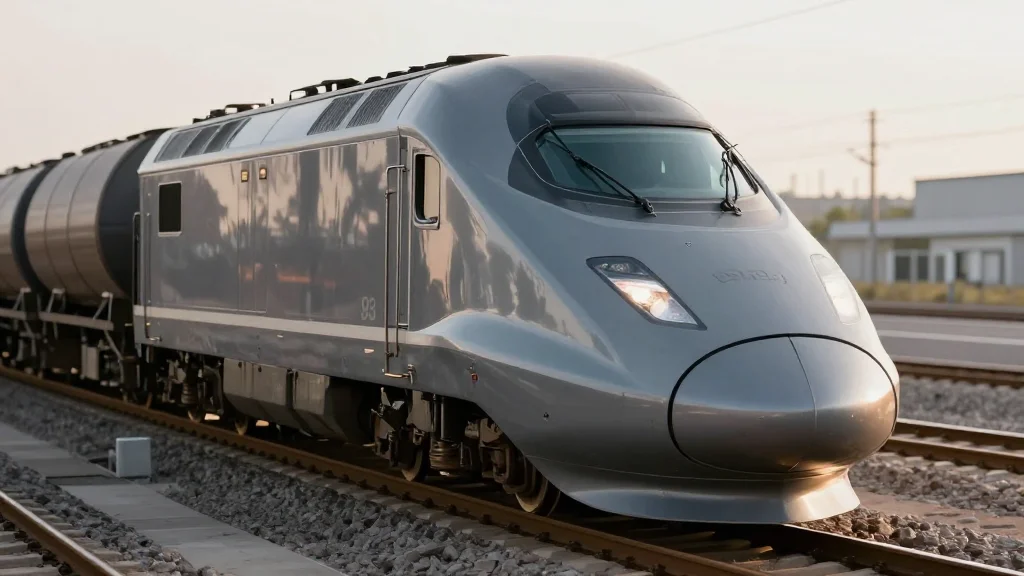
Derby Firms Target 110 Mph Freight Trains with New Class 93 Locomotive

Companies Mentioned
Why It Matters
The Derby initiative tackles two persistent challenges in UK transportation: road congestion and carbon emissions. By enabling freight trains to travel at passenger‑train speeds, the project could shift a significant share of goods movement from trucks to rail, directly reducing traffic on the M1 and A50 corridors that serve the East Midlands. Faster rail freight also aligns with the Department for Transport’s ambition to double rail freight tonnage by 2030, supporting economic growth while meeting climate commitments. If successful, the technology could be replicated on other freight corridors, prompting a cascade of infrastructure upgrades, such as reinforced track and signalling systems capable of handling higher speeds. The ripple effect would extend to port logistics, warehousing, and last‑mile delivery, creating a more integrated, low‑carbon supply chain across the UK and potentially setting a benchmark for other European freight networks.
Key Takeaways
- •Alstom, Yellow Rail and Rail Operations Group are developing a 110 mph (160 km/h) Class 93 freight locomotive.
- •Current wagons are limited to 75 mph (120 km/h) due to bogie design.
- •Redesign of the wagon bogie is required to unlock full locomotive speed.
- •A 22‑25‑wagon train could replace about 25 lorries, cutting road traffic.
- •Tri‑mode power (electric, diesel, battery) offers operational flexibility and lower emissions.
Pulse Analysis
The Derby high‑speed freight project arrives at a pivotal moment for UK logistics. Historically, rail freight has been constrained by slower speeds and limited train lengths, making it less attractive for time‑critical cargo. By targeting 110 mph, the consortium is effectively blurring the line between passenger and freight performance, a shift that could force a re‑evaluation of network capacity planning. The tri‑mode capability further future‑proofs the solution, allowing operators to navigate the patchwork of electrified and non‑electrified routes without sacrificing speed or emissions goals.
From a competitive standpoint, the initiative pits traditional road haulage firms against a technologically advanced rail alternative. If the bogie redesign succeeds and the service proves reliable, logistics providers may renegotiate contracts to favor rail, especially for high‑value, time‑sensitive goods moving between ports and inland distribution hubs. This could trigger a wave of investment in rail‑centric supply chains, from automated loading facilities to digital tracking platforms that synchronize with faster train schedules.
Looking ahead, the project's success hinges on regulatory approval and the ability to scale the upgraded wagons across the network. Should the pilot demonstrate tangible reductions in journey times and emissions, policymakers are likely to accelerate funding for complementary infrastructure—such as upgraded signalling and track reinforcement—thereby creating a virtuous cycle of speed, capacity, and sustainability. In the longer term, the Derby model could serve as a template for other freight corridors in Europe, positioning the UK as a leader in high‑speed rail freight innovation.
Derby firms target 110 mph freight trains with new Class 93 locomotive
Comments
Want to join the conversation?
Loading comments...