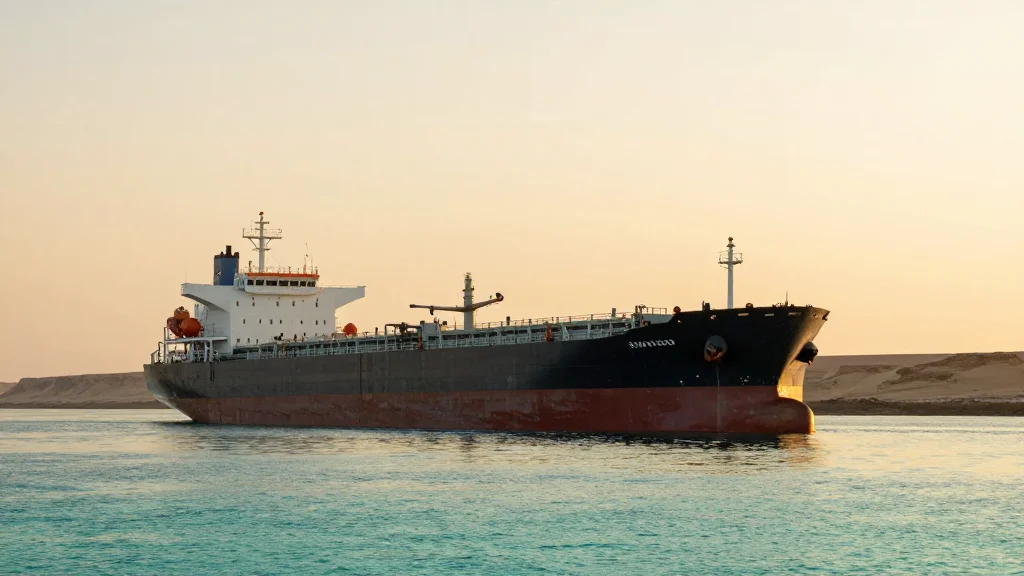
Despite Iranian Blockade, ADNOC Picks Up Pace of Oil Export Sales
Companies Mentioned
Why It Matters
Keeping oil flowing under the blockade safeguards global supply and protects ADNOC’s revenue, while demonstrating the resilience of Gulf exporters amid heightened geopolitical risk.
Key Takeaways
- •ADNOC tendered 14 million barrels, including “bottled‑up” cargoes.
- •Uses VLCCs and ship‑to‑ship transfers off Fujairah to bypass blockade.
- •Drone attack damaged the Barakah tanker but did not halt operations.
- •Gulf oil exports remain far below normal, OPEC at 40‑year low.
- •Tender suggests confidence in peace prospects or logistical workarounds.
Pulse Analysis
The Strait of Hormuz has long been a chokepoint for global oil flows, and Iran’s recent closure threatens to tighten that bottleneck further. By issuing a 14‑million‑barrel tender that includes cargoes from the “bottled‑up” side of the strait, Abu Dhabi’s state oil company signals that it can still access markets without waiting for a diplomatic resolution. This move underscores the strategic importance of alternative routing options and the willingness of major producers to invest in logistical workarounds when geopolitical risk spikes.
ADNOC’s operational playbook now relies heavily on ship‑to‑ship (STS) transfers off Fujairah in the Gulf of Oman, allowing VLCCs to load in the Arabian Gulf and off‑load to smaller vessels beyond the reach of Iranian forces. The approach proved its resilience when the Barakah, a VLCC loaded via STS, was struck by drones on May 4; the vessel sustained damage but remained afloat and continued its ballast voyage. Such incidents highlight the calculated risk profile that Gulf exporters accept, balancing higher insurance premiums and security costs against the imperative to maintain export momentum.
Despite these tactical successes, regional export volumes remain depressed. OPEC’s May shipments hit a four‑decade low, and vessel traffic through the strait has barely recovered, with only eight crossings recorded in early June. The constrained supply environment has kept oil prices volatile, prompting buyers to seek alternative sources and prompting refiners to adjust feedstock strategies. Looking ahead, ADNOC’s aggressive tendering could pressure other Gulf producers to adopt similar STS schemes, while any escalation in the Hormuz dispute could further tighten global markets, reinforcing the strategic value of flexible, resilient export pathways.
Despite Iranian Blockade, ADNOC Picks Up Pace of Oil Export Sales
Comments
Want to join the conversation?
Loading comments...