Diesel Subsidy: Sabah, Sarawak, and WP Labuan Land Transport Vehicles Urged to Register Under SKDS Immediately
Companies Mentioned
Why It Matters
By tightening subsidy distribution via SKDS, the government seeks to protect billions of dollars in public funds from leakage while ensuring transport operators continue receiving essential fuel support amid volatile global energy prices.
Key Takeaways
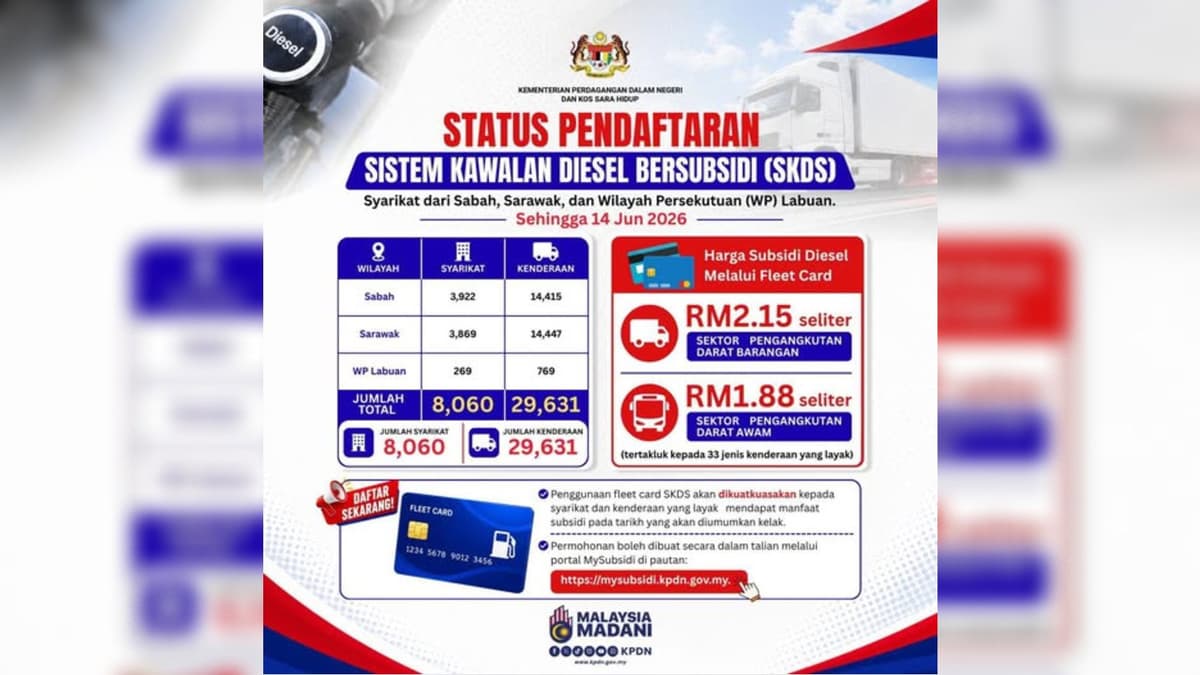
- •29,631 vehicles registered under SKDS by June 14, 2026
- •Subsidy rates: $0.47/L for goods, $0.41/L for public transport
- •Govt spent $440M on diesel subsidies in 2025 for East Malaysia
- •March‑April 2026 subsidy costs jumped to $124M and $142M
- •Mandatory fleet‑card use will be enforced later to curb leakages
Pulse Analysis
The Subsidised Diesel Control System (SKDS) represents Malaysia’s latest digital effort to streamline diesel‑subsidy distribution in East Malaysia’s transport sector. Launched for land‑goods operators on 4 May 2026 and for public transport in June 2024, the platform links eligible vehicles to PETRONAS SmartPay fleet cards, allowing real‑time monitoring of fuel purchases. By converting the RM2.15 and RM1.88 per litre subsidies to roughly $0.47 and $0.41, respectively, the system provides transparent, predictable cost relief for operators while feeding accurate data to regulators.
Escalating subsidy outlays have prompted urgent policy action. Government spending surged from $22‑$23 million per month in early 2026 to over $124 million in March and $142 million in April, driven by global energy‑price spikes and regional conflict pressures. Cumulatively, $308 million was expended in the first third of the year, underscoring the fiscal strain of unchecked subsidies. SKDS’s digital ledger is designed to plug leakage channels—such as smuggling and unauthorized use by non‑resident drivers—thereby safeguarding public finances and limiting waste.
For transport firms, rapid SKDS registration is now a compliance imperative. The system’s 33 eligible vehicle categories cover most freight and passenger fleets, and the upcoming mandatory fleet‑card enforcement will make the platform the sole conduit for subsidy claims. Companies that delay risk losing subsidy access, which could erode profit margins in a cost‑sensitive industry. As the government tightens enforcement, SKDS is poised to become a cornerstone of Malaysia’s broader strategy to balance affordable logistics with fiscal responsibility.
Diesel subsidy: Sabah, Sarawak, and WP Labuan land transport vehicles urged to register under SKDS immediately
Comments
Want to join the conversation?
Loading comments...