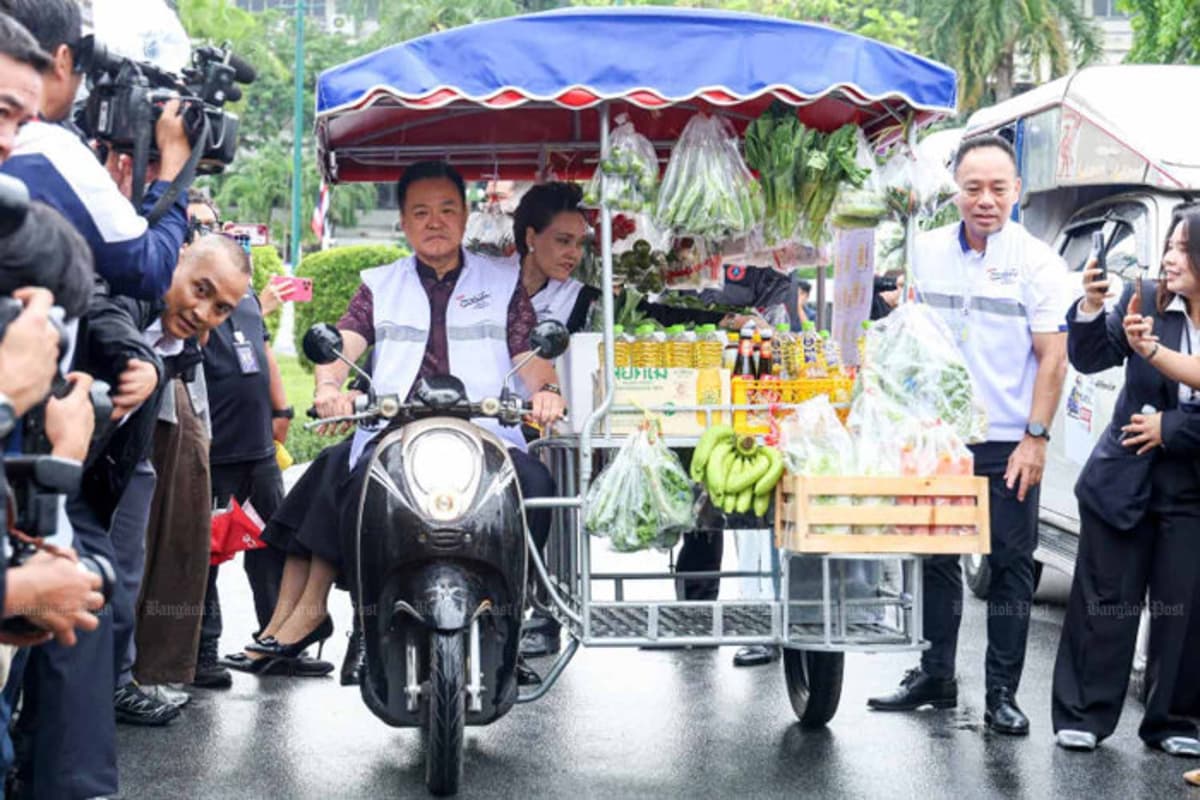
Discount Grocery Sales Go Mobile
Why It Matters
The program directly tackles Thailand’s cost‑of‑living pressures by expanding affordable retail access in underserved regions, potentially reshaping rural consumption patterns. Its scale could serve as a model for other emerging markets facing similar inflationary challenges.
Key Takeaways
- •Mobile grocery vans offer 10‑30% lower prices than malls
- •Over 10,000 vendors registered, receiving free initial stock
- •Government subsidizes fuel up to 3,000 baht (~$81) monthly
- •Initiative aims to reach 4 million households nationwide
- •Project could save consumers about 280 million baht (~$7.6 M)
Pulse Analysis
Thailand’s cost‑of‑living crisis, spurred by soaring energy prices from the Middle East conflict, has prompted the government to innovate retail delivery. By repurposing pickup trucks and side‑car motorcycles as mobile discount grocery units, officials hope to bypass traditional supply‑chain bottlenecks that inflate prices in urban markets. The "rot phum phuang" concept, long familiar to Thai villagers, now carries a policy‑backed price guarantee of 10‑30% below mall rates, offering a tangible relief valve for price‑sensitive consumers.
The rollout hinges on a partnership between the Department of Provincial Administration and private suppliers. Over 10,000 mobile vendors have signed up, each receiving an initial load of goods at no cost and fuel subsidies ranging from 1,000 to 3,000 baht ($27‑$81) per month, calibrated to vehicle size. By targeting 4 million households, the scheme projects a collective savings of about 280 million baht ($7.6 million), translating into measurable purchasing‑power gains for low‑income families in remote provinces where brick‑and‑mortar stores are scarce.
If successful, Thailand’s mobile discount grocery model could inspire similar initiatives across Southeast Asia and other emerging economies grappling with inflation and limited retail infrastructure. Critics note logistical challenges—fuel price volatility, vendor compliance, and product quality monitoring—but the government’s direct subsidy approach mitigates many operational risks. As the program scales, its impact on rural consumption patterns, local supplier networks, and overall price stability will be closely watched by policymakers and investors alike.
Discount grocery sales go mobile
Comments
Want to join the conversation?
Loading comments...