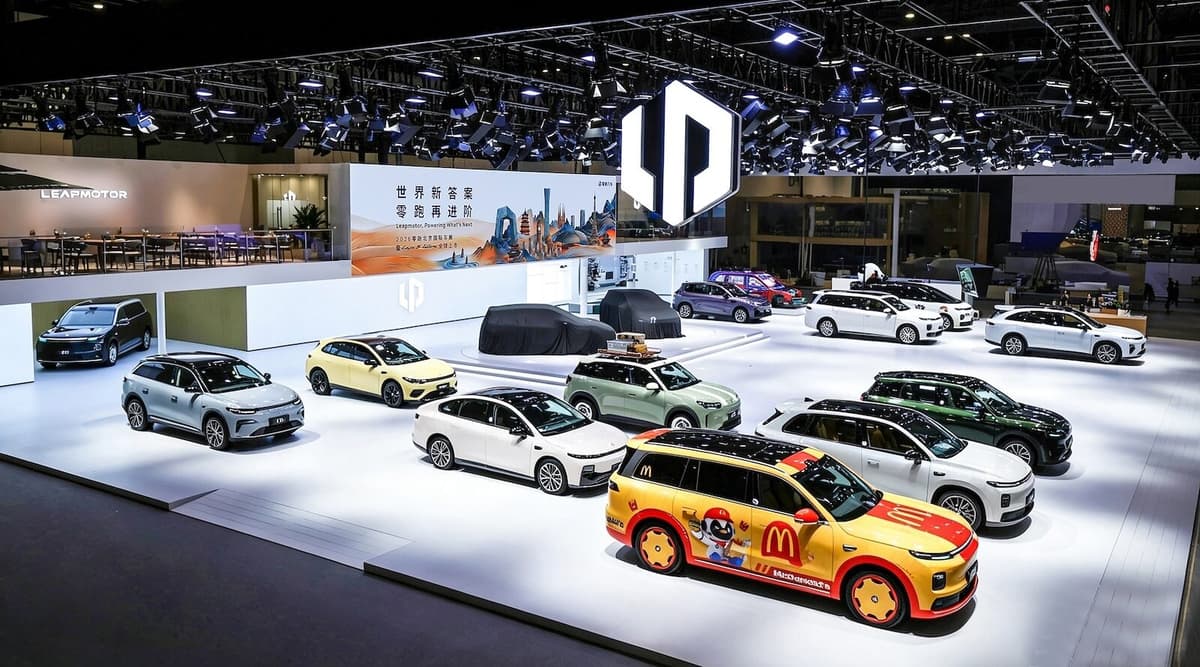
Divergence in the World EV Market — Auto China 2026 vs US Market
Why It Matters
The split between China’s rapidly expanding EV ecosystem and the US’s constrained market signals divergent growth paths, affecting global supply chains, investment decisions and competitive dynamics.
Key Takeaways
- •Chinese automakers showcase over 200 new EV models at Auto China 2026
- •US EV market still dominated by Tesla and a few legacy brands
- •Chinese EVs increasingly exported to ASEAN and South American markets
- •Legacy Chinese makers prioritize heritage branding over breakthrough EV innovation
- •XPeng’s autonomous‑driving tech gains attention for future global rollout
Pulse Analysis
The Beijing Auto Show 2026 underscored China's relentless push to dominate the electric‑vehicle sector. With more than 200 new EVs unveiled, manufacturers ranging from state‑backed giants to nimble startups are leveraging generous subsidies, a nationwide charging network, and a consumer base that values range and price. Export strategies are now a core focus; several Chinese brands announced plans to ship models to ASEAN nations and South America, where demand for affordable EVs outpaces local production. This aggressive rollout reflects a policy‑driven ambition to capture market share beyond domestic borders.
In stark contrast, the United States EV landscape remains narrowly concentrated. Tesla continues to command a sizable share, while legacy automakers such as Ford, GM and Stellantis have introduced only a handful of electric models, often repurposing existing platforms rather than pioneering new designs. Regulatory incentives have tapered, and charging infrastructure growth lags behind that of China, limiting consumer adoption outside urban centers. Consequently, U.S. manufacturers are focusing on premium segments—sporty crossovers and luxury sedans—rather than the mass‑market vehicles that dominate Chinese show floors.
The divergent trajectories carry strategic implications for investors and suppliers. Companies embedded in China's battery supply chain stand to benefit from expanding volumes, while U.S. parts makers may see slower growth unless they secure partnerships with emerging Chinese EV firms. Moreover, advancements such as XPeng’s autonomous‑driving suite signal that Chinese players are not only scaling production but also chasing high‑tech differentiation, potentially reshaping global standards. Stakeholders should monitor policy shifts, cross‑border collaborations, and consumer sentiment as the two markets evolve on parallel yet increasingly disconnected paths.
Divergence in the World EV Market — Auto China 2026 vs US Market
Comments
Want to join the conversation?
Loading comments...