
Companies Mentioned
Why It Matters
Understanding what qualifies as a muscle car shapes brand heritage, collector markets, and how manufacturers position performance models globally.
Key Takeaways
- •Merriam‑Webster defines muscle cars as American‑made two‑door coupes
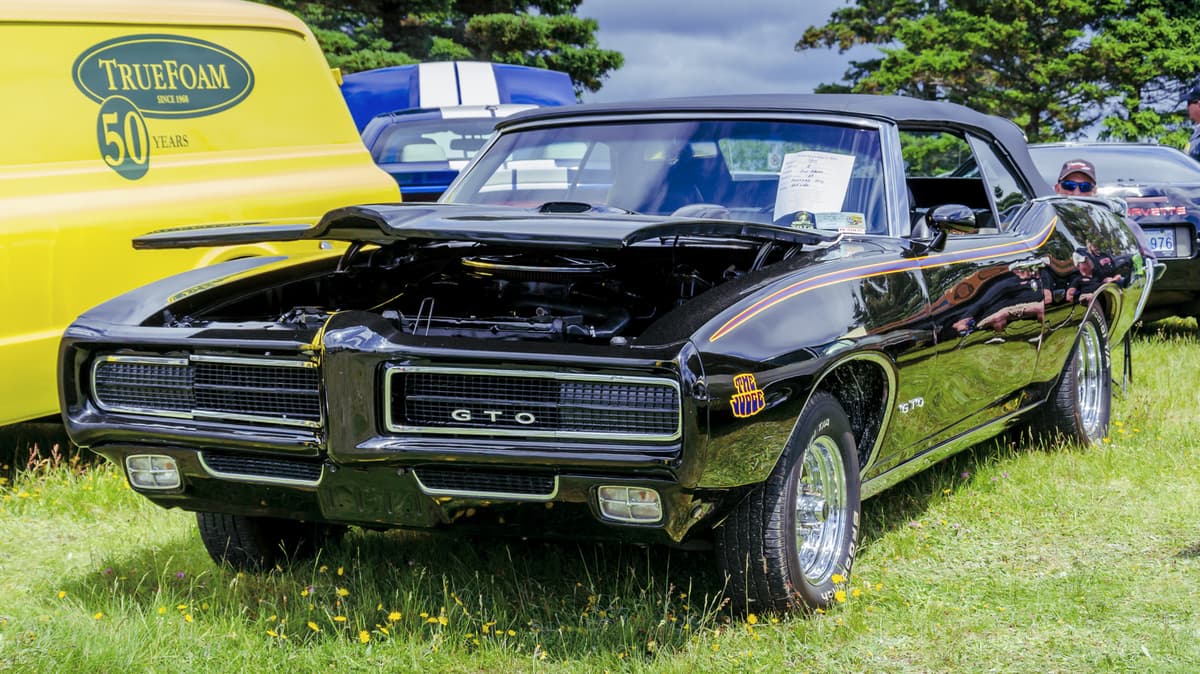
- •1964 Pontiac GTO is widely credited as the first muscle car
- •Holden Monaro (1968) met classic muscle criteria despite being Australian
- •2004 Pontiac GTO was a rebadged Australian‑built Monaro
- •Mercedes 600 SEL with 6.3‑L V8 is dubbed a German muscle car
Pulse Analysis
The term "muscle car" has long been anchored in American automotive culture, originally describing affordable, high‑displacement V8 coupes that emerged in the early 1960s. While the 1964 Pontiac GTO is often celebrated as the archetype, historians point to earlier examples like the 1949 Oldsmobile Rocket 88, underscoring that the genre’s genesis is more nuanced than a single model. This historical ambiguity sets the stage for ongoing debates about the essential ingredients of a muscle car—engine size, rear‑wheel drive, price point, and, crucially, national origin.
Beyond the United States, several overseas models have satisfied the classic muscle formula, challenging the notion that geography is a prerequisite. Australia’s 1968 Holden Monaro combined a midsize body with a large V8 at a relatively low price, a recipe later rebadged for the U.S. as the 2004 Pontiac GTO. In Europe, Mercedes‑Benz covertly installed a 6.3‑liter V8 into a 300 SEL, and Aston Martin’s 1977 V8 Vantage delivered supercar performance in a two‑door coupe. These examples illustrate that the performance ethos transcends borders, prompting enthusiasts and journalists to broaden the definition.
The classification debate carries real‑world implications for collectors, insurers, and manufacturers. If the muscle label expands globally, it could unlock new market segments and heritage branding opportunities for non‑American automakers. Conversely, preserving an American‑only definition reinforces a cultural narrative that fuels nostalgia and domestic brand loyalty. As the automotive landscape evolves with electrification and cross‑border collaborations, the muscle car’s identity will likely continue to be a barometer of how heritage and innovation intersect in the performance car segment.
Does A Muscle Car Necessarily Have To Be American?
Comments
Want to join the conversation?
Loading comments...