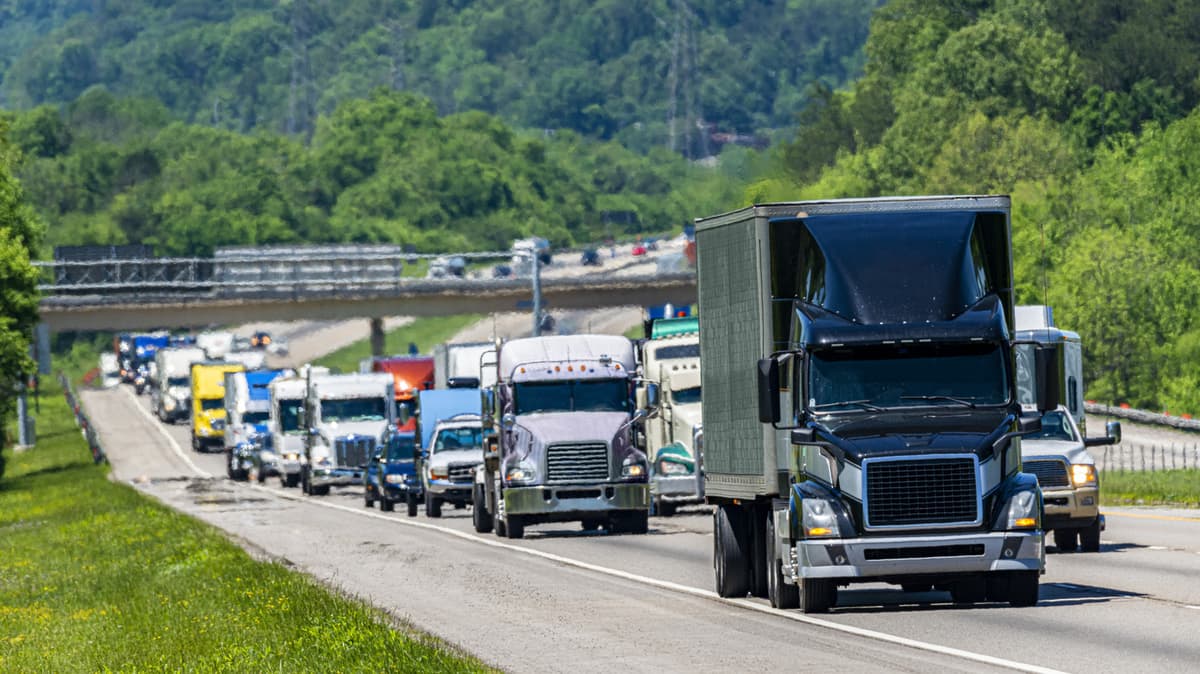
Don't Get Stuck Behind Slow Semis, Avoid These Truck Bottlenecks

Why It Matters
These chokepoints shave hours off freight schedules, raise fuel costs, and increase accident risk for carriers and commuters alike. Identifying and addressing them is critical for supply‑chain reliability and regional economic competitiveness.
Key Takeaways
- •I‑294 in Chicago tops 2026 truck bottleneck list, avg 39.5 mph.
- •George Washington Bridge improves 15.8% YoY, still only 28.2 mph.
- •Atlanta’s I‑285 “Spaghetti Junction” ranks third, avg 35 mph.
- •Houston I‑45/69/59 interchange stuck at 20.2 mph, minimal change.
- •Two Atlanta interchanges in top‑5 show regional freight strain.
Pulse Analysis
Freight congestion has become a strategic concern for U.S. logistics, as trucks account for roughly 70 % of goods movement. The American Transportation Research Institute leverages anonymized GPS data from thousands of carriers to pinpoint where heavy‑truck traffic throttles highway capacity. By translating raw speed metrics into actionable insights, ATRI helps shippers anticipate delays, adjust routing, and negotiate more realistic delivery windows, ultimately protecting margins in an environment where fuel prices and driver shortages already strain profitability.
The 2026 rankings reveal a mixed picture. Chicago’s I‑294 corridor slipped further, reflecting construction bottlenecks that have eroded speeds by 5 % year‑over‑year. Conversely, the George Washington Bridge showed a 15.8 % improvement, likely due to toll‑collection upgrades and better traffic‑management algorithms, yet average speeds remain sub‑30 mph. Atlanta’s perimeter loop now hosts two of the top five chokepoints, underscoring the city’s rapid growth and its status as a freight hub anchored by the world’s busiest airport. Houston’s I‑45/69/59 interchange, despite a decade‑long improvement program, has barely moved the needle, highlighting how entrenched infrastructure deficits can outlast short‑term construction fixes.
Policymakers and industry leaders are converging on a multi‑pronged response. Federal and state agencies are earmarking billions for bridge replacement, interchange redesign, and intelligent transportation systems that relay real‑time speed data to drivers. Meanwhile, carriers are piloting dynamic routing platforms and exploring platooning technologies that can smooth flow through known bottlenecks. As e‑commerce demand continues to surge, the pressure to de‑congest these corridors will intensify, making data‑driven prioritization of projects essential for maintaining supply‑chain resilience and regional economic health.
Don't Get Stuck Behind Slow Semis, Avoid These Truck Bottlenecks
Comments
Want to join the conversation?
Loading comments...