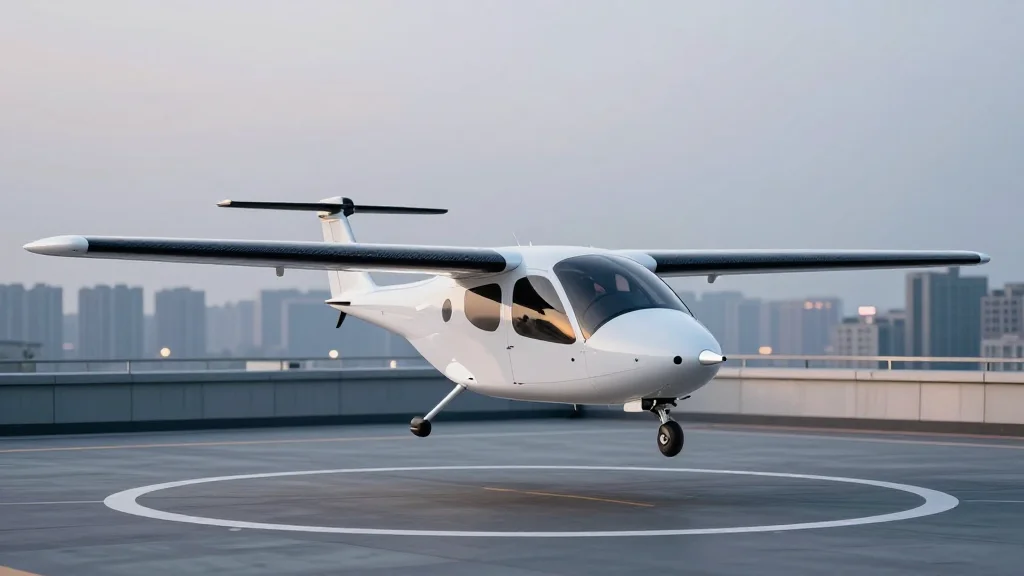
Doroni Aerospace Unveils Final Design of Its H1-X eVTOL
Why It Matters
The H1‑X’s extended range and low‑training requirements could accelerate adoption of electric air‑taxi services, while strong pre‑order demand signals growing market confidence ahead of the 2028 rollout.
Key Takeaways
- •H1‑X offers 100+ mile range and 120 mph top speed.
- •Semi‑autonomous controls reduce pilot training time.
- •FAA granted Special Airworthiness Certificate for testing.
- •600 pre‑orders indicate strong market interest.
- •Commercial deliveries targeted for 2028.
Pulse Analysis
The urban air mobility (UAM) sector is reaching a critical inflection point as manufacturers shift from concept to certification. Doroni Aerospace’s newly unveiled H1‑X eVTOL marks a tangible step forward, featuring a 100‑plus‑mile electric range and a 120 mph cruise speed that rival many short‑haul helicopters. Its sleek, tilt‑rotor architecture is paired with a semi‑autonomous flight‑control system that promises intuitive handling and dramatically reduced pilot training requirements. By delivering performance metrics comparable to conventional rotorcraft while maintaining the efficiency of electric propulsion, the H1‑X positions itself as a viable candidate for intra‑city and regional air‑taxi services.
Regulatory clearance remains a gatekeeper for commercial eVTOL deployment, and Doroni’s receipt of an FAA Special Airworthiness Certificate for testing is a noteworthy milestone. The certificate allows the company to conduct flight trials under a tailored safety framework, accelerating the path toward full certification. Moreover, the semi‑autonomous control suite aligns with the FAA’s emerging guidance on reduced‑pilot‑operation models, potentially lowering operating costs and expanding the talent pool beyond traditional helicopter pilots. This regulatory head‑start could give Doroni a timing advantage over rivals still awaiting basic airworthiness approvals.
Market appetite for electric air‑taxis is reflected in Doroni’s reported 600 pre‑orders, a figure that signals confidence from operators seeking to augment their fleets ahead of the 2028 commercial launch. Early commitments provide a revenue runway that can fund further development, testing, and infrastructure partnerships in key metropolitan corridors. As cities grapple with congestion and sustainability targets, the H1‑X’s combination of range, speed, and low‑training entry could accelerate adoption of point‑to‑point aerial mobility. Investors and municipal planners will be watching closely to gauge how quickly Doroni can translate prototype success into operational service.
Doroni Aerospace unveils final design of its H1-X eVTOL
Comments
Want to join the conversation?
Loading comments...