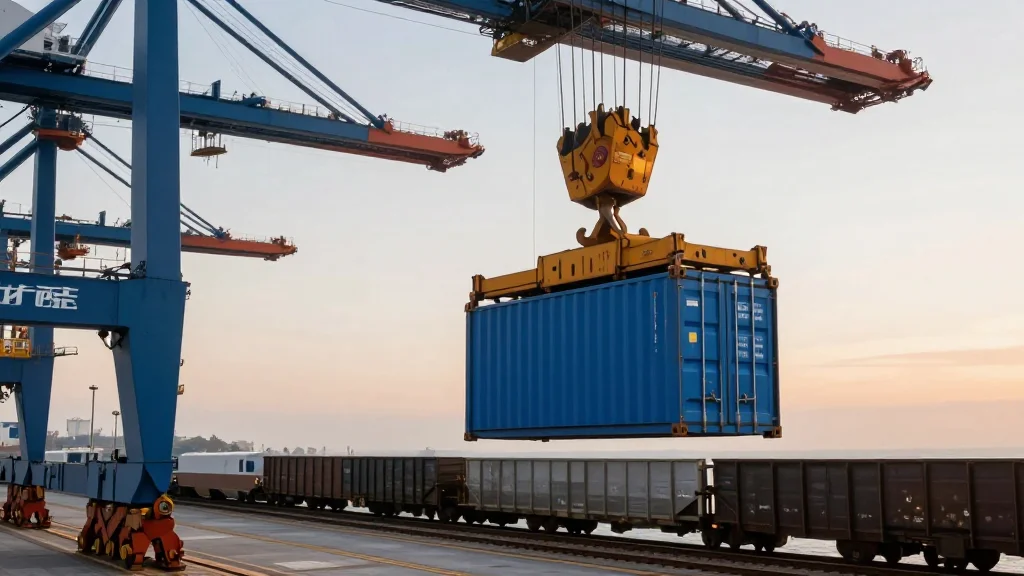
DP World and Gujarat’s Deendayal Port Authority Plot Tuna‑Tekra Terminal to Boost Kandla Hub

Companies Mentioned
Why It Matters
The Tuna‑Tekra terminal could transform Kandla into a next‑generation container hub, directly influencing trade volumes on India’s western seaboard. By increasing capacity and integrating rail‑based cargo movement, the project promises to reduce logistics costs, shorten delivery times, and enhance supply‑chain resilience for industries ranging from petrochemicals to agriculture. Moreover, the partnership underscores a shift toward private‑sector‑led infrastructure development in India, a model that could accelerate modernization across the country’s port network. If successful, the terminal and Magrail pilot may set a benchmark for multimodal integration, encouraging other ports to adopt similar technologies. This would not only improve domestic freight efficiency but also strengthen India’s position in regional trade corridors linking Central Asia, the Middle East, and Africa, thereby boosting economic growth and job creation in Gujarat and beyond.
Key Takeaways
- •DP World delegation led by Rizwan Soomar met DPA chairman Sushil Kumar Singh on April 24 in Gandhidham.
- •The Tuna‑Tekra container terminal is planned to significantly boost Kandla’s cargo‑handling capacity.
- •Discussions included the Magrail Pilot Project, aimed at improving rail connectivity and reducing turnaround times.
- •Project aligns with India’s push for private‑sector participation and logistics modernization on the western coast.
- •Next steps involve feasibility studies, clearances, and a financing framework targeting a 2027 construction start.
Pulse Analysis
DP World’s engagement with the Deendayal Port Authority reflects a strategic pivot toward deepening its presence in high‑growth emerging markets. Historically, the firm has focused on mature hubs in the Middle East and Europe; the Tuna‑Tekra initiative marks a deliberate bet on India’s untapped western corridor, where capacity constraints and hinterland bottlenecks have limited throughput. By coupling a new container terminal with an innovative rail‑based Magrail system, DP World is not merely adding berth space but attempting to rewrite the logistics value chain, offering shippers a more integrated, end‑to‑end solution.
The timing is also crucial. India’s recent policy reforms—such as the National Logistics Policy and the push for multimodal freight corridors—create a conducive environment for private investment. DP World’s global network can bring best‑in‑class technology, while the DPA provides local regulatory know‑how and land access. If the Tuna‑Tekra terminal delivers on its promise, it could trigger a competitive response from neighboring ports like Mundra and Nhava Sheva, spurring a wave of capacity upgrades across the country. This competitive pressure may ultimately lower freight rates and improve service reliability for exporters and importers alike.
Looking forward, the success of the Magrail pilot will be a litmus test for the scalability of rail‑centric solutions in India’s port ecosystem. Should the pilot demonstrate measurable reductions in dwell time and emissions, it could become a template for other terminals seeking to diversify away from truck‑dominant hinterland links. In that scenario, DP World would not only secure a foothold in Kandla but also position itself as a pioneer of sustainable, multimodal logistics in South Asia, a narrative that could attract further investment and deepen its strategic relevance in the region.
DP World and Gujarat’s Deendayal Port Authority Plot Tuna‑Tekra Terminal to Boost Kandla Hub
Comments
Want to join the conversation?
Loading comments...