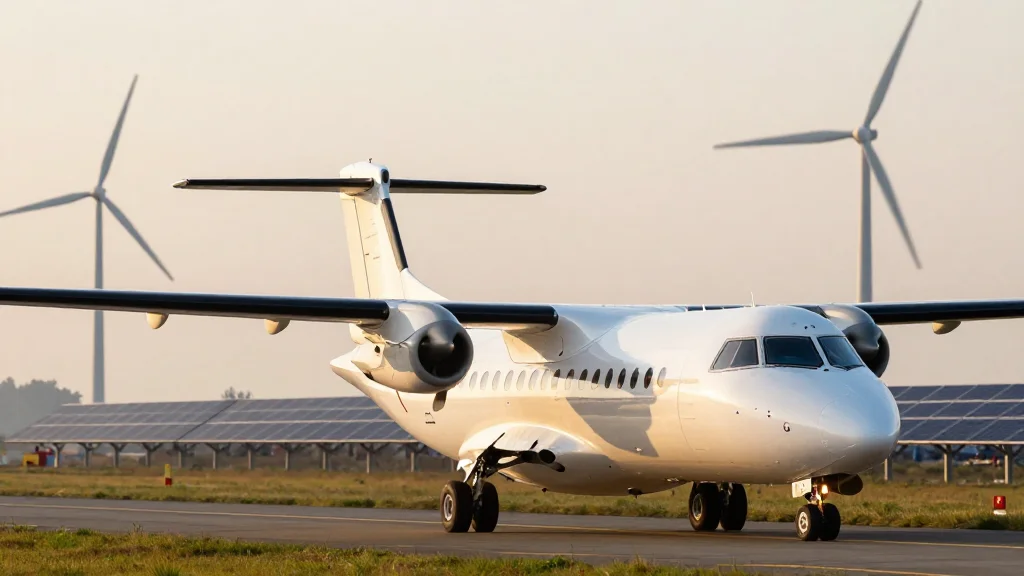
Draft Guidelines on State Aid to the Air Transport Sector — T&E Consultation Response
Why It Matters
Stopping indiscriminate subsidies redirects scarce public money toward greener aviation solutions and strengthens competition, accelerating Europe’s climate‑neutral transport agenda.
Key Takeaways
- •Operating aid for regional airports should end after ten-year exemption
- •Investment aid must include strict climate‑neutrality conditions
- •Aid limited to airports essential for connectivity not replaceable by other transport
- •EU guidelines should prioritize zero‑emission aviation and e‑SAF development
Pulse Analysis
The European Commission’s draft State Aid framework for air transport marks the latest attempt to reconcile public subsidies with the bloc’s climate ambitions. Transport & Environment, a leading climate‑policy NGO, points out that the original 2014 rules capped operating aid to regional airports at ten years, a limit that was temporarily extended by five years in 2023 to cushion Covid‑induced losses. With aviation emissions reaching a record 2025 peak and the sector largely rebounding, T&E contends that the pandemic‑driven justification has evaporated, leaving little room for continued blanket support. Ending operating aid would force regional airports to compete on service quality rather than volume, curbing the race for route expansion that often ignores environmental costs.
Airports that cannot sustain themselves without subsidies would need to explore partnerships, multimodal links, or niche markets that add genuine societal value. This shift aligns with the EU’s Green Deal objective of decoupling economic growth from fossil‑fuel consumption and protects scarce public resources from propping up uncompetitive carriers. In the long run, it encourages a market where sustainability is a prerequisite for profitability.
Investment aid, however, can still play a strategic role if it is tethered to strict climate‑neutrality clauses. T&E recommends that funds be reserved for airports that serve irreplaceable connectivity corridors and that actively promote zero‑emission technologies such as electric aircraft and sustainable aviation fuel (e‑SAF) production. By targeting subsidies to projects that demonstrably reduce carbon intensity, the EU can stimulate innovation while safeguarding energy sovereignty. The proposed conditionalities would create a transparent, results‑driven funding model that accelerates Europe’s transition to a low‑carbon aviation ecosystem.
Draft Guidelines on State Aid to the Air Transport Sector — T&E Consultation Response
Comments
Want to join the conversation?
Loading comments...